National nature reserve • the Beskydy Protected Landscape Area
The Kněhyně – Čertův mlýn reserve
The most strictly protected reserve in the Beskids: over 198 hectares of natural mountain forest and the richest pseudokarst in Czechia.
On the ridge of the Radhošťská hornatina stand side by side the two highest Beskids summits on the Zlín Region's boundary – Kněhyně (1,257 m) and Čertův mlýn (1,206 m). Only a shallow saddle separates them, and one national nature reserve joins them, protecting natural mountain forest and the richest pseudokarst in Czechia.
The southern summit • the highest point of the Zlín Region
Čertův mlýn1,206 m
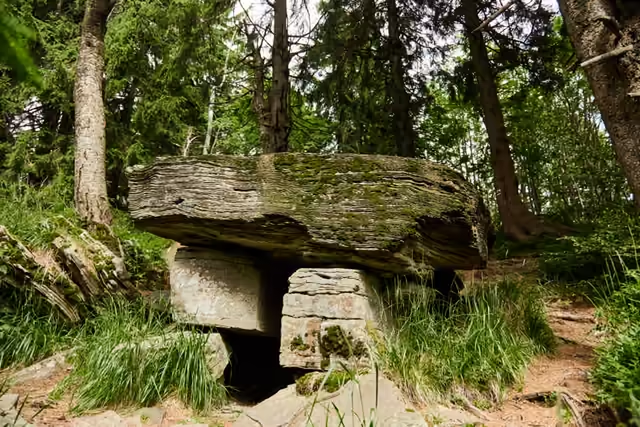
A mountain opening up through deep-seated creep – a rock channel, fissures, pseudokarst caves and, at the end of a hundred-metre trough, Čertův stůl. A legend about the devil's mill and an argument about a dolmen are tied to it.
Open the page →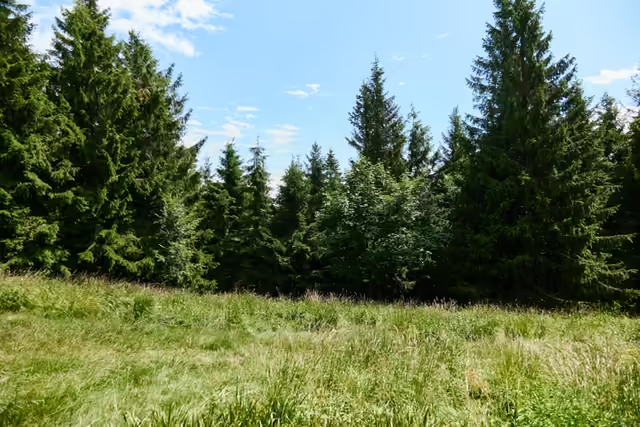
The northern summit • the higher of the two
Kněhyně1,257 m
The higher of the two summits, on the boundary with the Moravian-Silesian Region. Its slopes are where the reserve is richest in nature; the waymarks to the summit itself were removed and the summit is closed.
Open the page →Natural mountain forest on steep slopes
The ministry of culture declared the reserve on 19 January 1989 over an area of just under 199 hectares. It is the third largest in the Beskydy Protected Landscape Area, and in the international classification it belongs among strict nature reserves (IUCN Ia). It lies in the cadastres of Čeladná (Frýdek-Místek district) and Prostřední Bečva (Vsetín district).
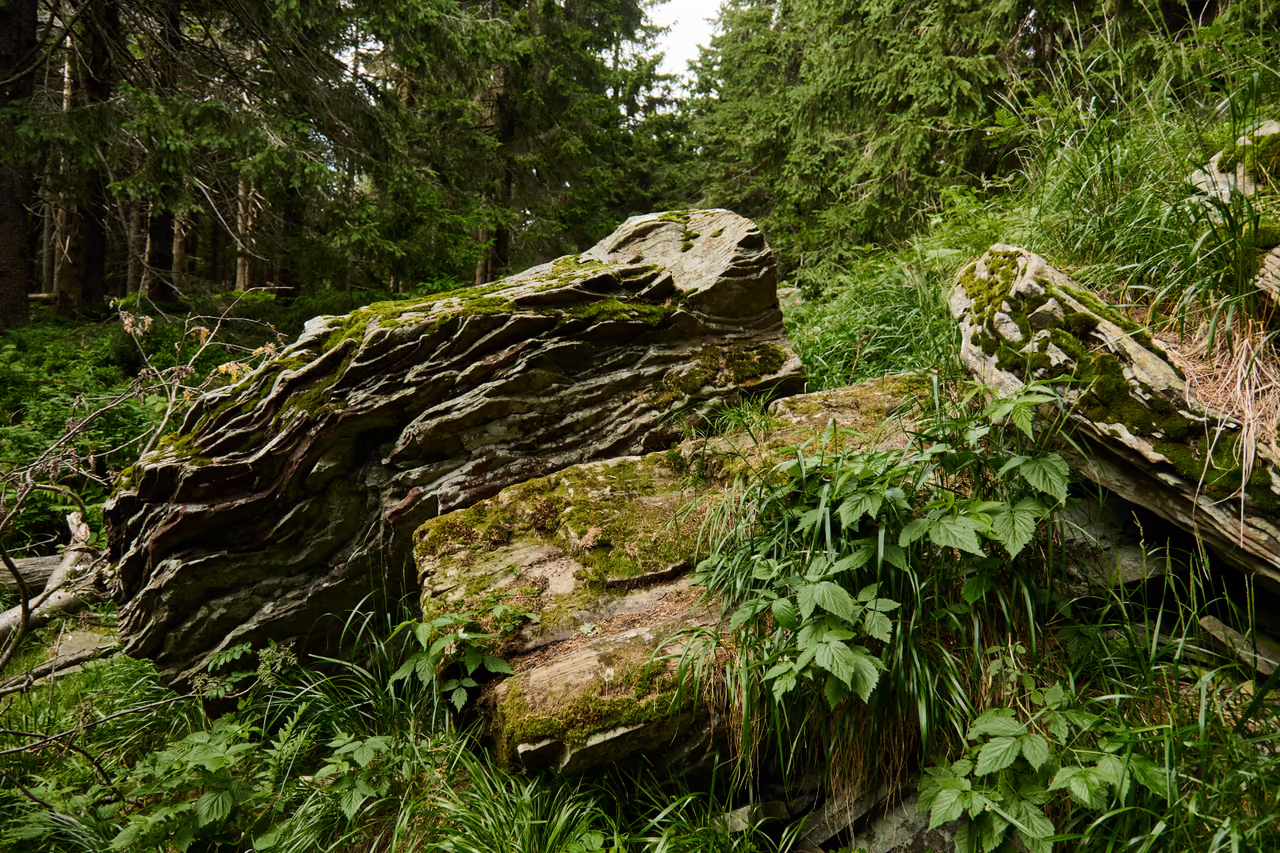
What is protected here is a unique remnant of natural mountain forest on very steep stony slopes with pseudokarst features. On the flat summits of both mountains grow stunted rowan-spruce forests, and on the steep slopes below them spruce-fir beech woods. The oldest stands are over a century and a half old.
Rare mountain nature
Among the plants the most valuable is the Moravian monkshood, which in Czechia grows only in the Moravian-Silesian Beskids, and at the highest levels the rare shrub rock currant. In the boulder scree lives the blind ground beetle Duvaliopsis pilosella stobieckii – the only blind ground beetle in Czechia, a Carpathian element that lives nowhere else in the country apart from a few Beskids summits.
The Eurasian lynx moves through the reserve, and in recent years a brown bear has appeared here more than once. Until the early 1980s the western capercaillie bred regularly around Čertův mlýn; the forest still suits it, but disturbance drove it out and only a few birds are left in the Beskids. Since 2017 Lesy ČR has been reinforcing the population with birds from the rearing station at Krásná pod Lysou horou.
What opens up above carries on below
Both mountains stand on soft Godula sandstone, which slowly slides under its own weight and tears into fissures – geologists call it deep-seated creep. Where the rock opens up, pseudokarst caves form: cavities without water or dripstone, of which Czechia has most right here.
There are five caves in the reserve, all on the southern summit. The longest, Čertova díra, is 74 metres; a short way from it drops Kněhyňská propast – at 57.5 metres the deepest pseudokarst shaft in Czechia. The underground here is among the highest-lying bat hibernation sites in the country.
- Čertova díra (the longest cave)
- 74 m
- Kněhyňská propast – the deepest pseudokarst shaft in Czechia
- 57.5 m
- pseudokarst caves on Čertův mlýn
- 5
Walking is on waymarked paths only
- The site is a strict nature reserve – you walk on waymarked paths only. Conservationists removed the path to the summit of Kněhyně in 2007, and the summit is closed.
- The rock formations and caves (Čertův stůl, Čertova díra) lie off the waymarks – do not approach them.
- Gathering, camping and driving in do not belong here. The caves need particular quiet in winter – they are bat hibernation sites.
- There are no refreshments or toilets in the reserve. The nearest facilities are at the Pustevny saddle.