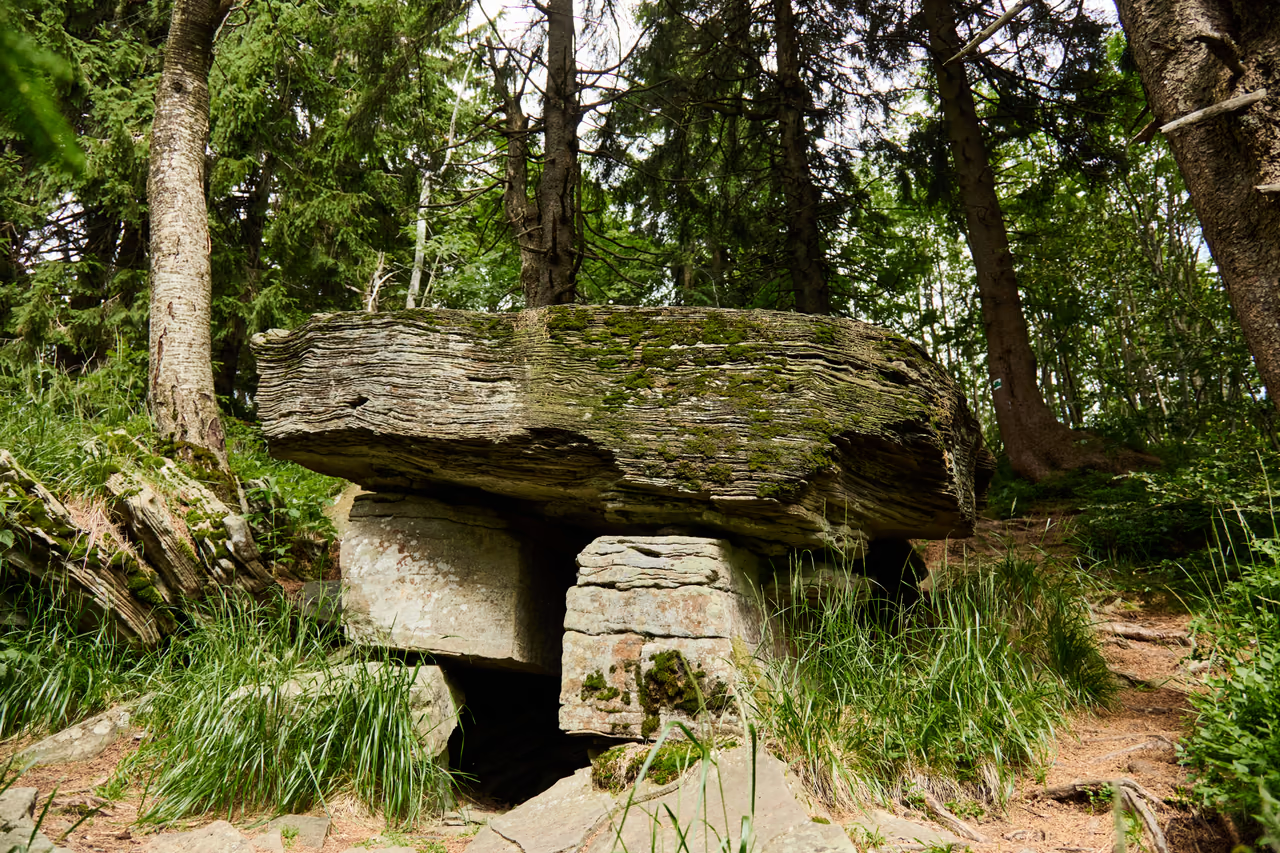
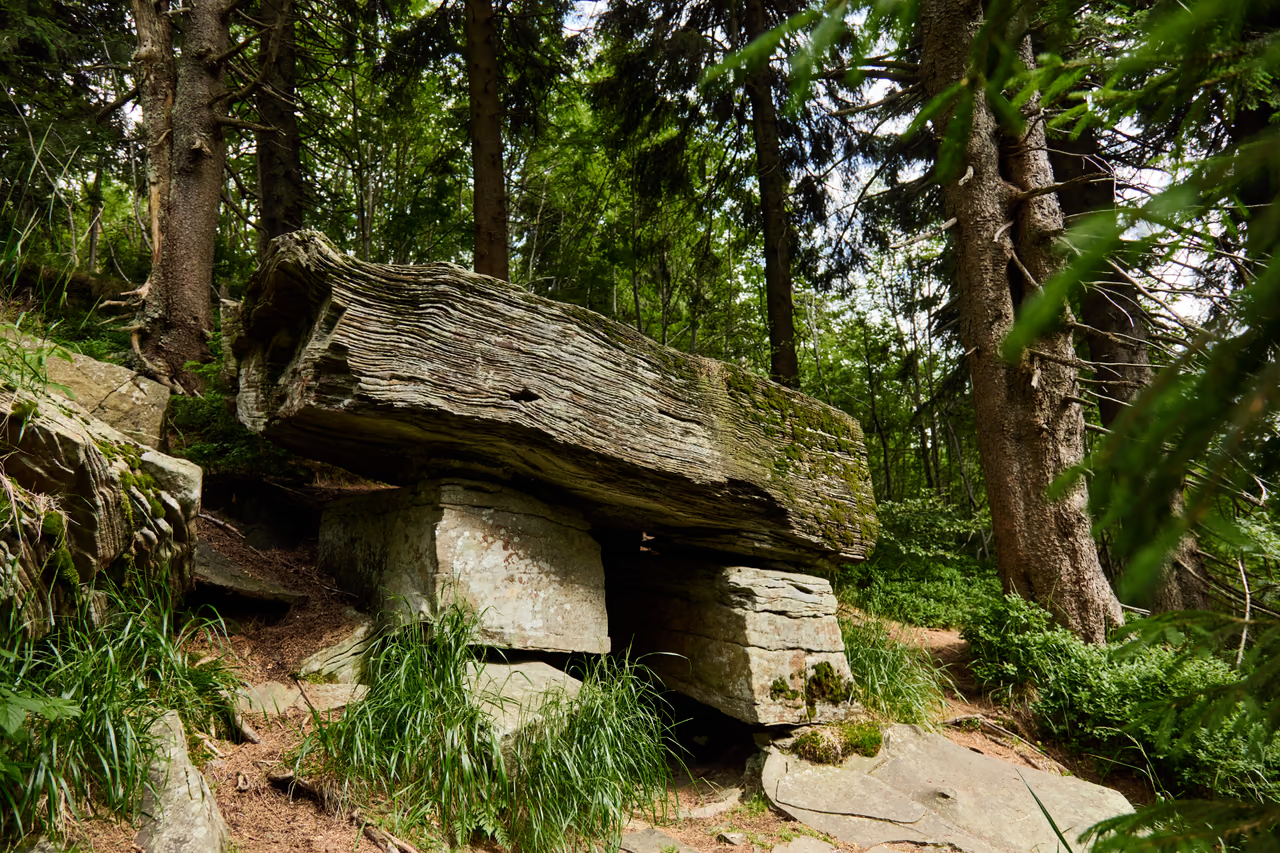
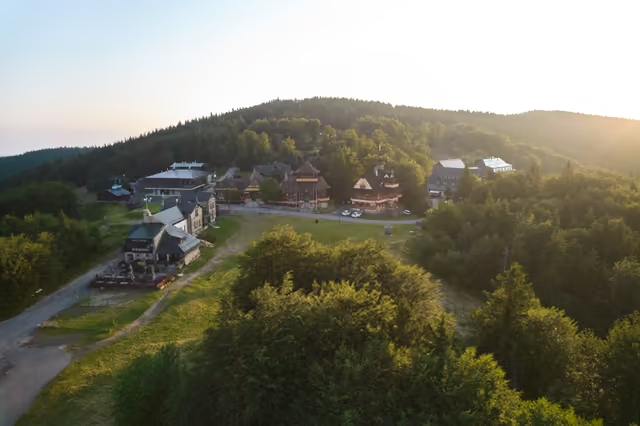
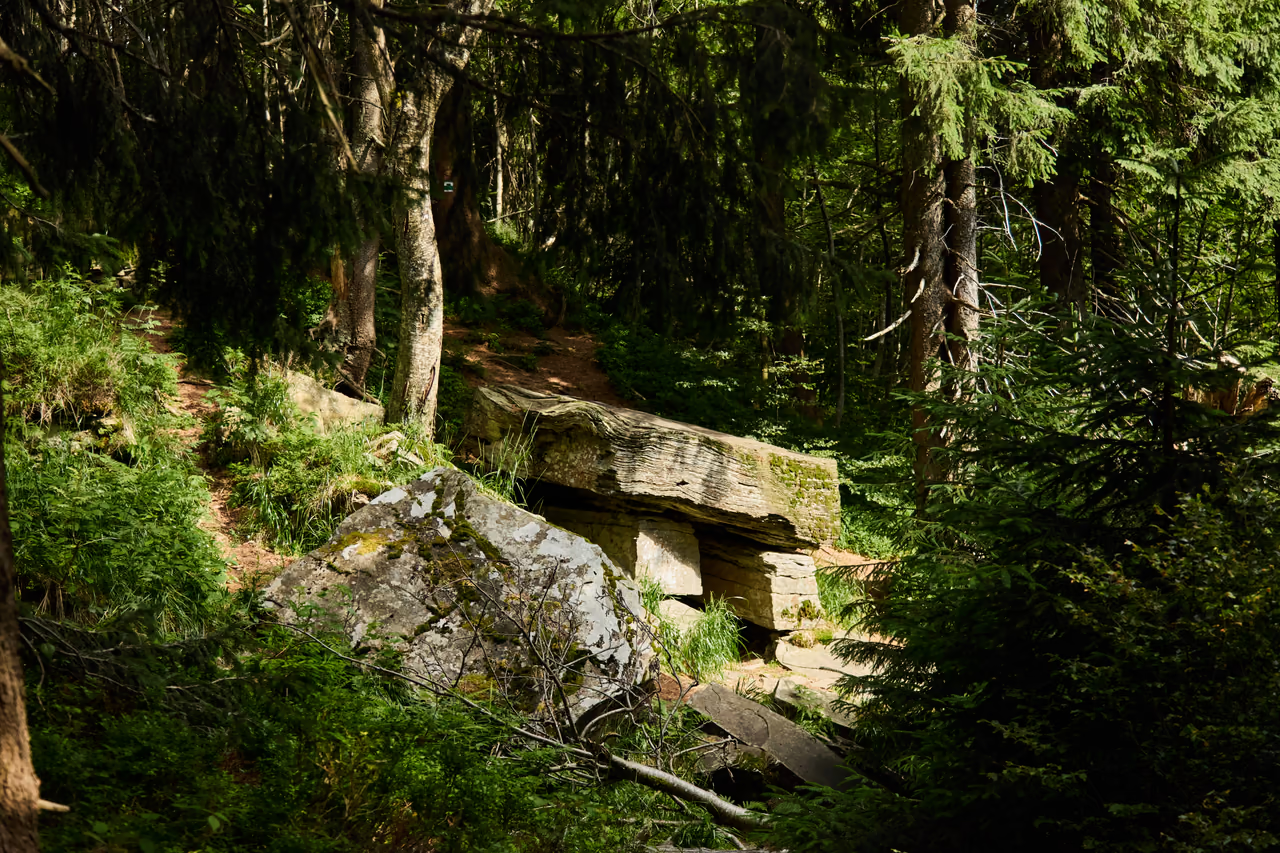
Čertův stůl in sunbeams among spruces - a stone slab carried by lower blocks, a large boulder in front of it, mountain forest all around

A mountain in the Kněhyně – Čertův mlýn reserve • Prostřední Bečva • 1,206 m a.s.l.

Čertův mlýn and Čertův stůl

The highest mountain in the Zlín Region is slowly tearing apart below its summit. At the end of that tear stands Čertův stůl - a shape people could explain to themselves only as the devil's work.

The devil's work, made by nature

Čertův mlýn is the highest mountain in the Zlín Region (1,206 m a.s.l.). Its summit is tearing apart through deep-seated creep, and two striking features are left behind: a hundred-metre rock channel like a mill race cut in stone, and a short way from it a stone slab on two plinths. People could not explain them - so the channel was given to the devil's mill and the slab to his table. Both were made by the same settling mountain.

Čertův stůl from the front - a flat stone slab carried by two plinths, a dark hollow between them, grass and spruces around
Čertův stůl: a slab on two plinths with a hollow between them. Its regular shape is what suggests it might have been built by people.

Why come here

The summit of the Zlín Region's highest mountain

Čertův mlýn (1,206 m) is the highest summit in the Zlín Region and in the Vsetín district. The marked trail runs right across the disintegrating summit - along the way you see rock outcrops, fissures and detached blocks.

When to go

When you can see the stone

The summit's fractured rock is easiest to see in spring before the leaves come out and in autumn. In winter the ridge is demanding and after rain it is slippery. Moving through the reserve at night is not advisable - it belongs to the animals.

Not to be missed

The rock channel and the table

A hundred-metre stone trough like a mill race cut in rock, in fact created as the blocks of the disintegrating ridge moved apart. The legend saw the devil's work in it; Čertův stůl stands at its end.

Čertův stůl360°
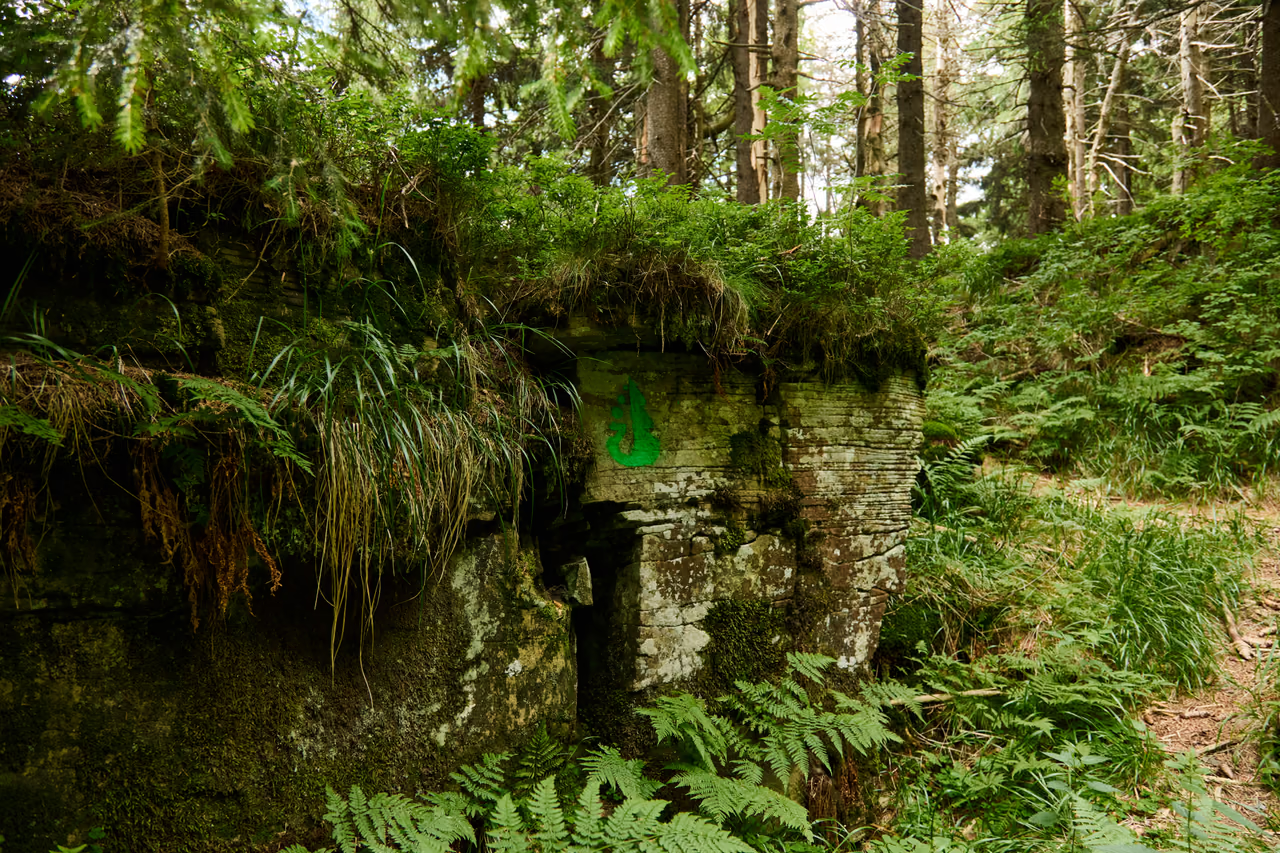
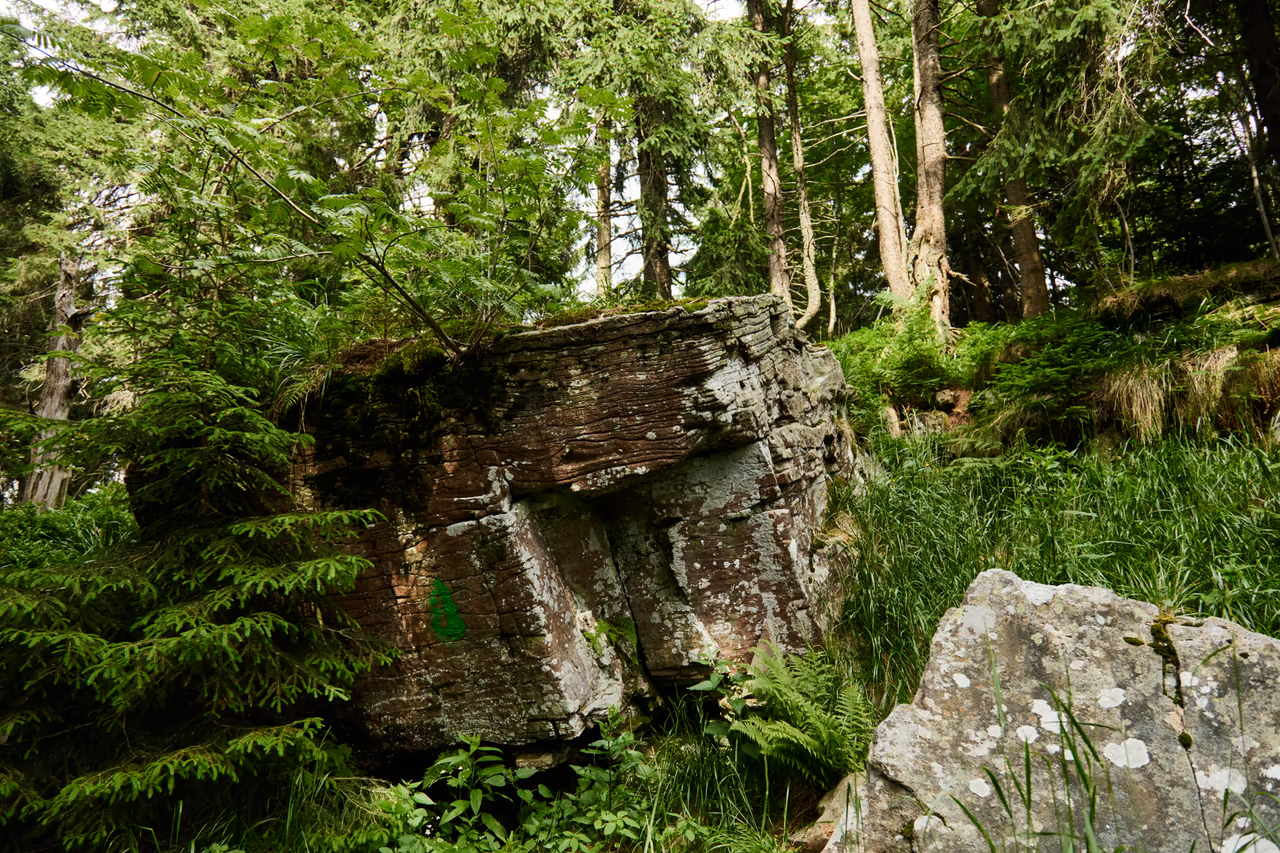
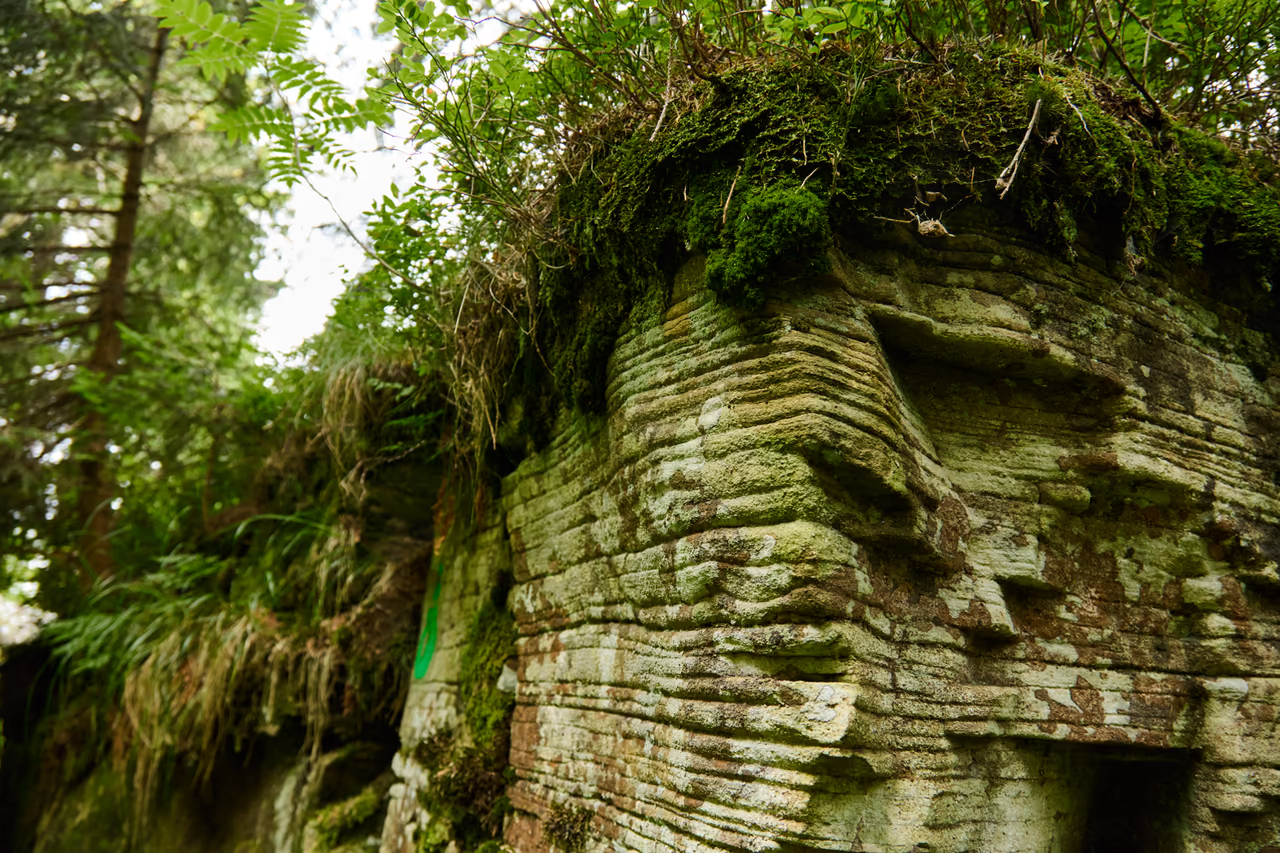
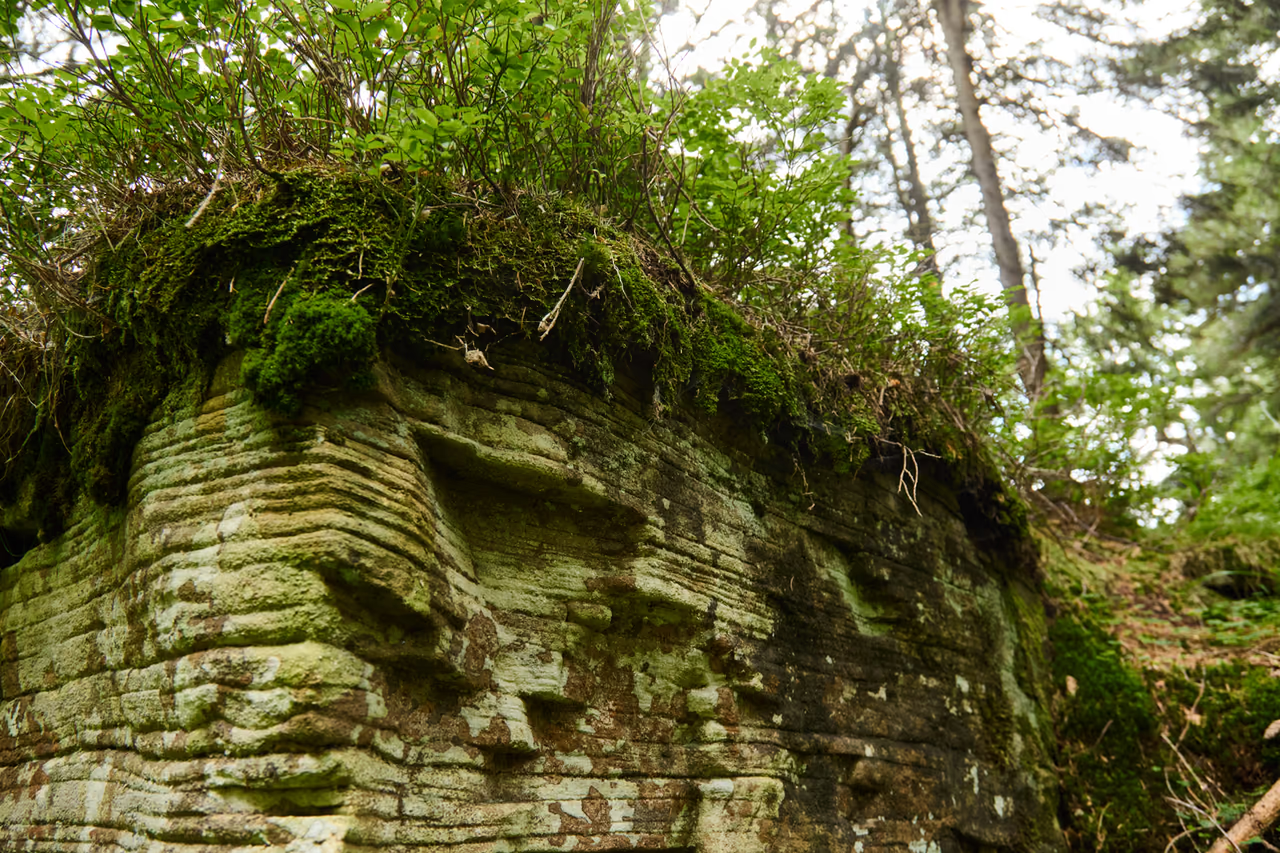
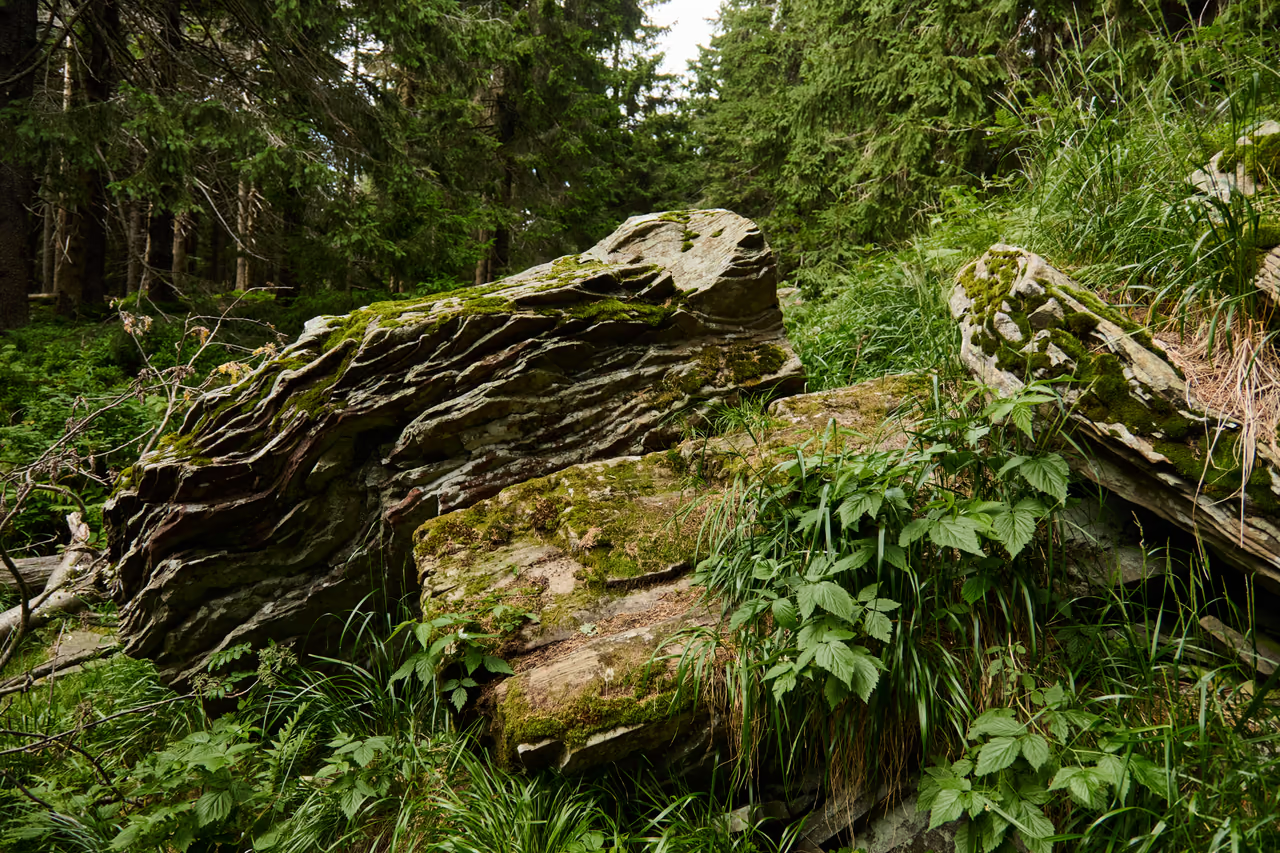
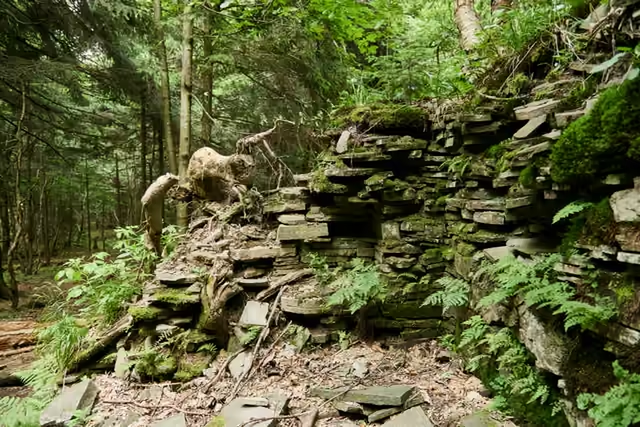
A marked rock outcrop by the path - a green waymark on a detached blockA massive detached block of Godula sandstone in the mountain forestDetail of the layered sandstone face of the outcrop, overgrown with mossLayers of Godula sandstone in the scarp of the disintegrating ridge

The story of Čertův mlýn

The mountain tears, the stone settles - and people told the tale so long that it produced a devil, a mill and a bride.

A mountain opening up

A summit slowly tearing apart

Čertův mlýn is made of Godula sandstones - a hard flysch rock in which sandstones prevail over softer claystones. A firm slab on top with more yielding beds below is the recipe for an unstable giant.

The result is a slow loosening of the summit through deep-seated creep: the massif slides, the rock tears into fissures and detached blocks, and caves and shafts form along their surfaces.

The mountain tears most conspicuously a short way below the summit: a stone trough some hundred metres long runs southwards, created as rock blocks moved apart. Čertův stůl stands at its end.

Anyone who reaches the summit today is standing on a mountain that is still opening up. The scattered boulders, the trough as if carved, the slab on plinths - all of it is the work of one slow process. To people long ago it made no sense, so they found a different culprit.

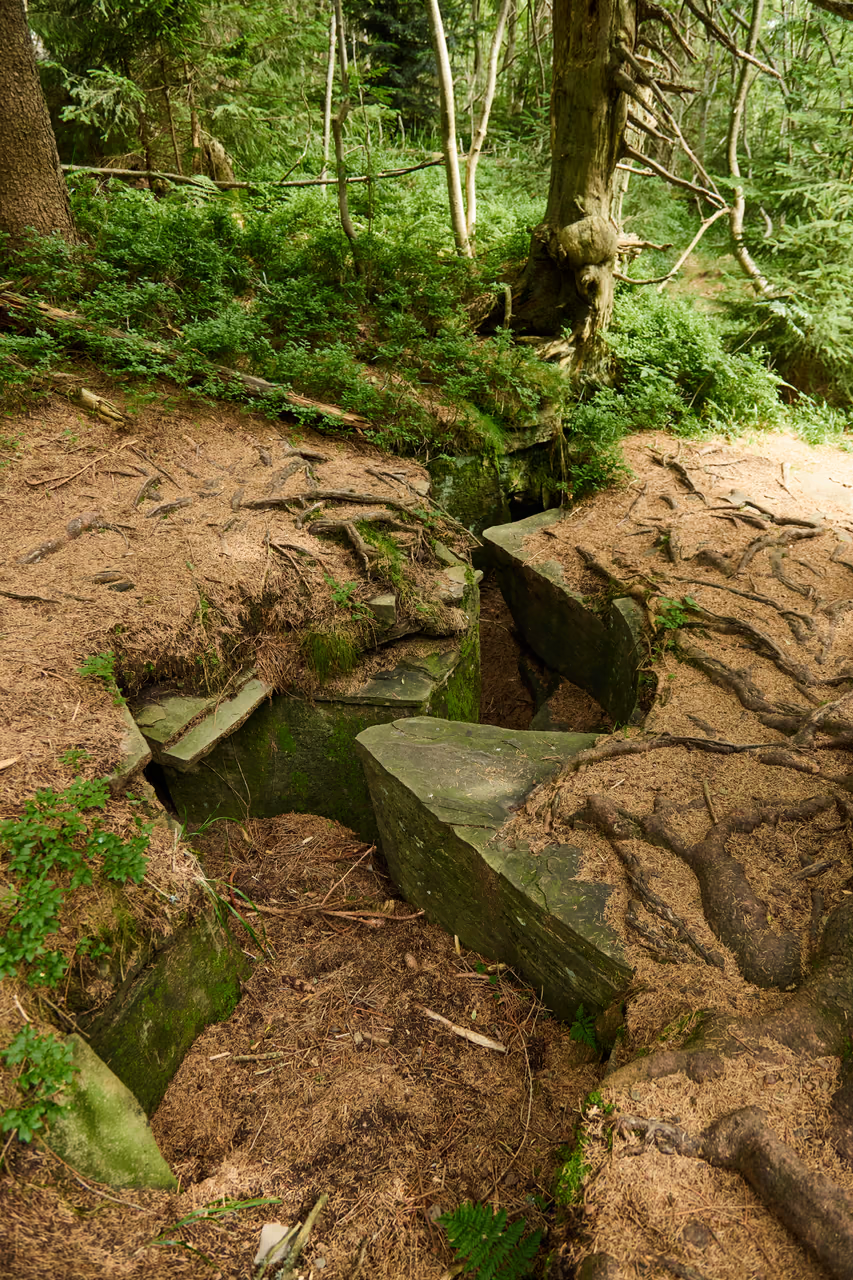
A narrow rock fissure in the forest floor below the summit - the edges of parted sandstone blocks forming the channel show through roots and moss
The rock channel below the summit - a regular trough created as blocks moved apart.

The mountain's underground

Where the fissures from the surface lead

Čertův mlýn holds five pseudokarst caves between 5 and 74 metres long. They were formed as the rock opened during the loosening of the summit.

The largest is Čertova díra, about 150 metres south-south-west of the summit: 74 metres long and 30 metres deep, markedly vertical, with two entrances. A short way on, already at neighbouring Kněhyně, Kněhyňská propast drops into the depths - at 57.5 metres the deepest pseudokarst shaft in Czechia.

the length of Čertova díra
74 m
Kněhyňská propast - the deepest in Czechia
57.5 m
caves in the mountain
5
Where nextCyrilka Cave →Pseudokarst and bat hibernation belong here too - but the caves here are closed to the public. The theme is therefore developed by Cyrilka one ridge over, where the entrance can be reached.

The legend

The devil who never finished the mill

A farmer's wife below the mountain had a daughter of marrying age whom nobody wanted - until one day she flew into a rage and said the girl might as well marry the devil himself. Soon afterwards a young huntsman came to the spinning evening, boasted of his wealth and asked for the daughter. The mother agreed on one condition: within forty-eight hours, before the cock crowed a second time, he would build a mill up on the summit ready to grind at once.

An old uncle crossed himself at once and asked whether they had not noticed a horse's hoof. Since morning, he said, a beggar had been going round the Bečva valleys buying up every cockerel. So they hid one - and when the mill was almost finished on the second night, the cockerel crowed after midnight. The devil fell and never finished the work. All that is said to remain of the unfinished mill are boulders scattered across the summit (the building stone) and the rock channel along which the water was to run to the wheel - that hundred-metre trough below the summit.

to build the mill
48 hours
that ruined the work
1 cockerel
the summit where the mill was never finished
1,206 m

A dolmen, or the mountain's work?

A table still argued over today

The six-and-a-half-tonne slab lies on two stone plinths so regularly that it invites the thought of human work. It is spoken of as a pagan sacrificial table and as a prehistoric astronomical device - but most often as a dolmen, the prehistoric “stone table” found all over Europe.

The astronomical interpretation was favoured by Associate Professor Jan Folprecht, whose explanation even reached the information board at the summit: he sees it as a megalithic structure, perhaps used for rituals. He also offers an observation that sounds tempting - the table's axis points to Radhošť, and from the hollow one could watch the sun set over its summit at the equinoxes. The archaeological research that would confirm this, however, has never taken place.

The other camp sees the slab as the mountain's own work - supported by the same evidence as for the trough a little higher up: a fractured summit, detached blocks of Godula sandstone and chance arranging them into the shape of a table. Fissures and tumbled blocks are everywhere here, making a natural origin easy to believe. No one knows for certain yet, and perhaps that is just as well: the riddle has kept the mountain alive for generations.

Čertův stůl at an angle - the slab carried by stone plinths, a hollow between them, grass and trees around
Čertův stůl.

Timeline

From the sea floor to a declared reserve

  1. the Cretaceous

    Sand on the sea floor

    Godula sandstones are laid down in the Carpathian sea - the hard flysch rock the whole massif of Čertův mlýn is made of.

  2. the folding of the Carpathians

    The flysch folds into nappes

    The rocks are compressed into folds and thrust over one another - forming the ridge of the Radhošťská hornatina with summits above 1,200 m.

  3. to this day

    The mountain opens up

    The summit slowly cracks and slides: fissures, landslides and caves appear. A hundred-metre rock trough runs down from it, with Čertův stůl at its end.

  4. 19 January 1989

    The reserve is declared

    The Kněhyně – Čertův mlýn national nature reserve is created (just under 199 ha) - the third largest reserve in the Beskydy Protected Landscape Area.

  5. 2001

    The dolmen hypothesis

    Associate Professor Jan Folprecht publishes his interpretation of Čertův stůl as a megalithic structure oriented towards Radhošť. The text reaches the information board at the summit.

  6. 2002

    The Čertův mlýn nature trail

    Conservationists open a 7 km trail with nine stops from Martiňák to Pustevny.

    The nature trail
Na závěr

Doplňující info a test znalostí

Rychlá rekapitulace

What is Čertův stůl?

A stone slab detached at the end of the hundred-metre rock channel below the summit of Čertův mlýn (1,206 m, the highest mountain in the Zlín Region). It was created by the same deep-seated creep that is tearing the mountain into fissures.

Is Čertův stůl a dolmen?

That is only a hypothesis put forward by Associate Professor Jan Folprecht in 2001, which reached the information board at the summit. No archaeological research has taken place - it is not known for certain whether it is a natural formation or a structure.

Can I reach the table on a marked trail?

No, it lies off the marked trail inside a national nature reserve where movement is allowed only on marked routes. The page therefore shows the table in a 360° panorama.

Are there caves beneath Čertův mlýn?

Yes, the mountain has pseudokarst caves and a bat hibernation site - described in detail on the Cyrilka Cave page.

Závěrečný kvíz

Otázka 1 z 6

The stone slab of Čertův stůl resting on lower plinths in the mountain forest, with a dark hollow beneath the slab

Why are there so many fissures, clefts and tumbled blocks on Čertův mlýn?

RysíkRysík→

There is a quiz a little further up. Shall we try it?

A few quizzes and I get glasses, and I will feel properly educated.

Try the quiz

Your rank: Homebody. You do not have a single stamp yet. Visit any place and become a Pilgrim.

You can experience the Beskids and Moravian Wallachia with Rysík and without him. Rysík would love to be there for it. Whether you take him along and take on the challenges with him is up to you.

Save Čertův mlýn to your favourite places

You can find your favourite places in your account. On the Walking routes page you can use them to filter routes.

Something not right here?

Suggest a more accurate wording.

Where next

Where the story continues

Čertův mlýn is only part of a larger whole. The related places and their stories are on the following pages.