Why come here
A symbol of Moravian Wallachia
The statue stands in the open on the ridge - you pass it whether you walk from Pustevny to Radhošť or the other way round. On the ridge walk, you cannot miss it.
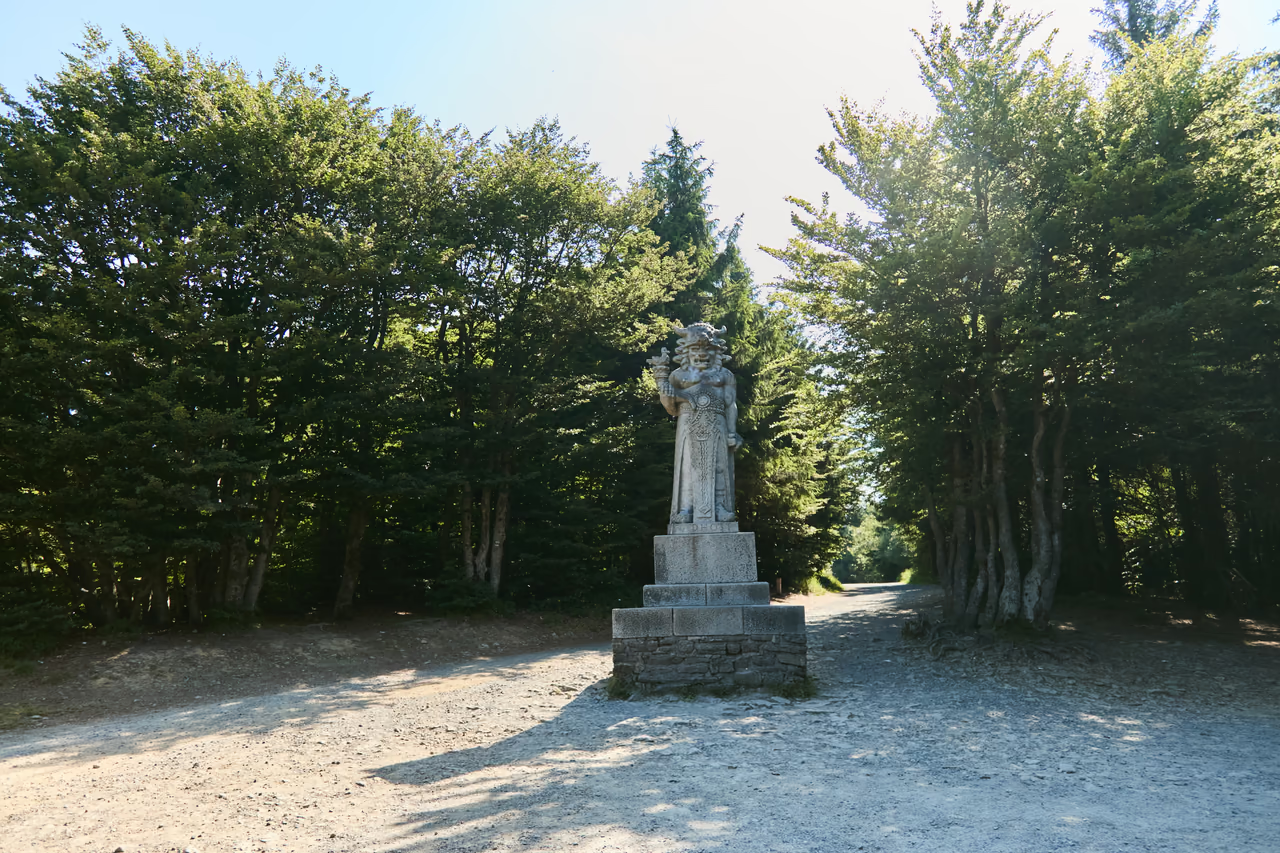
Statue • the Radhošť ridge • 1,105 m a.s.l.
The Slavic pagan god of the sun, abundance and harvest, on the ridge route between Pustevny and Radhošť.
Halfway along the ridge route from Pustevny to Radhošť stands the statue of Radegast, one of the symbols of Moravian Wallachia. The Radegast we know is the work of the academically trained sculptor Albín Polášek, born in Frenštát pod Radhoštěm.
Today's statue on the ridge is a granite replica from 1998; both original casts survived and can still be seen.
Why come here
The statue stands in the open on the ridge - you pass it whether you walk from Pustevny to Radhošť or the other way round. On the ridge walk, you cannot miss it.
Not to be missed
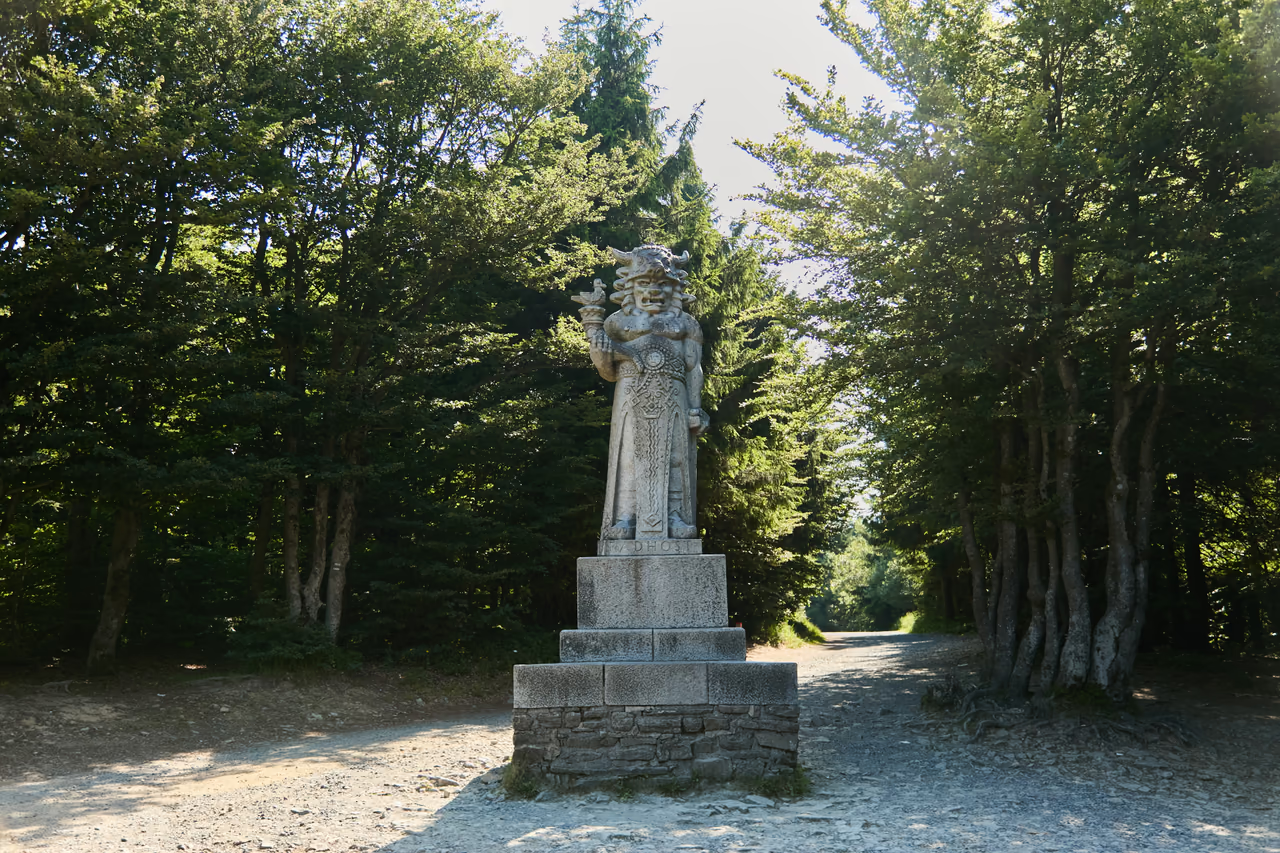
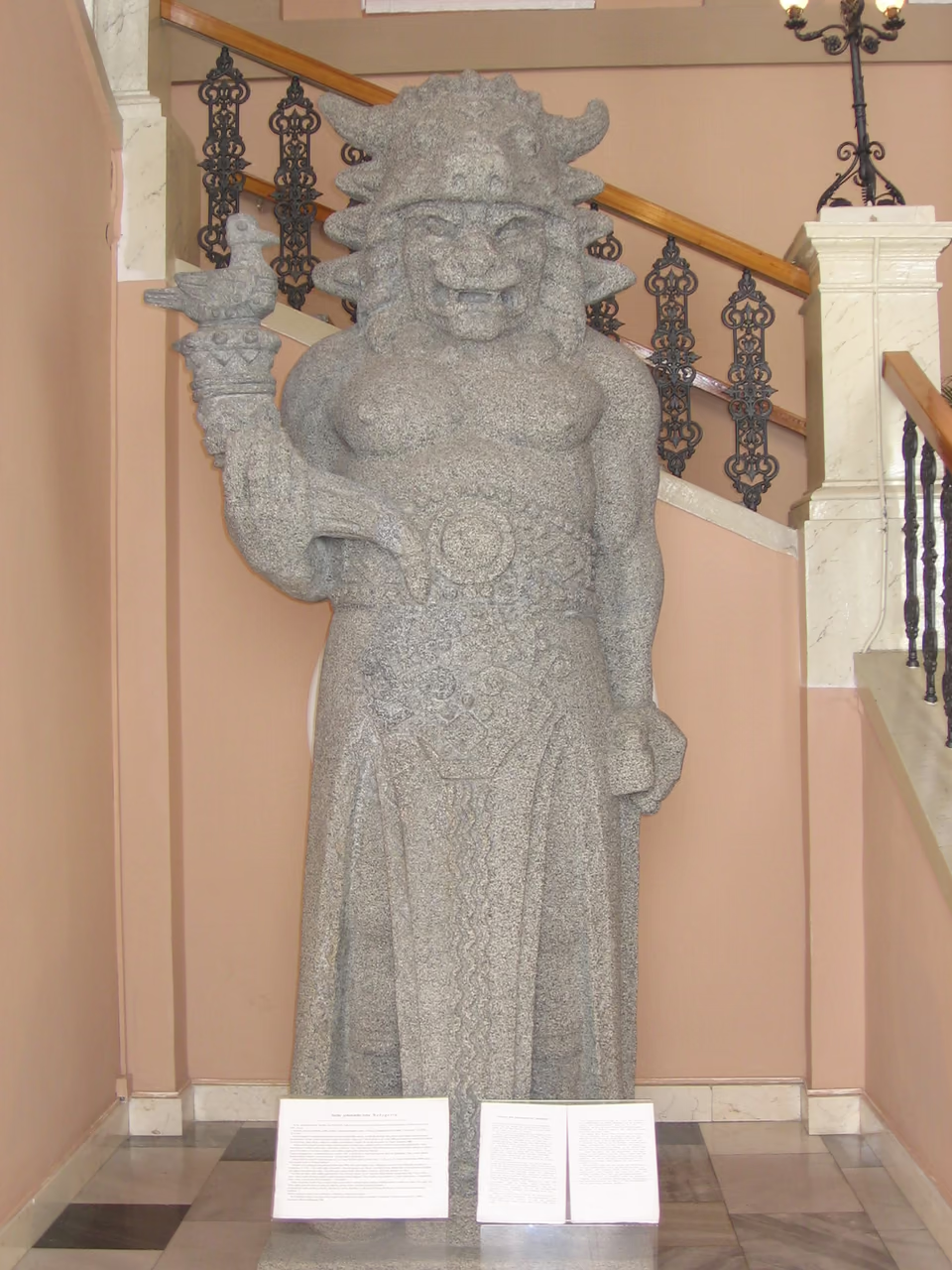
Radegast has a man's body and a lion's face. On his head is a helmet in the shape of a bull's head with mighty horns. In his right hand he holds a horn of plenty; with his left he leans on an axe.
Where the originals are
The original from the ridge can be seen during office hours in the entrance hall of the town hall in Frenštát pod Radhoštěm. The second cast, found years later in the garden of a foundry, is at Zoo Praha.

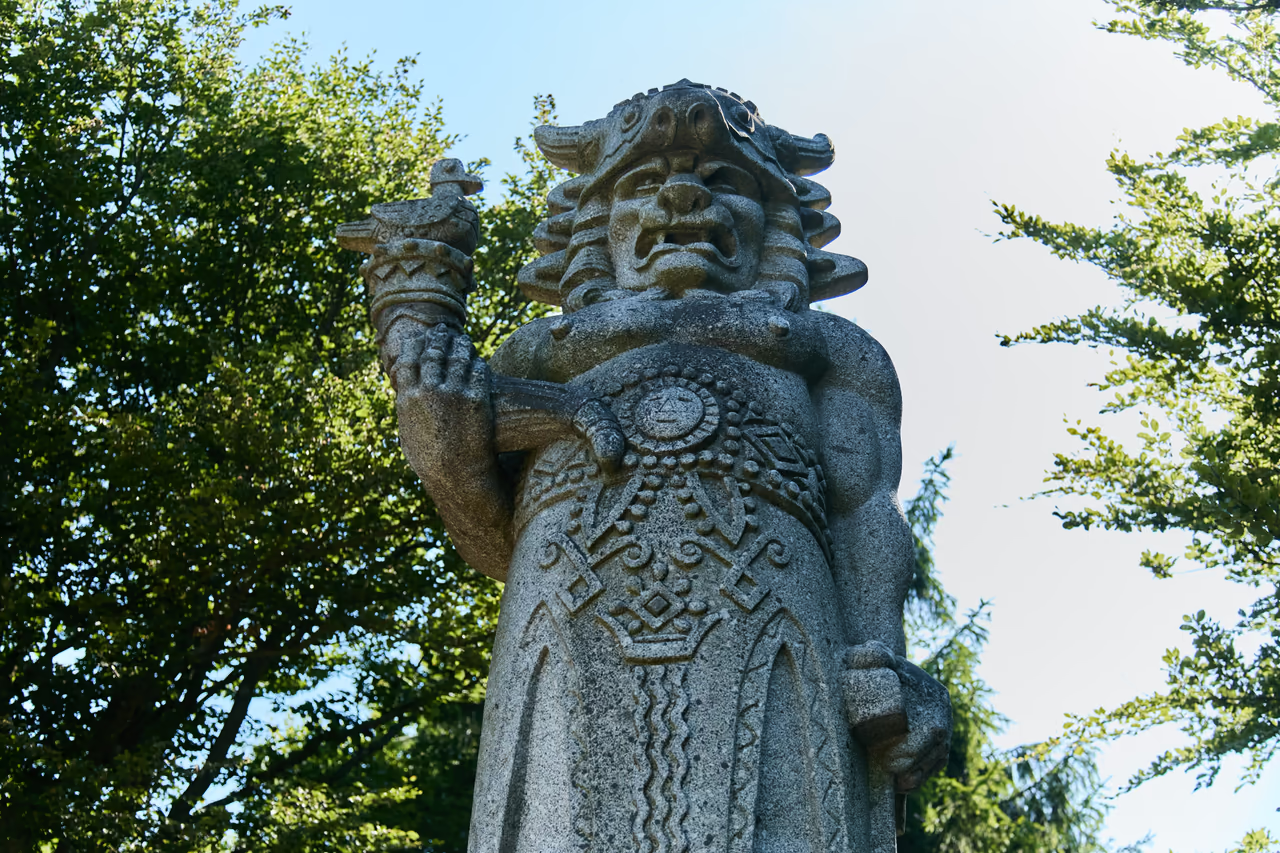
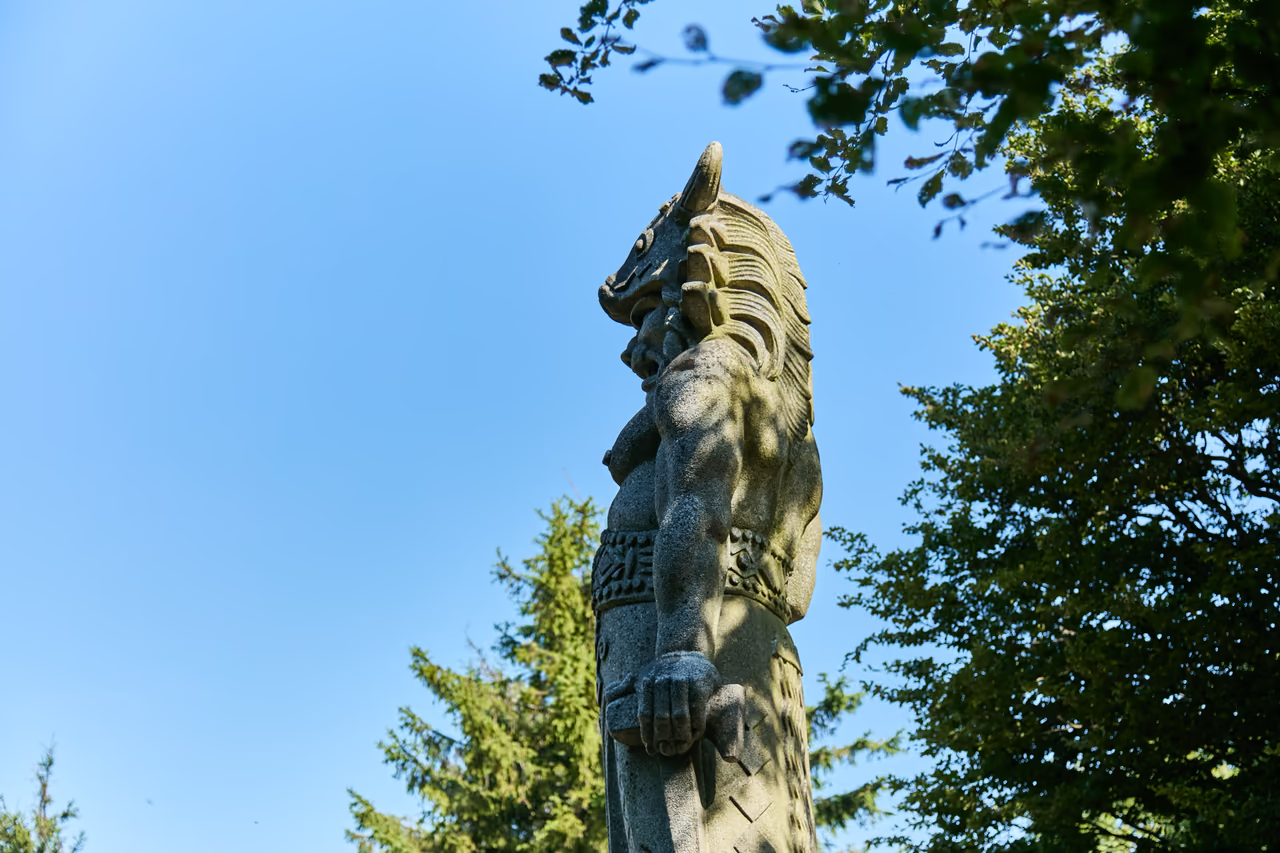
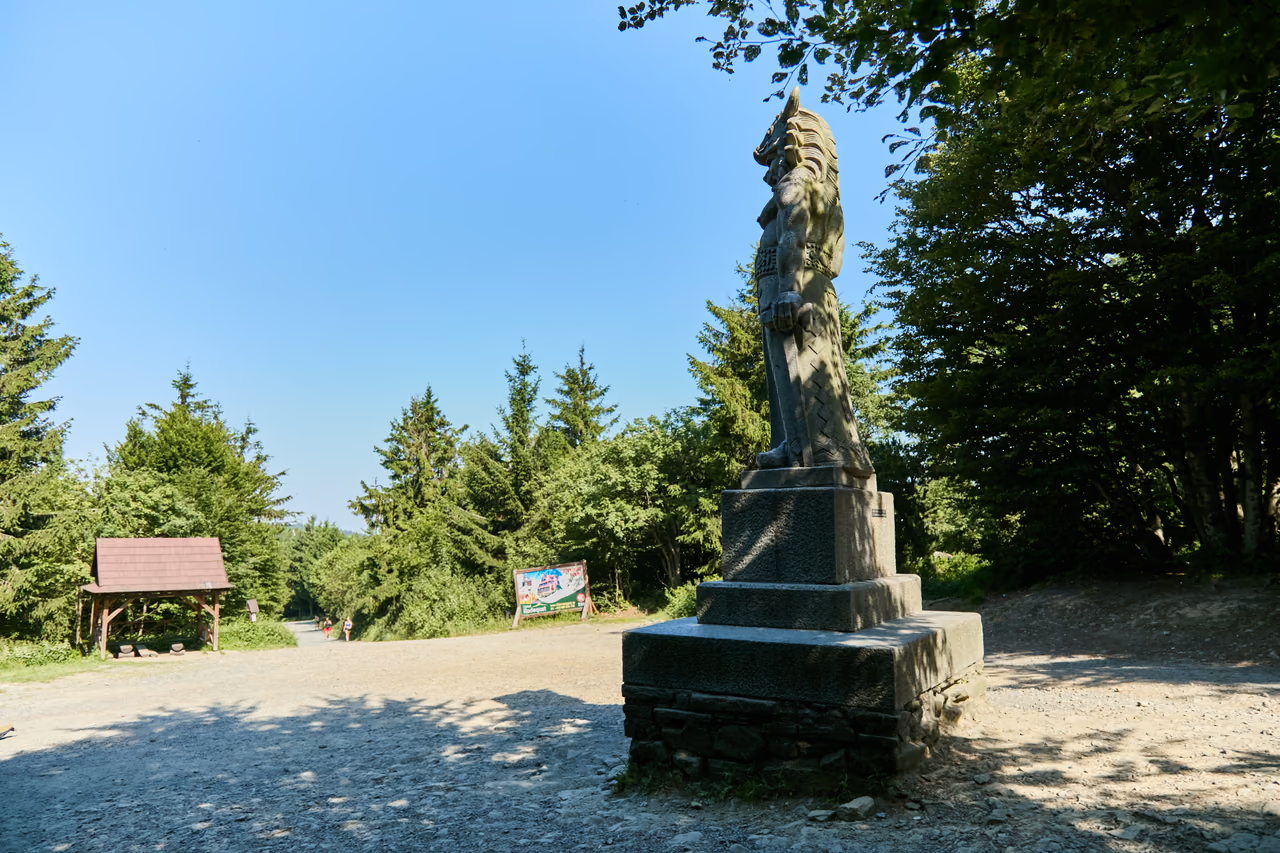
The granite replica of the Radegast statue on the ridge
Concrete, lightning, granite: the story of the statue on the ridge
The work
Albín Polášek (1879–1965), born in Frenštát pod Radhoštěm and a professor at the Art Institute in Chicago, began work on Radegast as early as 1924 in America, where several variants of the work were made. The statue took its final form only in 1930, in a rented Prague studio. The same sculptor also gave Radhošť the statues of Cyril and Methodius - their story is told on the Radhošť page.
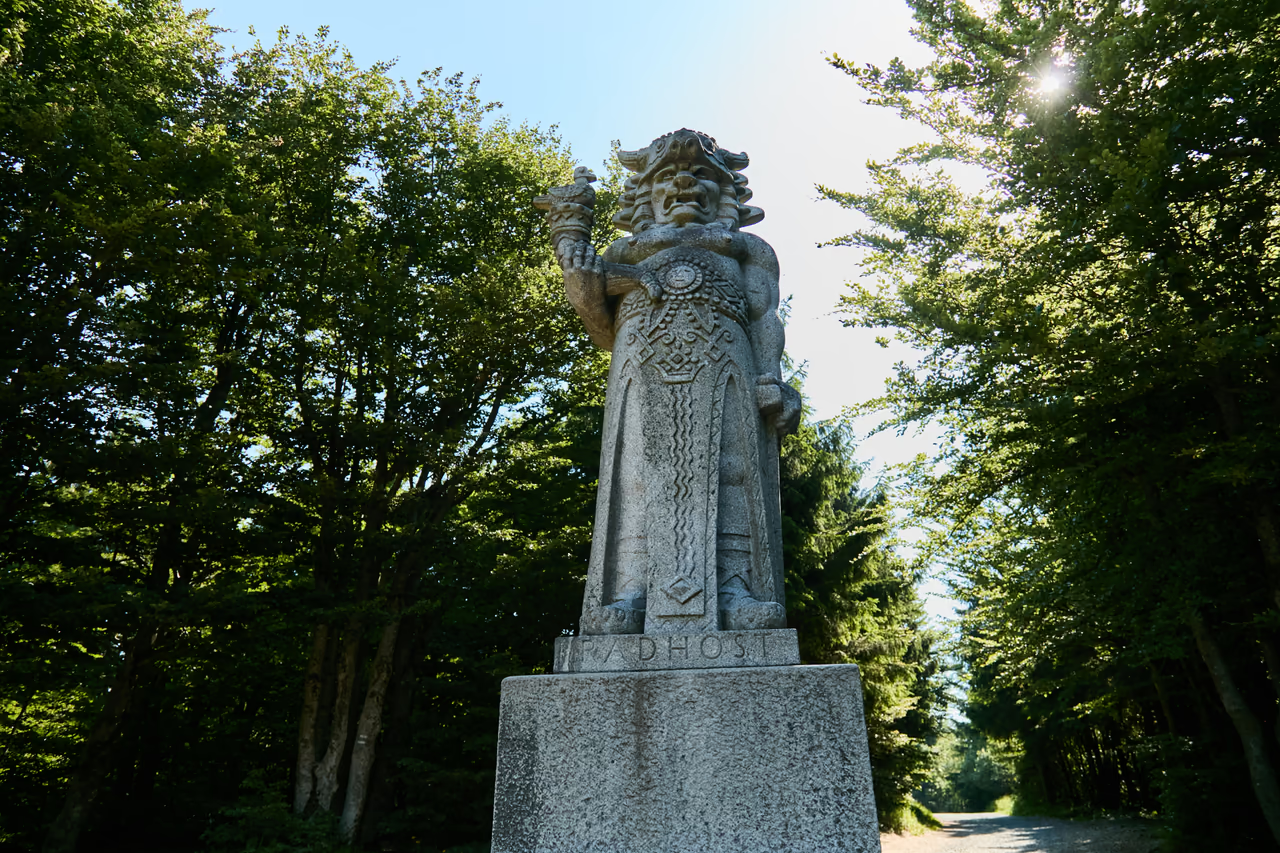
Polášek conceived Radegast as a man's body with a lion's face and a helmet in the shape of a horned bull's head; in one hand he holds a horn of plenty, in the other an axe. That form is purely Polášek's artistic idea - no documented image of the deity associated with Radhošť exists. Polášek gave the statue to Pohorská jednota Radhošť.
The plinth carries the carved inscription RADHOŠŤ, even though the statue stands about 2.5 km from the actual summit - the name belongs to the whole ridge between Pustevny and the summit, not only to its highest point.
The unveiling
In 1930 Polášek had both Radegast and the statues of Cyril and Methodius, which he made for Radhošť at the same time, brought up to the ridge at his own expense - besides a lorry, a team of ten horses helped. Asked why so much effort and expense, he replied:
“When neither you nor I are here any more, those statues will still be standing. And if now and then a pilgrim comes who understands their message, that will be the reward that gives my soul peace.”Albín Polášek during the transport of the statues to Radhošť
The day before the unveiling, on 4 July 1931, a thunderstorm with hail broke over the ridge. Lightning killed the twenty-two-year-old private Karel Than as he stood guard by the statue - and speculation about the pagan god's first victim spread at once. The next day the weather cleared and the statue was ceremonially unveiled on 5 July 1931 during the Slavic Pilgrimage.
Mountain vs. statue
Artificial stone did not hold out long at over 1,100 metres. The statue was damaged by a lightning strike and weathered in the harsh mountain climate. Repairs in the 1980s only slowed the decay - the bond between old and new concrete did not hold.
In 1995 the statue was dismantled and taken to a conservation workshop in Leskovec near Vsetín. Using it as a model, the academically trained sculptor Miroslav Machala and the conservators Jan Sobek and Miroslav Zubíček carved an exact copy in granite. They worked from a twenty-one-tonne block brought from a quarry near Sedlčany.
The granite replica returned to its original place on 29 June 1998. That is what you meet on the ridge today: a faithful likeness of the original at the same size, this time in a material that withstands mountain weather.
The originals
There were two versions of the statue from the outset. At the Maška foundry in Prague - the one that later produced the equestrian statue of Jan Žižka on Vítkov - two identical casts were made using a smaller model. The casts were made of artificial stone: concrete with crushed granite around an iron frame.
The original from the ridge was restored after being dismantled and stands today in the entrance hall of the town hall in Frenštát pod Radhoštěm - in its sculptor's home town.
The second cast was to stand in a house Polášek planned to build in Frenštát; that never happened. The statue was forgotten - until workmen found it at the turn of the 1950s and 1960s under a layer of soil and leaves in the garden of the former Maška foundry. It had probably been hidden there from the German occupiers during the Second World War. After restoration it was given to Zoo Praha, where it stands to this day.
One statue has thus become three: the replica on the ridge, the original in Frenštát and its twin at the Prague zoo.
Timeline
From the first variants in America in 1924, through a dramatic unveiling, to the granite replica standing on the ridge today.
1924
Albín Polášek starts work on Radegast; several forms of the work are made in the USA.
1930
The final form is created in a Prague studio and the Maška foundry casts two identical pieces. A lorry with a team of ten horses brings the statue up to the ridge - together with the statues of Cyril and Methodius that Polášek made for Radhošť at the same time.
1931
The statue is unveiled on 5 July during the Slavic Pilgrimage. The day before, lightning killed a soldier on guard duty beside it.
~1960
Workmen find the forgotten second original in the garden of the former Maška foundry, apparently hidden there during the occupation. After restoration it goes to Zoo Praha.
the 1980s
The statue on the ridge, damaged by lightning and mountain weather, is repaired; the concrete patching does not last long, however.
1995
The weathered statue goes to a conservation workshop in Leskovec near Vsetín. It serves as the model for a granite copy carved from a block from the Sedlčany quarry.
1998
On 29 June a faithful granite copy returns to the original spot. The original finds a home in the town hall in Frenštát pod Radhoštěm.
The statue stands in the open by the ridge path - a visit is best combined with a walk to Pustevny and Radhošť.
Beskids passport
Are you here in person?
This page has already been added to your Beskids passport as a digital visit. To collect a badge for visiting in person, use the button below while you are there.
Your browser asks for your location once when you click. Verification happens offline on your device and your location is not sent anywhere.
Follow the ridge to the granite statue of the pagan god Radegast by Albín Polášek – the same sculptor who also made the statues by the chapel.
From the statue, continue along the ridge for about another two kilometres to Radhošť's summit itself. You have views over both sides of the Beskids for practically the whole way.
Czechia's highest religious building – and beside it the statues of the missionaries, looking back across the ridge towards Radegast.
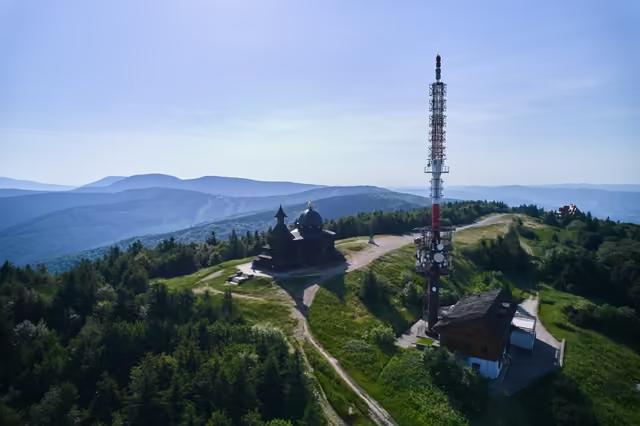
Don't want to go back the same way? From the chapel you can walk down the trail past the open-air museum Valašské muzeum v přírodě to Rožnov pod Radhoštěm. Check the return bus connection to Pustevny before setting off. The descent is dashed on the map.
From the other side: you can also leave the car in Rožnov pod Radhoštěm and walk the ridge in the opposite direction along the Pustevny – Radhošť – Rožnov route - from the chapel to the statue is then about 2 km. A full-day walk, shown with a dashed line on the map.
The statue stands in the open by the ridge path - no admission fee and no opening hours.
You are standing in open ground above 1,100 m a.s.l. - the weather changes fast here and the wind blows even in summer. An extra layer is useful practically always.
There is a snack bar and composting toilets by the statue. The snack bar's hours vary - do not count on it being open.
The original statue from 1931 stands in the entrance hall of the town hall in Frenštát pod Radhoštěm (accessible during office hours); the second cast can be seen at Zoo Praha.
Three. The granite replica from 1998 stands on the ridge, the 1931 original from the ridge is in the entrance hall of the town hall in Frenštát pod Radhoštěm, and its twin (the second cast from the same mould) is at Zoo Praha.
Granite. It is an exact copy of the original, carved in 1998 after mountain weather and a lightning strike had damaged the original in artificial stone.
Albín Polášek, born in Frenštát, a professor at the Art Institute in Chicago. It was ceremonially unveiled on 5 July 1931 during the Slavic Pilgrimage on Radhošť.
On foot along the ridge path - about 1.5 km from Pustevny, about 2 km from the chapel on Radhošť. No road leads to the statue.
Otázka 1 z 3
 Rysík→
A few quizzes and I get glasses, and I will feel properly educated.
Your rank: Homebody. You do not have a single stamp yet. Visit any place and become a Pilgrim.
You can experience the Beskids and Moravian Wallachia with Rysík and without him. Rysík would love to be there for it. Whether you take him along and take on the challenges with him is up to you.
You can find your favourite places in your account. On the Walking routes page you can use them to filter routes.
Suggest a more accurate wording.
The ridge walk and the legend of Radegast are told on the neighbouring page about Radhošť. The other places are close by on the way to the statue.
The ridge walk and the legend of Radegast
The path from Pustevny to Radhošť, the summit with the Chapel of Saints Cyril and Methodius, and the legend of the pagan god the mountain is named for - the wider context the statue only adds to.
Přejít na stránku →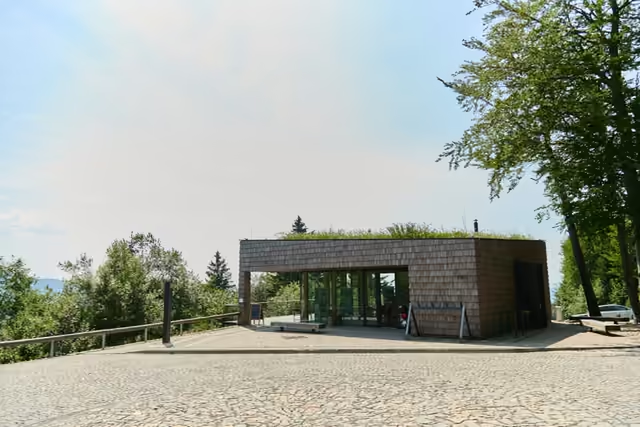
Where people set out from
The gateway to the Pustevny complex, with the information centre that handles the logistics of the walk - car, bus, chairlift and parking.
Přejít na stránku →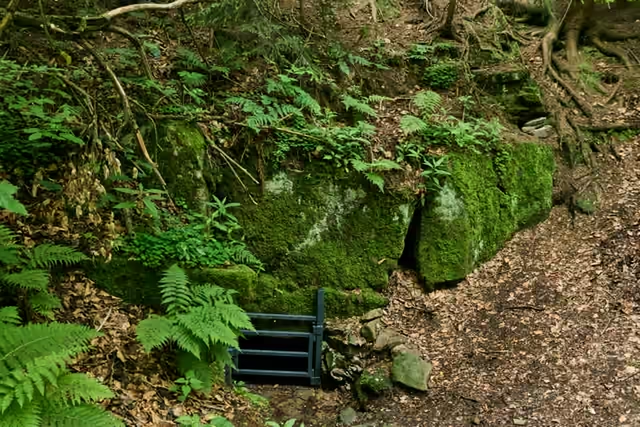
The underground close to the statue
A fissure opened by the sliding of the ridge and a hibernation site for bats - Czechia's second longest pseudokarst cave, only a short way from Pustevny.
Přejít na stránku →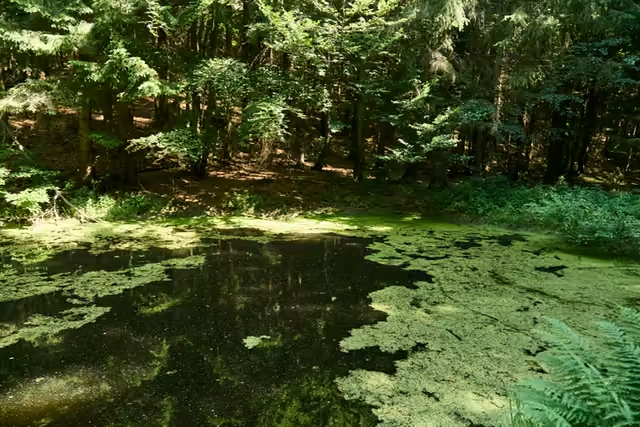
A stop on the way
A small lake that Beskid walkers dug themselves in 1894 - today a protected pool with three species of newt, a short way from Pustevny.
Přejít na stránku →