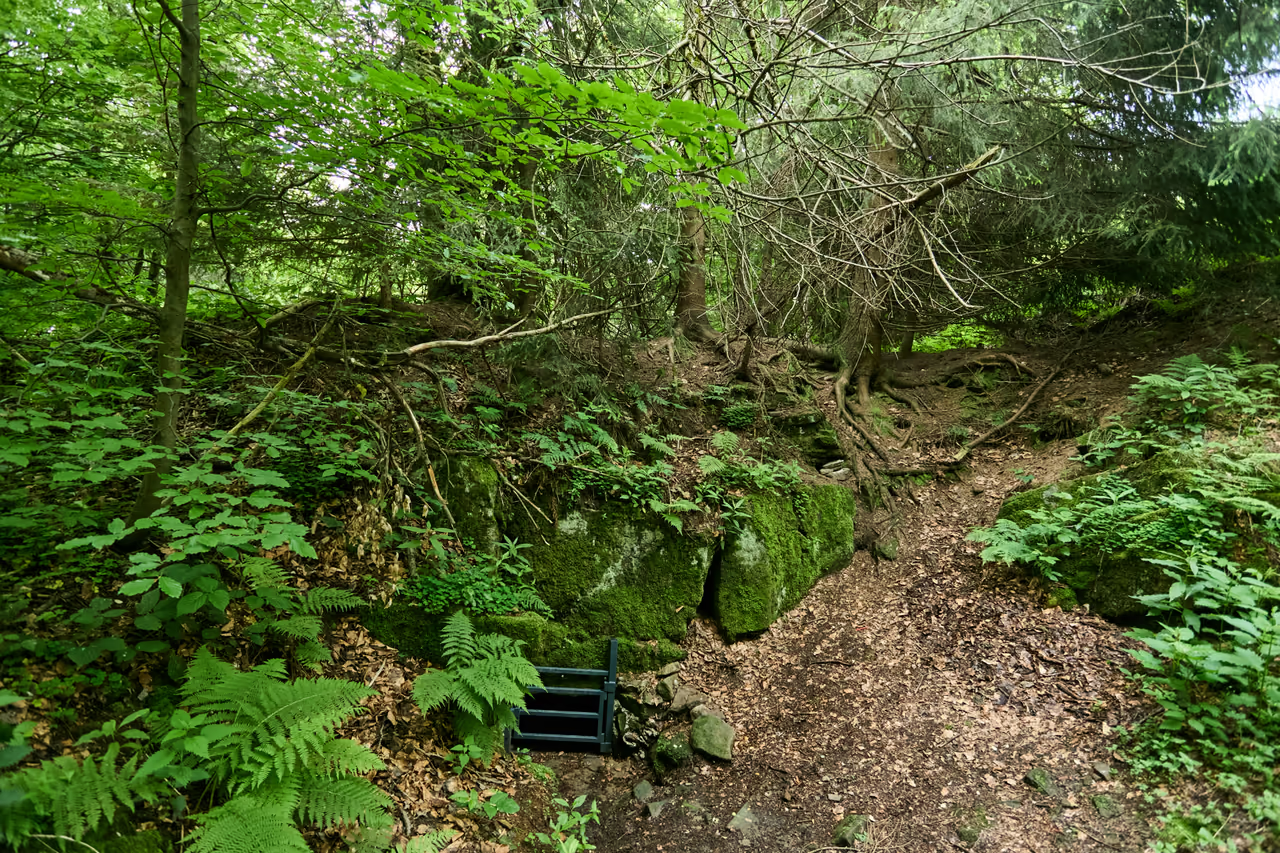
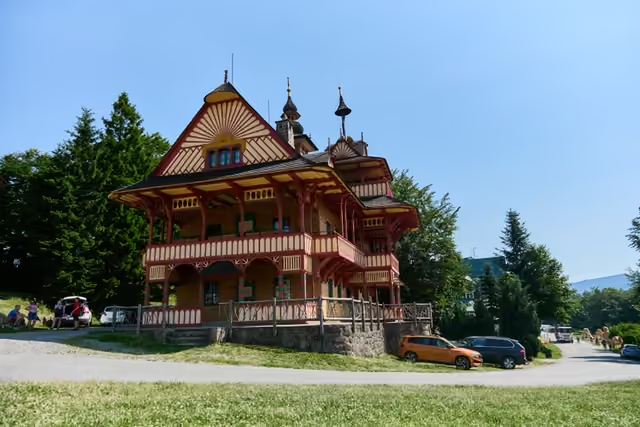
A forest hollow below Pustevny – mossy sandstone blocks, ferns, and the blue grille over the entrance to Cyrilka Cave beneath them

Cave • Pustevny • about 1,000 m a.s.l.

Cyrilka Cave

A fissure in a ridge that is slowly pulling apart. The second longest cave in Czechia and a bat hibernation site.

The longest cave in the Beskids

A few hundred metres from Pustevny a narrow, grilled opening sits in a hollow in the forest. Behind it run 568 metres of passages of the longest cave in the Beskids and the second longest pseudokarst cave in Czechia. Water did not carve it out: it was opened up by the ridge slope, which is slowly moving downhill. The cave is closed to visitors.

fissure caves along the ridge
~30
of passages linked by squeezes
3 levels
not karst carved out by water
pseudokarst
Cyrilka Cave360°

Why come here

Half a kilometre of passages behind an inconspicuous hole

It is a few minutes from Pustevny. You will see a hollow in the forest, cracked sandstone blocks and a grille in the slope. Behind it lies half a kilometre of passages of the longest cave in the Beskids.

What to picture

A ridge coming apart

Water did not carve the passages. They are fissures – cracks left as the slope of the Radhošť ridge slides slowly over soft claystones. The cave moves with the mountain and keeps changing.

Why it is closed

The grille protects people and bats

Going inside is not safe. The cave keeps moving and its blocks come down. In winter rare bats sleep here, and every disturbance costs them energy they cannot spare.

The story of Cyrilka Cave

Half a kilometre of passages that water never carved: a cave, its legends and its bats below Pustevny

How it formed

Passages opened up by a slope

The Beskids are built of flysch – layers of hard Godula sandstone interleaved with soft claystones. The claystones act as slip surfaces: sandstone blocks slide slowly down the slope on them and the ridge comes apart.

Where the massif tears, cracks are left behind, and out of them grows a fissure cave. Cyrilka is one: a network of cracks on three levels linked by squeezes. In places the passages are barely a few tens of centimetres high, elsewhere up to eight metres, and here and there they narrow to tight joints. This is what sets the Beskid caves apart from karst ones: their passages follow vertical cracks in the sandstone, so the walls tend to be almost straight. That is why people long suspected them to be human work rather than the work of nature.

The Radhošť ridge is full of such cracks – they have long been called the Radhošťské ďůry, the Radhošť holes. Cavers have counted about thirty of them here.

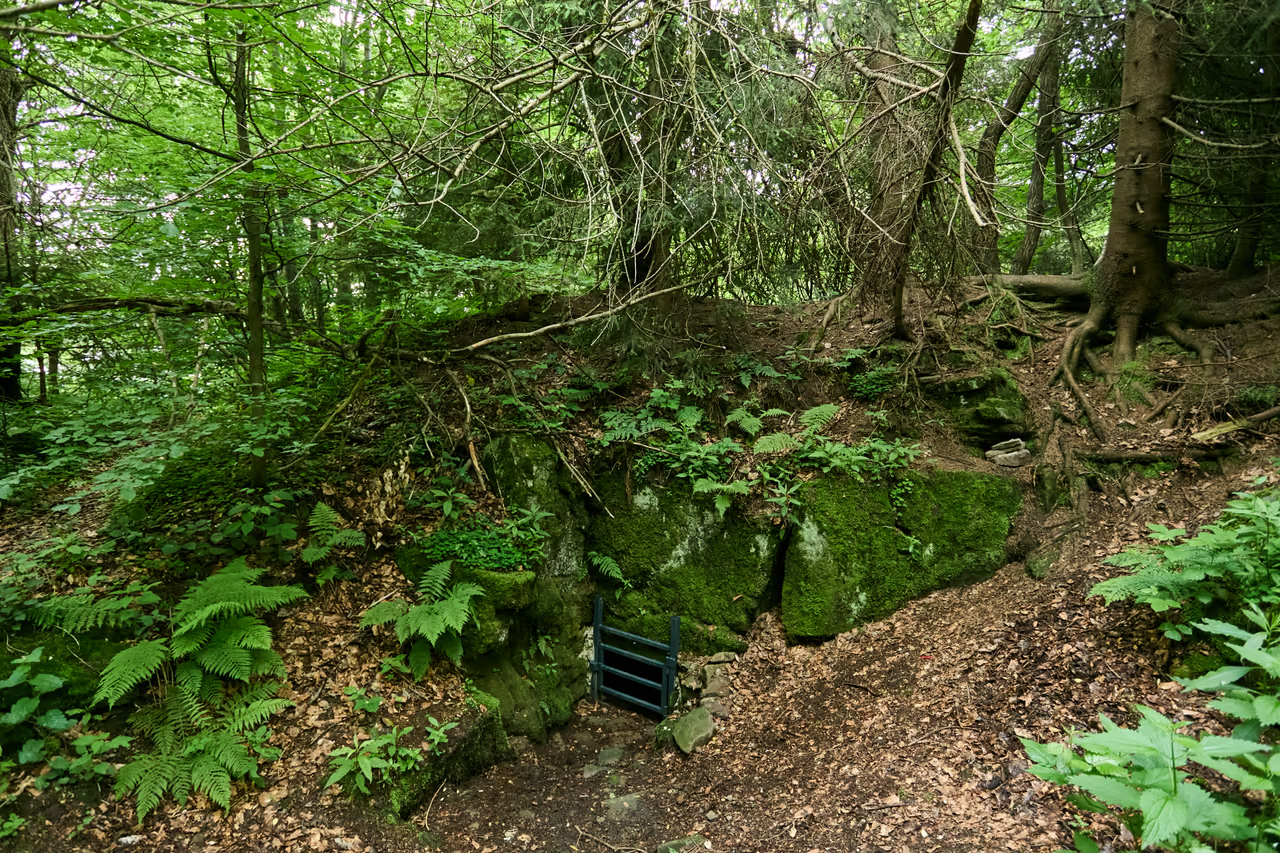
An undulating depression in the forest above Pustevny – cracked sandstone blocks covered with moss and ferns

Legends

The ďůry on Radhošť

In Moravian Wallachia caves were called ďůry, holes, and the ones on Radhošť have always been wrapped in legend. Inside the mountain, it was said, lay a huge cave with a stream, a stone footbridge across it and on the bridge a dog or a dragon guarding the treasure of the pagan priests. In the tales collected in Rožnov by Beneš Metoděj Kulda, three passages led out of Radhošť – one all the way to Velehrad, a second to Jablunkov, a third to Hungary.

“The oldest surviving reports of caves on the Radhošť ridge date from 1639.”J. Skutil, Radhošťské ďůry (1957)

Herders put the ďůry to practical use – as a cellar for dairy produce and a shelter from bad weather. Researchers began venturing into them in the 19th century: in 1895 František Přikryl had the entrance to Cyrilka widened. He was convinced that the underground continued as far as Volářka Cave below Radhošť, four kilometres away – which was never confirmed.

oldest surviving report
1639
Přikryl had the entrance widened
1895
led, so the legends said, to Velehrad and Hungary
3 ďůry

Exploration

Half a kilometre, metre by metre

Systematic research has been led since 1969 by the ORCUS Bohumín caving club (ZO ČSS 7-01). In 1976 the cavers broke through into the “New Section” and the cave grew by 210 metres to 375 metres.

Then came a long pause, and after it three years of discovery. New surveying in 2011 revealed further fissure passages and links between known branches: the length jumped to 511 metres. At the end of 2012 the cavers cleared away scree and forced their way into a narrow crack, today the Kašing passage – the length rose to 535 metres. Discoveries in 2015 brought the total to 552 metres, and a further extension in 2022 to today's 568 metres.

Those step-by-step discoveries make Cyrilka the second longest pseudokarst cave in Czechia – only Teplická Cave in the Adršpach–Teplice Rocks is longer (1,065 m). Geophysical measurements suggest that more unknown fissures lie higher up the slope.

A living mountain

A cave that never stops changing

Cyrilka is not a settled cave and never will be. It keeps changing: passages open and close and ceilings can come down; the entrance was last blocked by a collapse in 1998. That is why going inside is dangerous and a grille closes it off.

For a long time the passages were thought to run just below the surface – but precise surveying in 2011 showed that the floor of the cave lies as much as 16 metres underground. Deeper in the inner passages, tiny white soda straws hang from the ceiling, the only dripstone decoration here. They did not form from precipitating limestone as in ordinary caves, but from calcareous cement leached out of the sandstone.

Timeline

From the ďůry to half a kilometre of cave

  1. 1639

    The oldest report

    The oldest surviving reports of caves on the Radhošť ridge date from this year. Locally they are called ďůry, holes, and legends of treasure surround them.

  2. 1895

    The entrance widened

    František Přikryl has the entrance to Cyrilka widened and explores the cave. He wrongly believes the underground continues as far as Volářka Cave below Radhošť.

  3. 1953

    The first accurate plan

    D. Tučník publishes the first reliable plan of the cave, along with an explanation of how slope movement created it.

  4. 1969

    Systematic research begins

    The ORCUS Bohumín caving club arrives – surveying and monitoring of the microclimate, of block movement and of the bats continues to this day.

  5. 1976

    The New Section found

    A breakthrough into previously unknown spaces lengthens the cave by 210 metres to 375 metres.

  6. 1996

    Bat counts

    Regular bat counts begin. The critically endangered lesser horseshoe bat dominates the hibernation site.

  7. 1998

    The entrance blocked

    Moving rock blocks close off the entrance for the last time so far – a reminder that the mountain is still on the move.

  8. 2011

    New survey: 511 m

    Precise measurement reveals further passages and links between branches. It also shows that the floor of the cave lies 16 metres below the surface.

  9. 2012

    The Kašing passage: 535 m

    After clearing the scree the cavers squeeze into a narrow crack; beyond it follow crawls and a small chamber.

  10. 2015

    552 metres of passages

    Further discoveries extend the cave to 552 metres.

  11. 2022

    568 metres of passages

    An extension by the ORCUS caving club brings the total to today's 568 metres.

The cave's inhabitants

Life in an underground fridge

Inside it is constantly cold and damp, all year round and with little variation. Such a stable environment is rare in nature – and so creatures you will not meet elsewhere have withdrawn into Cyrilka.

temperature
4–10 °C
humidity
over 85 %
without change
all year

Bats

While the fly lives here all year, bats are winter guests. Together with Kněhyňská jeskyně and Čertova díra, Cyrilka is among the highest bat hibernation sites in Czechia; counts have been made here regularly since 1996.

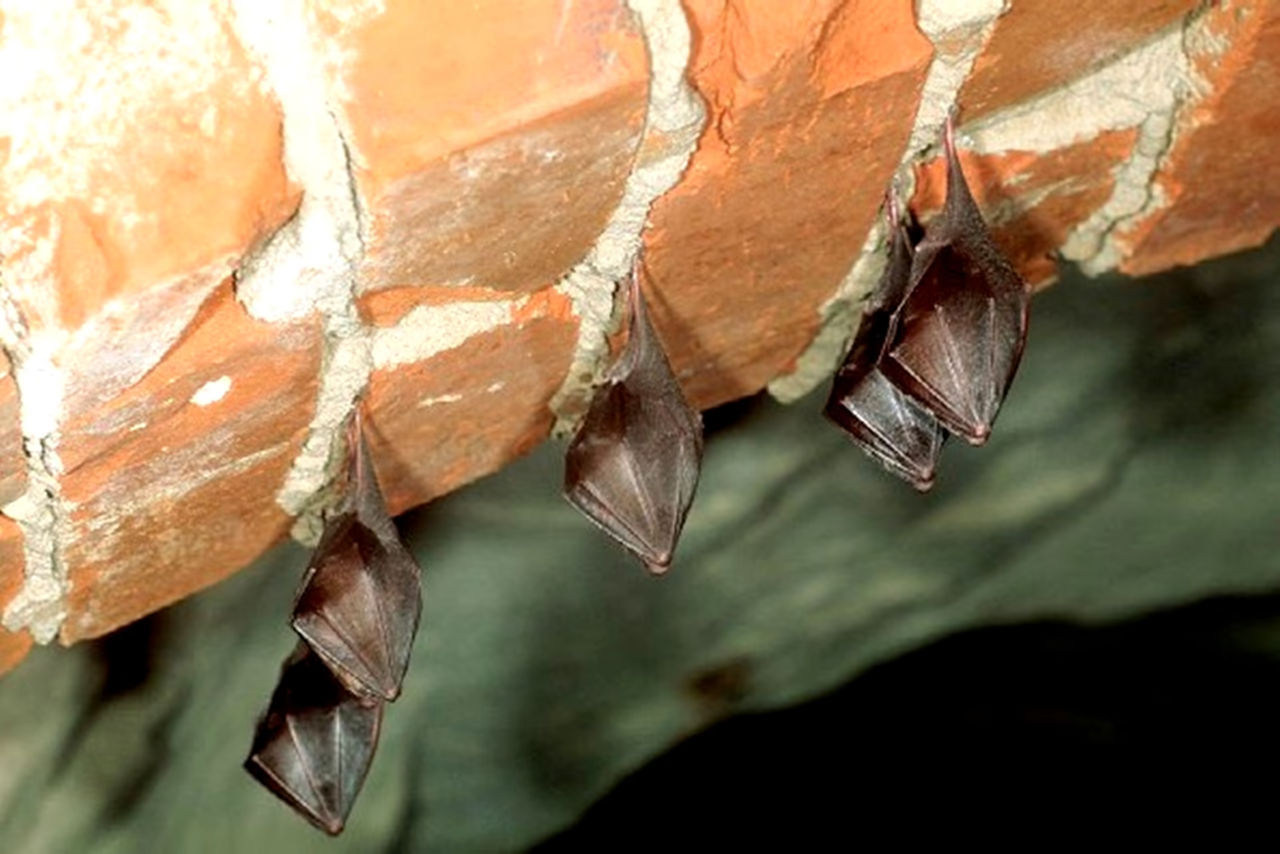
A lesser horseshoe bat hanging upside down, its body wrapped in its wings like a cloak, in an underground winter roost
Asleep, the lesser horseshoe bat wraps itself in its wings like a pear; switch the view for the unwrapped bat with its horseshoe-shaped nose-leaf. Illustrative photographs from other sites.Foto: Klaus Krahn, Wikimedia Commons, CC BY-SA 4.0, výřez

Lesser horseshoe bat

Rhinolophus hipposideros

The most numerous winter guest is the critically endangered lesser horseshoe bat – one of the rarest bats in the country. Where other species press into cracks for the winter, the horseshoe bat hangs freely by its feet and wraps itself completely in its broad wings, as if in a cloak.

Wrapped up and motionless like that, it looks rather like a hanging pear – an inconspicuous drop you would never take for a sleeping animal. Switch the view in the photograph and you will see it unwrapped: large ears and the horseshoe-shaped nose-leaf that gave the whole group its name.

A bat lives out the winter on its fat reserves and is reluctant to break its sleep. Every disturbance costs it energy it has no way of replacing in the frost – repeated waking can prove fatal. So nobody goes into the hibernation site.

Other bats that hibernate here

Almost all belong to the genus Myotis – small brown bats indistinguishable to the eye. What gives them away is a detail that vanishes in a photograph: a notch in the ear, the length of the ears, a fringe of bristles on the membrane, or sheer size. So each species below comes with the feature that identifies it.

  • Greater mouse-eared bat Myotis myotis

    The largest bat in the country and, after the horseshoe bat, the second most frequent sleeper in Cyrilka – size is the main clue.

  • Brown long-eared bat Plecotus auritus

    Ears almost as long as its body. For the winter it folds them like a concertina and tucks them under its wings – only the pointed tragi stick out.

  • Daubenton's bat Myotis daubentonii

    Hunts just above the surface of streams and ponds; it scoops up insects with its feet and tail membrane as well.

  • Natterer's bat Myotis nattereri

    The edge of its tail membrane carries a dense fringe of bristles – a brush for raking insects off leaves.

  • Geoffroy's bat Myotis emarginatus

    Known by the small notch on the edge of the ear that gave it its Czech name; its fur is reddish.

  • Whiskered bat Myotis mystacinus

    One of the smallest bats here, with a dark face and dark membranes.

  • Brandt's bat Myotis brandtii

    So like the whiskered bat that the two were long held to be one species; only a detail of the teeth separates them – bring a magnifier.

  • Bechstein's bat Myotis bechsteinii

    Large ears and exceptional rarity – a specialist of old broadleaved woodland.

Nine bat species have been recorded here over the years of monitoring. The number of hibernating animals varies from year to year.

Na závěr

Doplňující info a test znalostí

Rychlá rekapitulace

Is Cyrilka Cave open to the public?

No. A grille closes the entrance – you cannot go inside, the cave is closed to the public. You can only see it from outside, including the 360° tour on this page.

How do I get to the cave?

It is a few minutes' walk through the forest from Pustevny. No waymarked route leads there, only a trodden path.

How did Cyrilka Cave form?

It was opened up by cracks in a slope that is slowly sliding over soft claystones (deep-seated creep) – the typical pseudokarst of the Beskids, not karst carved out by water.

How long is Cyrilka Cave?

568 metres of passages (the last extension dates from 2022). It is the longest pseudokarst cave in the Beskids and the second longest in Czechia.

What hibernates in the cave?

Nine bat species, the most numerous being the critically endangered lesser horseshoe bat. A rare fly of the genus Crumomyia, adapted to life underground, also lives here all year.

Why should I keep quiet at the entrance?

Bats hibernate here from autumn to spring. Waking costs them fat reserves they cannot replace in the frost – so keep quiet at the entrance and do not shine lights inside.

Závěrečný kvíz

Otázka 1 z 4

What makes Cyrilka Cave exceptional?

RysíkRysík→

There is a quiz a little further up. Shall we try it?

A few quizzes and I get glasses, and I will feel properly educated.

Try the quiz

Your rank: Homebody. You do not have a single stamp yet. Visit any place and become a Pilgrim.

You can experience the Beskids and Moravian Wallachia with Rysík and without him. Rysík would love to be there for it. Whether you take him along and take on the challenges with him is up to you.

Save Cyrilka Cave to your favourite places

You can find your favourite places in your account. On the Walking routes page you can use them to filter routes.

Something not right here?

Suggest a more accurate wording.