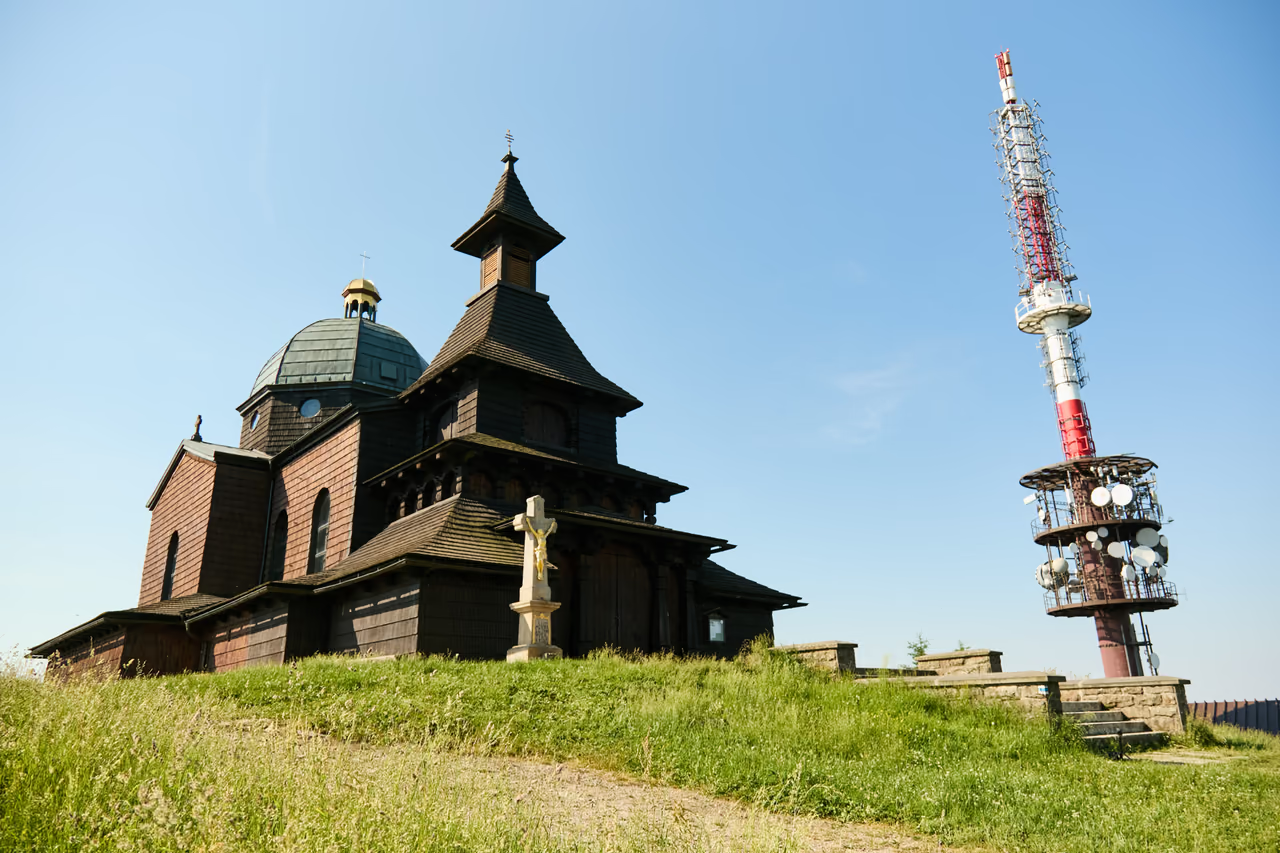
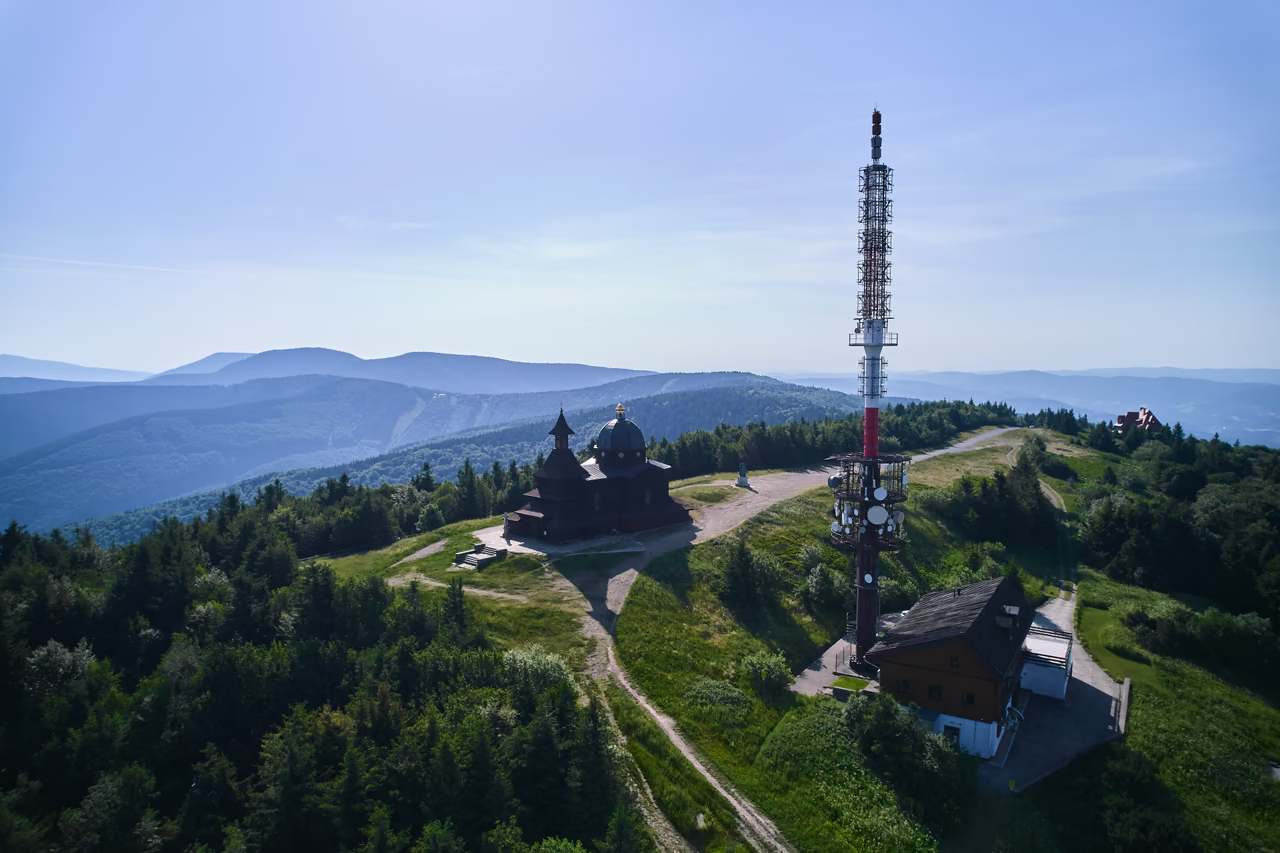
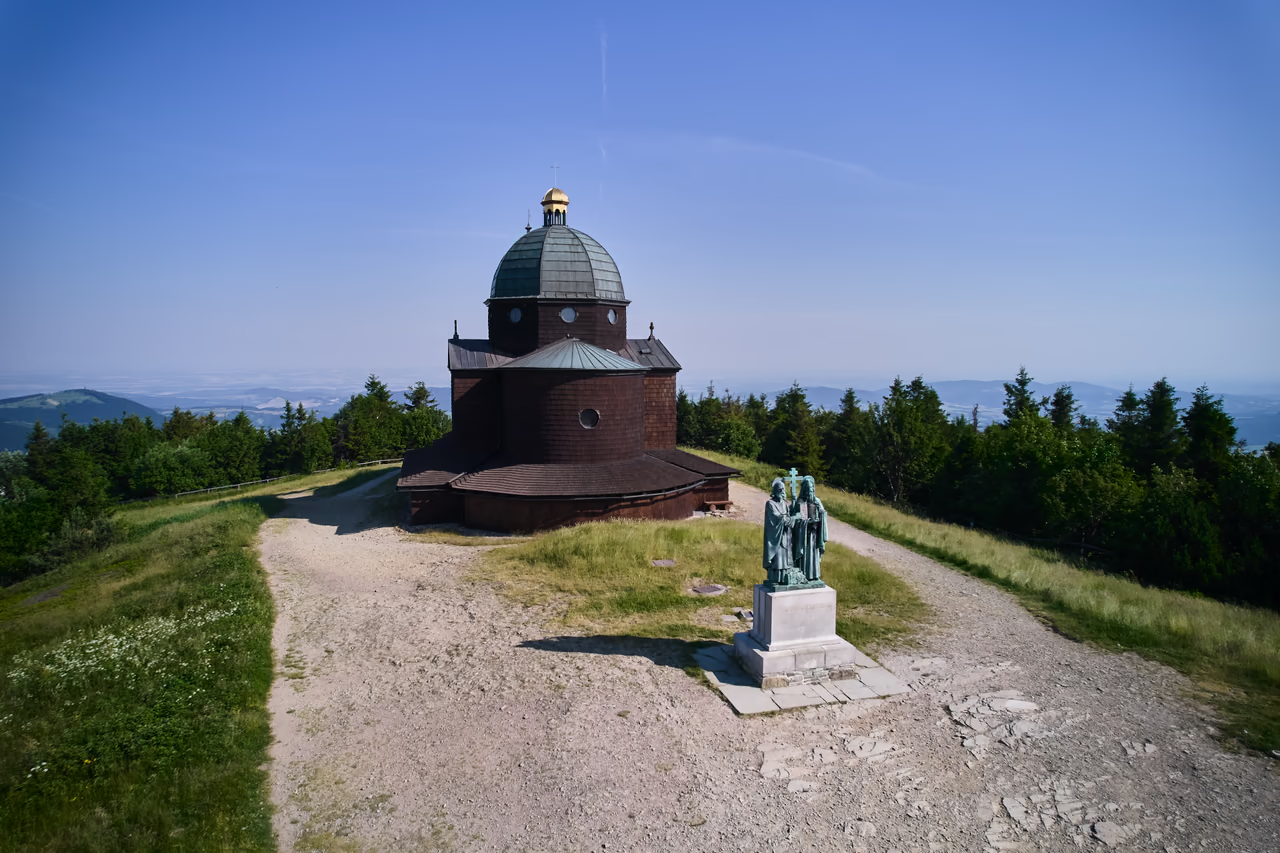
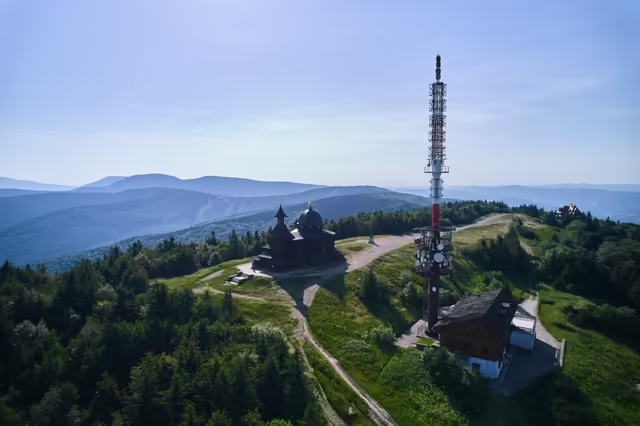
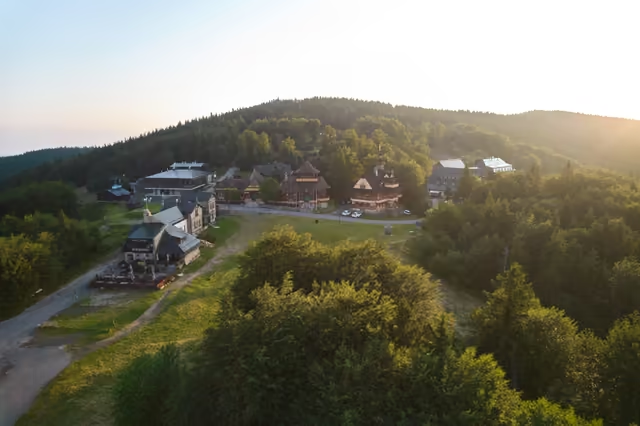
Aerial view of Radhošť's summit with the Chapel of Saints Cyril and Methodius and the transmitter

Moravia's highest pilgrimage site • 1,129 m a.s.l.

Radhošť and the Chapel of Saints Cyril and Methodius

A mountain linked by local legend to Radegast and the two missionaries.

Mountain, chapel, statues

Radhošť, a place of pilgrimage. Since 1898, the summit has been crowned by the highest church in Czechia – the shingle-clad Chapel of Saints Cyril and Methodius. Beside it stand statues of the two missionaries and a stone cross. A little further on, a television transmitter.Radhošť brings together pagan myth, pilgrimage and Wallachian stubbornness. Without that last ingredient, the mountain would have no chapel.

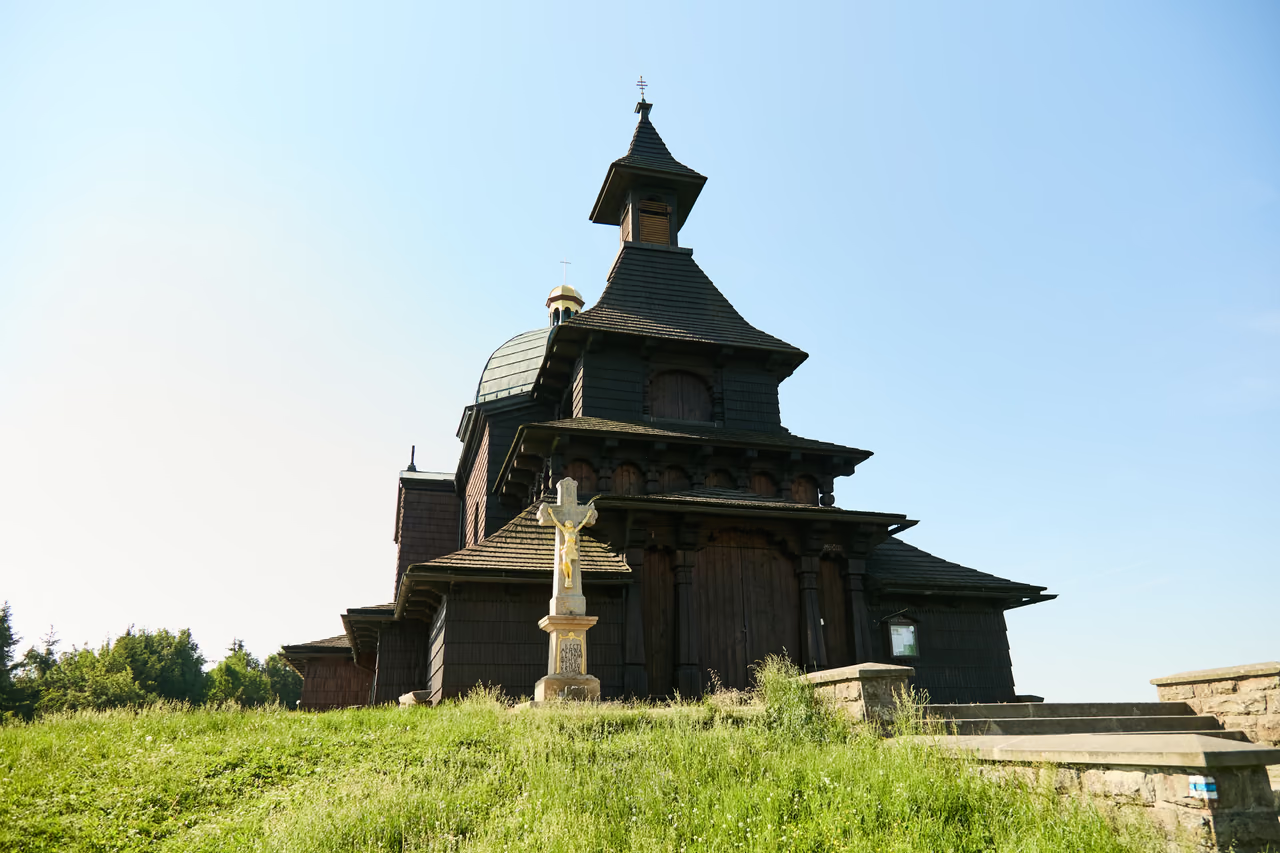
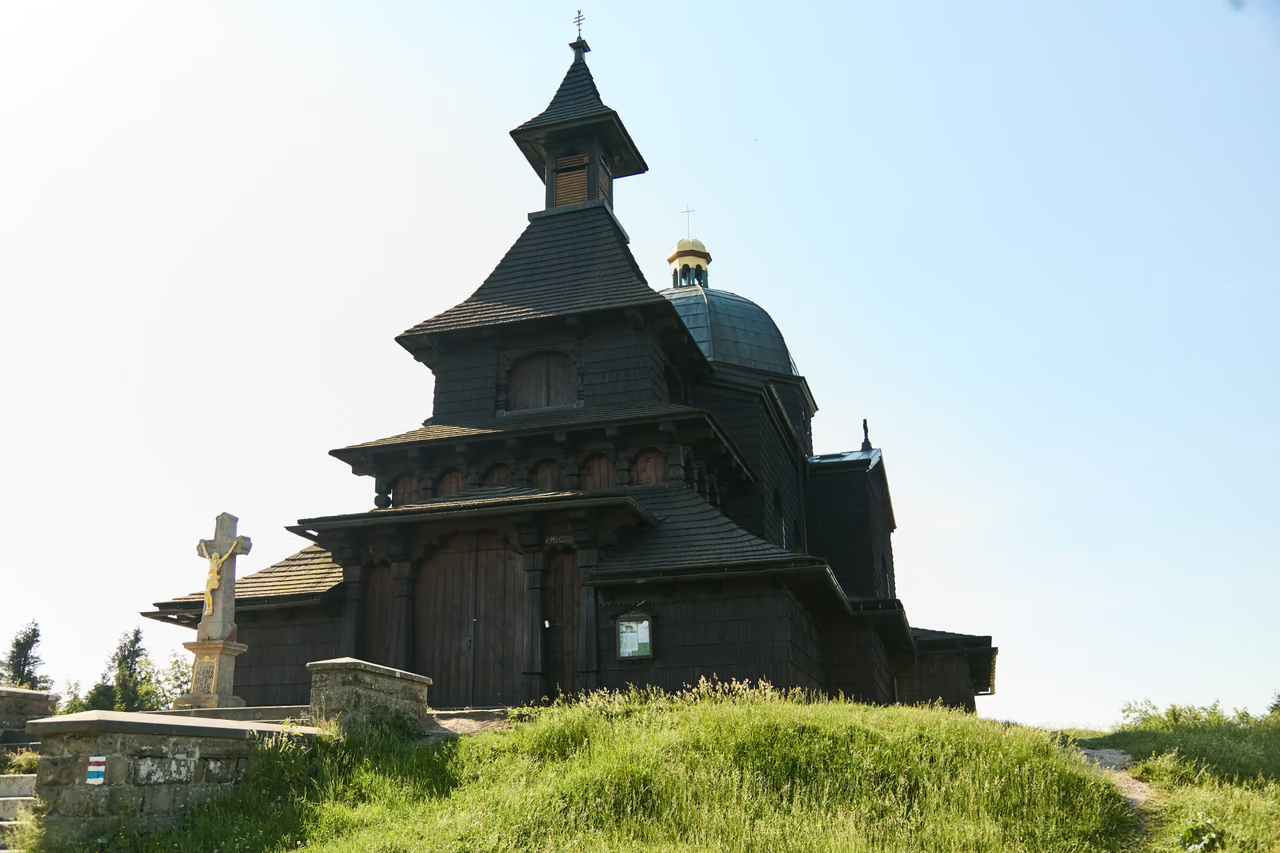
Side view of the Chapel of Saints Cyril and Methodius, with the transmitter and stone cross by the entrance
The shingle-clad chapel, bell tower and stone cross by the entrance – switch views

Why Radhošť

One story unites the mountain

The chapel, the two missionaries' statues and the Radegast statue on the ridge share a legend of Radegast and the missionaries. It gained momentum with the thousandth anniversary of Cyril and Methodius's arrival in Moravia and the fervour of the Czech National Revival.

When to go

All year; main pilgrimage on 5 July

You can walk the ridge all year. The chapel opens irregularly, depending on weather and volunteers (check with Matice Radhošťská). The busiest day is the Cyril and Methodius pilgrimage on 5 July.

What to see

Stained glass and bell tower views

Eight stained-glass windows depict scenes from the missionaries' lives and four patron saints. If the bell tower is open, climb to its second floor – above the treetops, you can see further than from the ridge.

Mount Radhošť

Views from the Beskids' westernmost thousand-metre peak

Radhošť and the Chapel of Saints Cyril and Methodius - View360°

360° view from Radhošť's summit – drag to look around the chapel and above the trees.

Radhošť's story

From a Baroque legend through thirty-six years of effort to a bell whose secret two men took to their graves.

Mountain and legend

Radegast came first

Legend makes Radhošť the home of Radegast, the Slavic pagan god of the sun, abundance and harvest. Cyril and Methodius are said to have come to topple his idol – on the very summit where the chapel stands today.

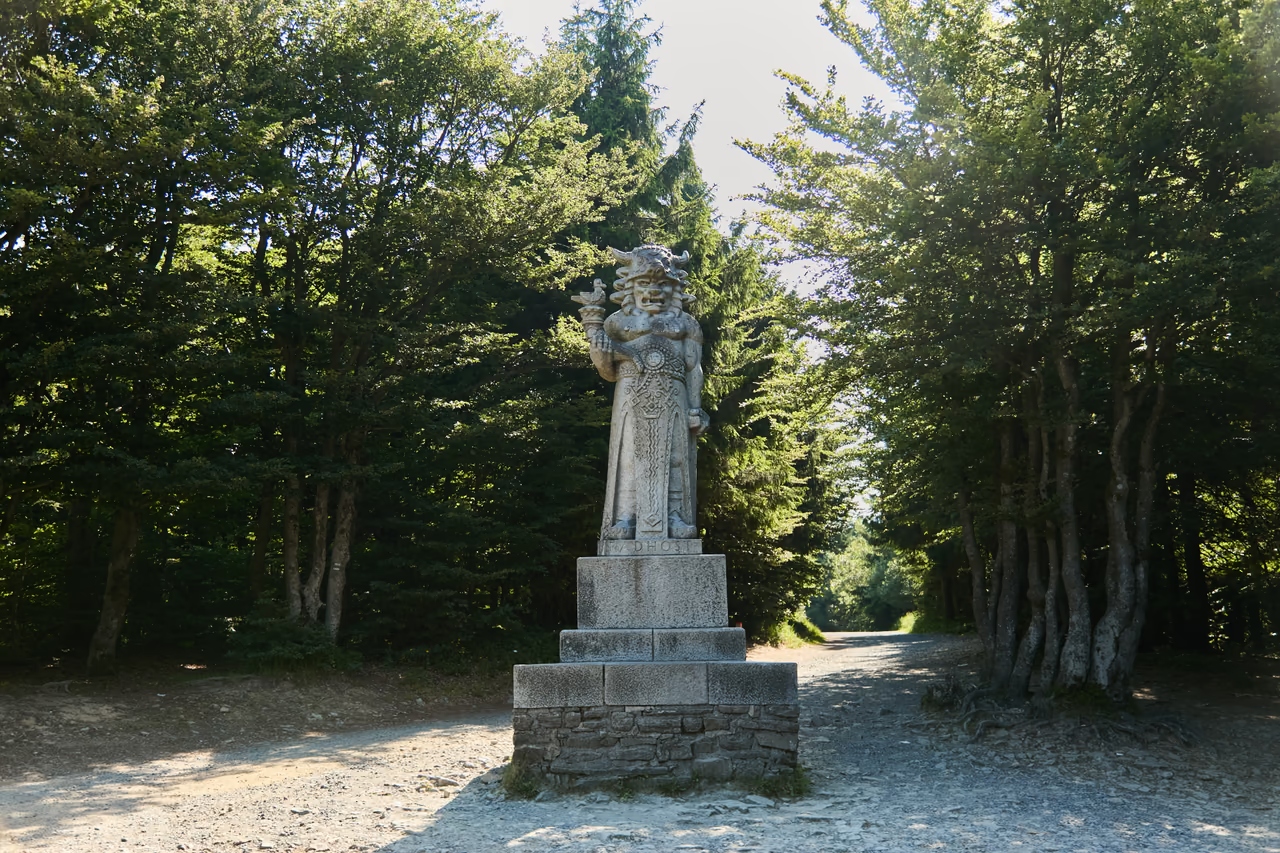
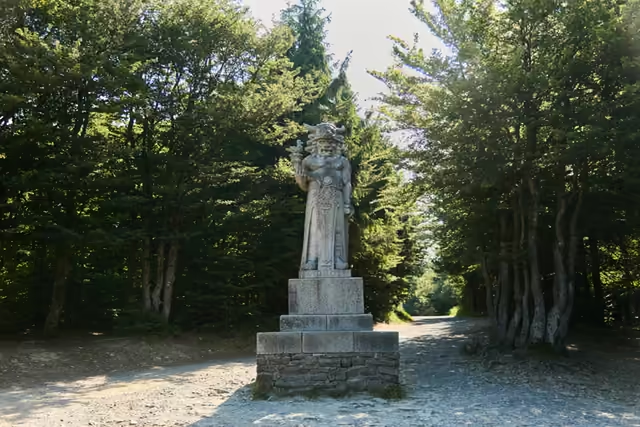
The legend was invented in 1710 by the historian Jan Jiří Středovský. It caught on, and later writers developed it further. It inspired both the chapel and Polášek's Radegast statue.

Read the legendabout 5 minutes' reading

In the old days, when prayers rather than maps guided people through the mountains, a golden Radegast is said to have stood on Radhošť's summit. The god of the sun, harvest and hospitality looked down from the region's highest point on valleys filled with hearth smoke. Mountain folk climbed to him with offerings: honey, grain, the first milk of spring. Around the idol burned a fire that must never go out. At the summer solstice there was dancing on the summit, and offerings were made to a white bull.

The mountain itself was said to be hollow. Beneath the pastures and beechwoods ran passages and halls where Radegast's priests guarded treasures gathered from all over Moravian Wallachia. There, in the darkness below the summit, they hid the golden idol when word of a new faith began to spread from Velehrad.

That news had two names: Cyril and Methodius. The brothers from Thessaloniki, who brought writing and the Word to Moravia, are said to have reached the foot of Radhošť. The story tells of a night spent beside a spring in the valley. When the morning mist lifted, they saw the golden idol gleaming on the summit in the sunlight. They climbed the path now walked by every pilgrim from Pustevny. People from the foothills joined them, curious to see who would face whom on the mountain.

At the summit, Methodius is said to have stood silent for a long time. Then he told the mountain folk that he would leave them their mountain, their fire and their songs. Only the idol would go: it took and gave nothing. Radegast's statue was thrown from the cliff. What happened next has two versions. In one, it rolled into the valley and still lies under moss in a ravine. In the other, the priests carried it underground in time and blocked the entrance. On the sacrificial site, the brothers then raised a cross – the first of many that stood on the summit over the centuries before today's chapel was built.

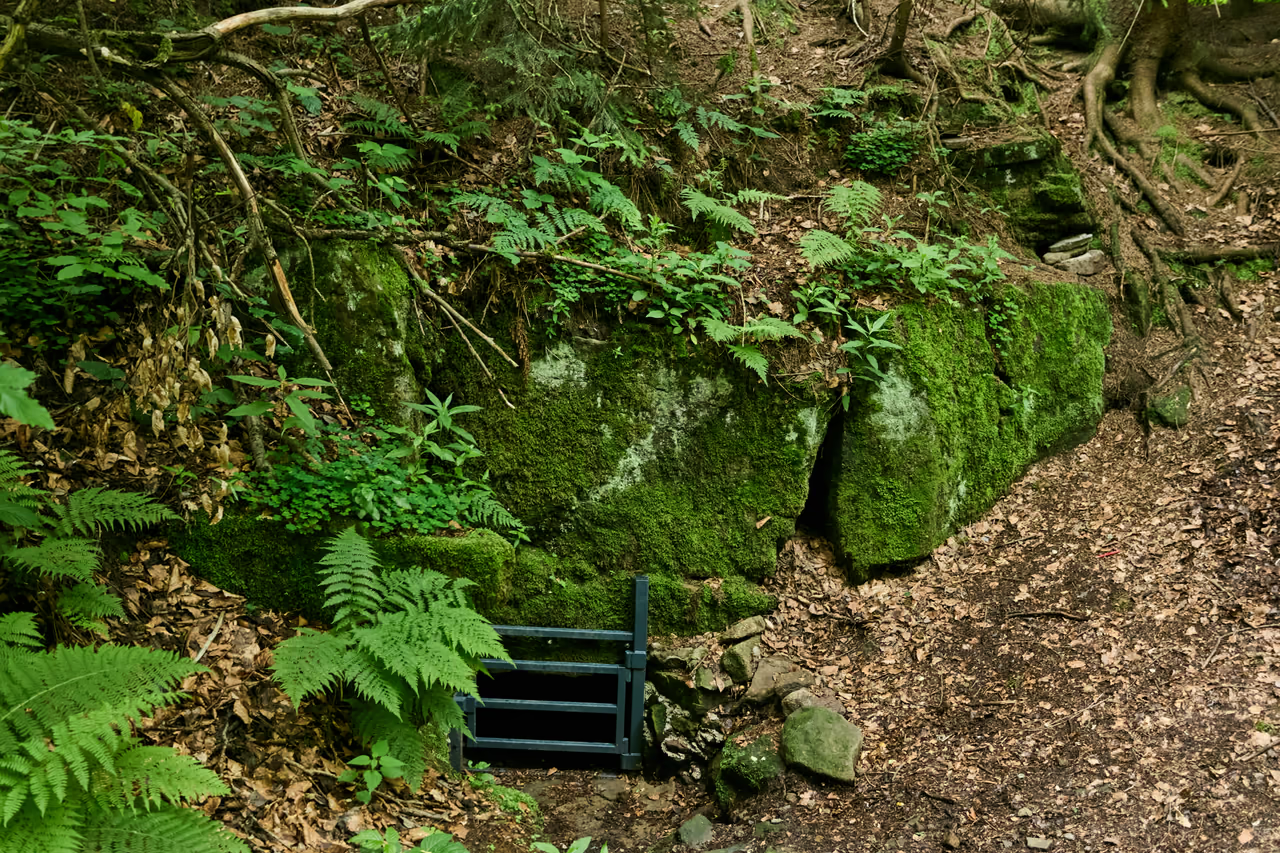
Radegast, as so often with old gods, never quite left. He is said to dwell in the underground halls, guarding the treasure left there with him. Only the mountain knows the entrances to his realm: sometimes they open in Cyrilka, the long fissure cave just below the ridge; sometimes in Volářka beneath the summit. Shepherds told of holes where a dropped stone kept falling and falling, without ever seeming to reach the bottom. In great storms, they said, the mountain rumbled as though something heavy had rolled over in its depths.

This much is known about the treasure: it opens once a year, on Good Friday, when the Passion – the biblical account of Christ's suffering and death – is read in churches. Anyone who finds the entrance then may take handfuls, but must neither speak nor look back. There is a tale of a farmer from Bečva who found the gold. At the exit he remembered the cap he had left inside. He looked back, and the rock closed. For the rest of his life he returned to the mountain every Good Friday, waiting for it to open again. It never did.

When the chapel was consecrated on the summit in 1898, old people from Trojanovice are said to have declared the mountain finally at peace. Above, a cross and a bell; below, in the darkness, the old god. Between them, the ridge that people still climb today, drawn by one or the other. The mountain, it seems, has room for both.

Jan Jiří Středovský first recorded this Baroque legend. Many later versions circulate; it is no historical source.

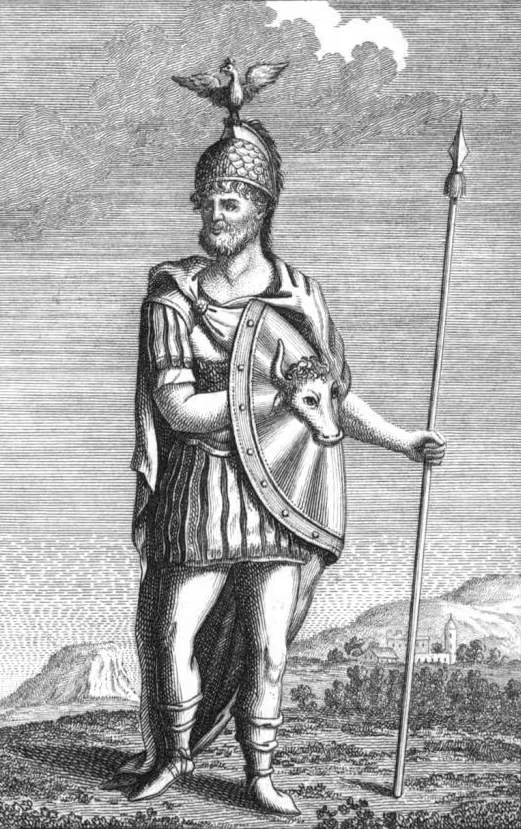
Engraving of Radegast from A. S. Kajsarov's book Slovanská a ruská mytologie, 1804
Engraving: A. S. Kajsarov, 1804, Wikimedia Commons, public domain

Building the chapel

36 years from idea to chapel

In 1862, Radhošť hosted a patriotic pilgrimage rally as the thousandth anniversary of Cyril and Methodius's arrival in Moravia approached. The first proposal for a summit memorial – the future chapel – was voiced there. An initial collection raised 120 gulden, then fundraising fell silent for years.

It resumed only in 1881. On Hynek Fialka's proposal, the Občanská beseda civic society in Frenštát voted to build a chapel on the summit and appointed a building committee to take over preparations. Another decisive boost came from Adolf Liebscher's triptych Valašská madona (Wallachian Madonna). It drew crowds to its own pavilion at Prague's 1895 Czechoslavic Ethnographic Exhibition. Liebscher then sold it to the committee well below its value and a touring exhibition across Bohemia and Moravia built on its Prague success, raising another 6,000 gulden, almost a third of the total cost.

Archbishop Theodor Kohn donated the land on the Trojanovice side; Count Rudolf Kinský gave the land on the Dolní Bečva side. The chapel was deliberately built across the boundary of two cadastral areas – half on the Rožnov side, half on the Frenštát side. The main European watershed between the Baltic and Black Sea drainage basins runs through its centre, as does the boundary between the Zlín and Moravian-Silesian regions.

For comparison: around 1900, a cow cost roughly 200–250 gulden.

Bird's-eye view of the Chapel of Saints Cyril and Methodius and the missionaries' statues on Radhošť's summit
The summit chapel today – on land donated by two estates, right on their boundary.

The building changes

Why a stone chapel wears wood

In 1905, the building committee became the volunteer association Matice Radhošťská. It still maintains and runs the chapel, apart from an enforced break between 1951 and 1994, when the association was dissolved.

Architect Felix Skibiňský's building was originally white and rendered, with a Byzantine-style dome. Mountain weather soaked the masonry, so in 1924–1926 the chapel was clad in treated wooden shingles and a wooden bell tower with a shingle roof was added. That transformed the “stone Byzantium” into the building we know today.

The wooden bell tower was restored at the turn of the millennium. Carpenters used old techniques: the carved columns and hand-hewn beams match the originals down to the details. Local people donated timber from their own forests. On one beam, the carpenters carved “Valaši sobě” – “Wallachians for themselves”.

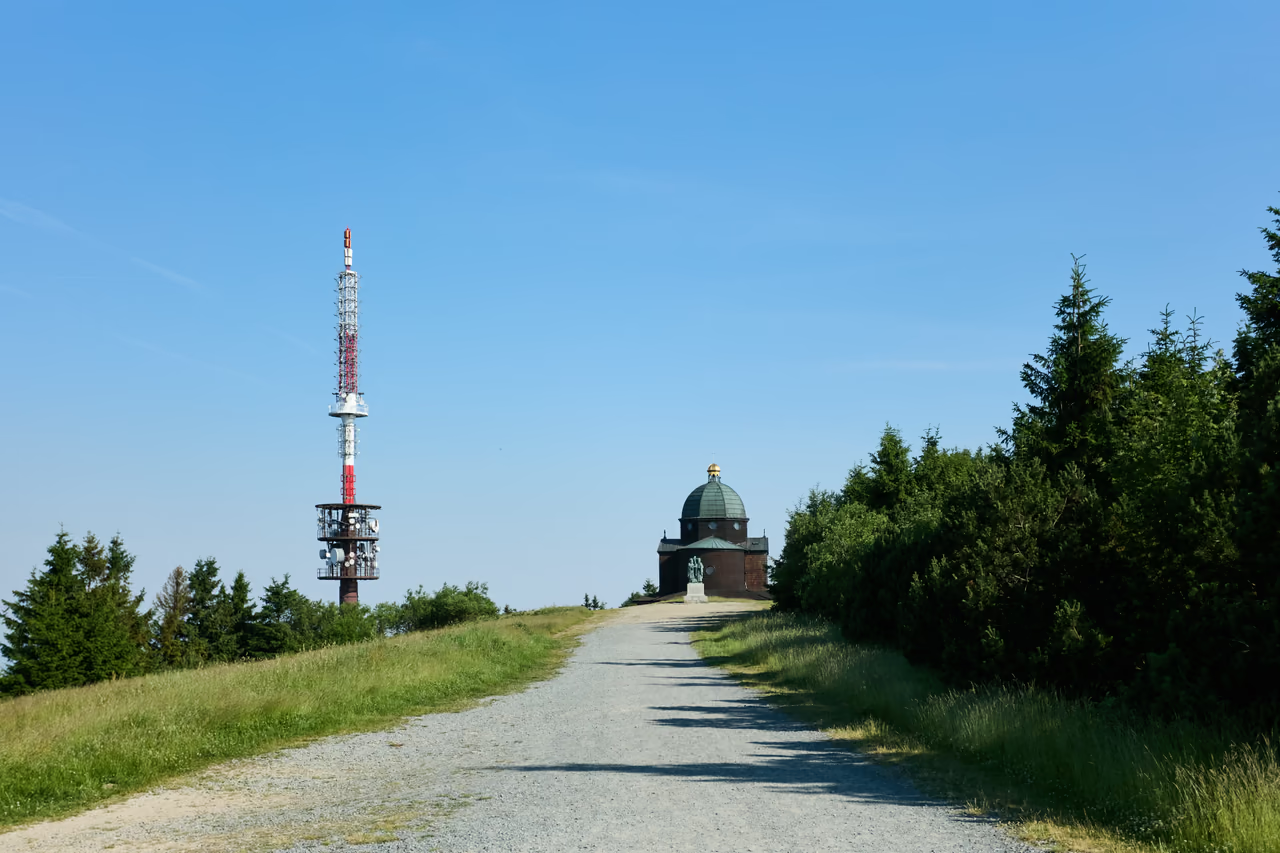
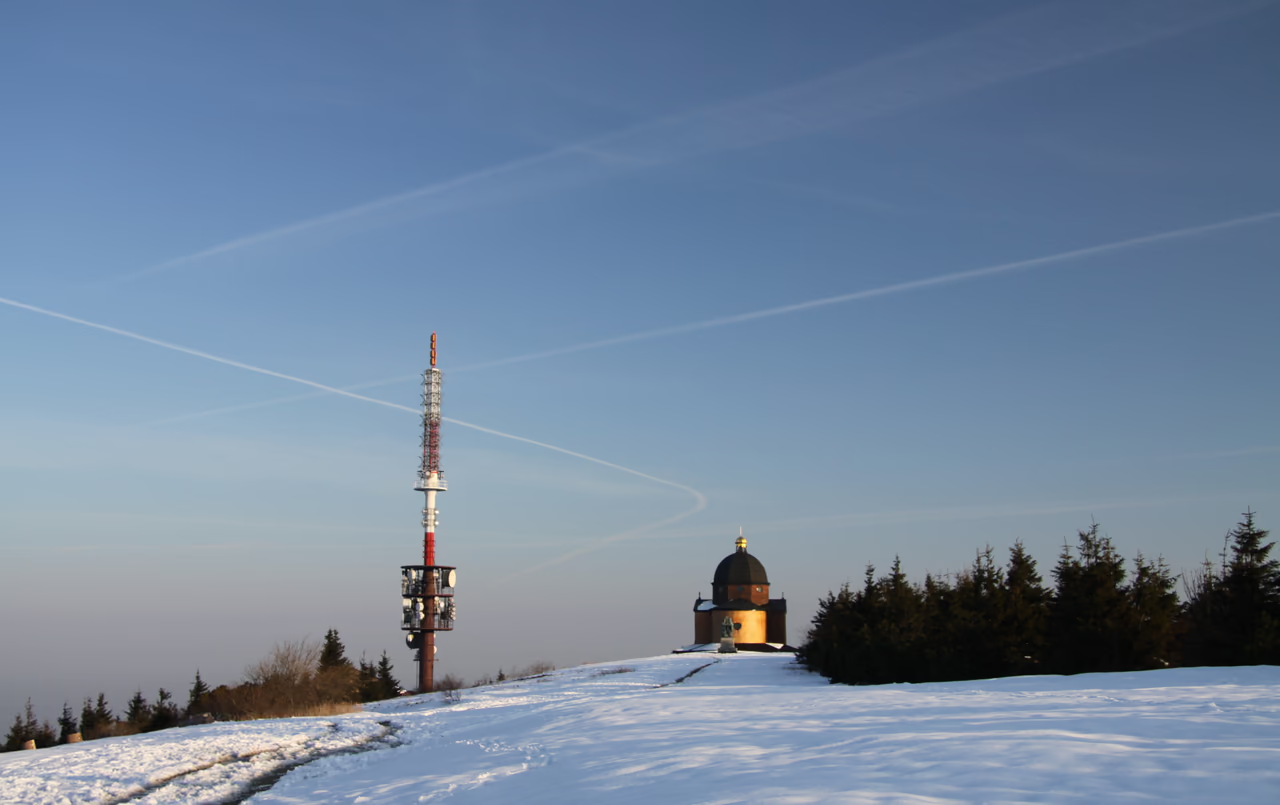
The Chapel of Saints Cyril and Methodius and transmitter seen from the approach path in summerThe shingle-clad Chapel of Saints Cyril and Methodius with its bell towerWinter 2011Summer 2026
The chapel and transmitter seen from the approach path – drag to switch between summer and winter. The shingles' protective treatment gives the wood a recurring colour cycle: a fresh coat darkens it, then rain and sun gradually wash it out until the next treatment.Photo winter 2011: Valtameri, Wikimedia Commons, CC BY 3.0, cropped

The bell

It survived two wars, and no one knows how

The bell is older than the chapel. Frenštát industrialist Josef Calasanz Bumbala and his wife Josefa commissioned it in 1896 – two years before the chapel's consecration. It was placed in a small open bellcote above the front of the original stone building. Only during the 1924–1926 alterations was it moved to today's wooden bell tower. Alongside the missionaries, it is dedicated to Saint Joseph Calasanz, founder of the Piarist schools and the donor's baptismal patron.

One mystery surrounds the bell: how it survived both world wars. Wartime requisitions sent bells from far grander churches to be melted down. Radhošť's bell still rings today. How it was saved twice went to the grave with the association's chairmen at the time: Emil Kostelník and Dean Medard Horák.

The Chapel of Saints Cyril and Methodius with the shingle-clad tower housing the bell
The bell hangs in the tower added in 1924–1926.

Carved into a bell tower beam

“Valaši sobě” – “Wallachians for themselves”

The bell tower needed restoration at the turn of the millennium. Local people donated timber from their own forests, continuing the tradition of gifts and collections that had funded the chapel a century earlier.

Foto: Jiri Roznovjak, Wikimedia Commons, CC BY-SA 3.0, výřez

Stone cross

The summit's oldest witness

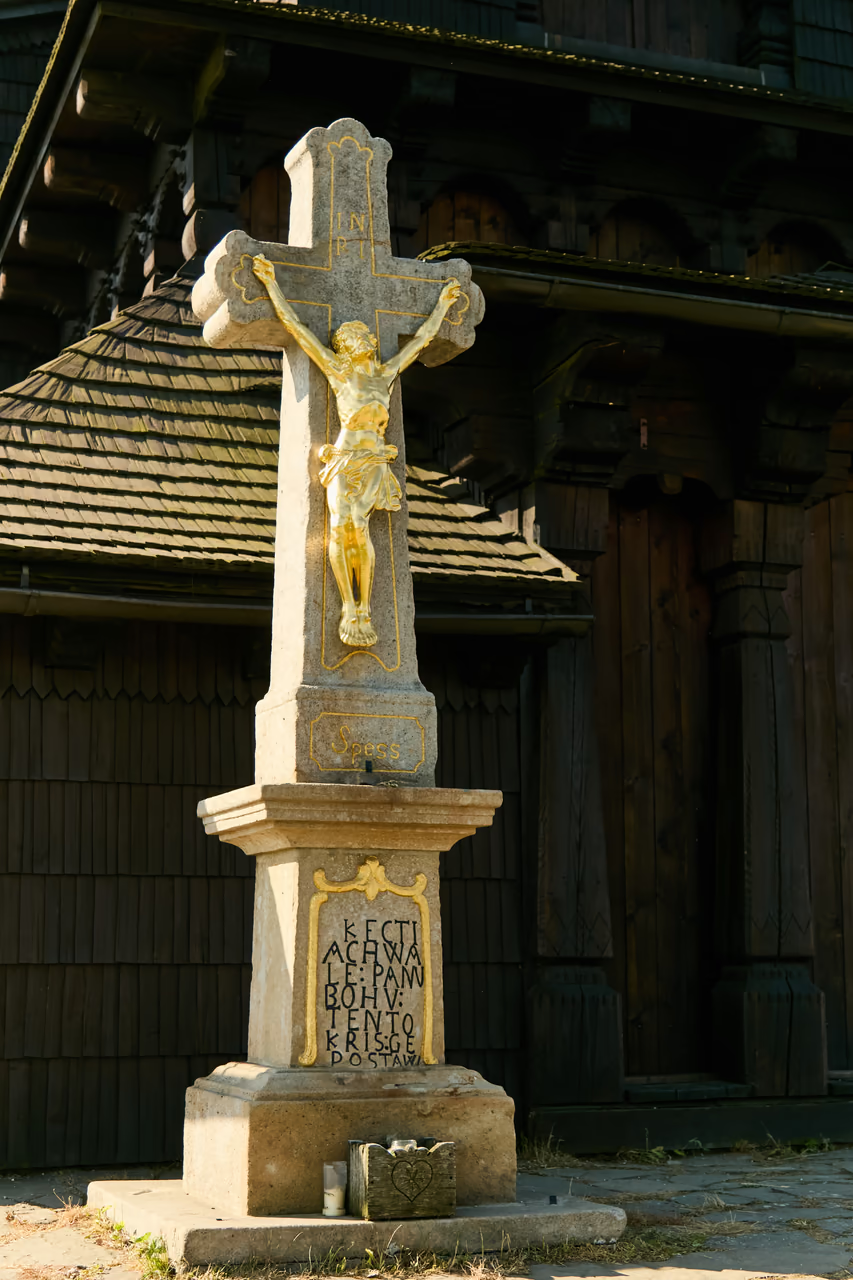
The oldest object on the summit is the stone cross. Rožnov townsman Michal Janík commissioned it in 1805 to replace an older wooden one. A succession of crosses had stood on the same spot since 1735. Janík's was the last, remaining there for over a century. Svatopluk Čech, who visited Radhošť in 1881, also mentioned it in Vzpomínky z cest a života (Memories of Travel and Life).

In 1930, Polášek's bronze statues took the cross's place. The cross was moved in front of the chapel entrance and it still stands there. The inscription on its base is carved into the stone and picked out in paint.

Michal Janík's stone cross from 1805, with a gilded Christ, by the chapel entrance

Statues of the missionaries

A gift from a sculptor who found fame in America

Born in Frenštát, Albín Polášek began poor and unknown. In America, he became one of the most respected sculptors of his day. As a professor, he headed the sculpture department at Chicago's Art Institute; his monuments still stand in American cities.

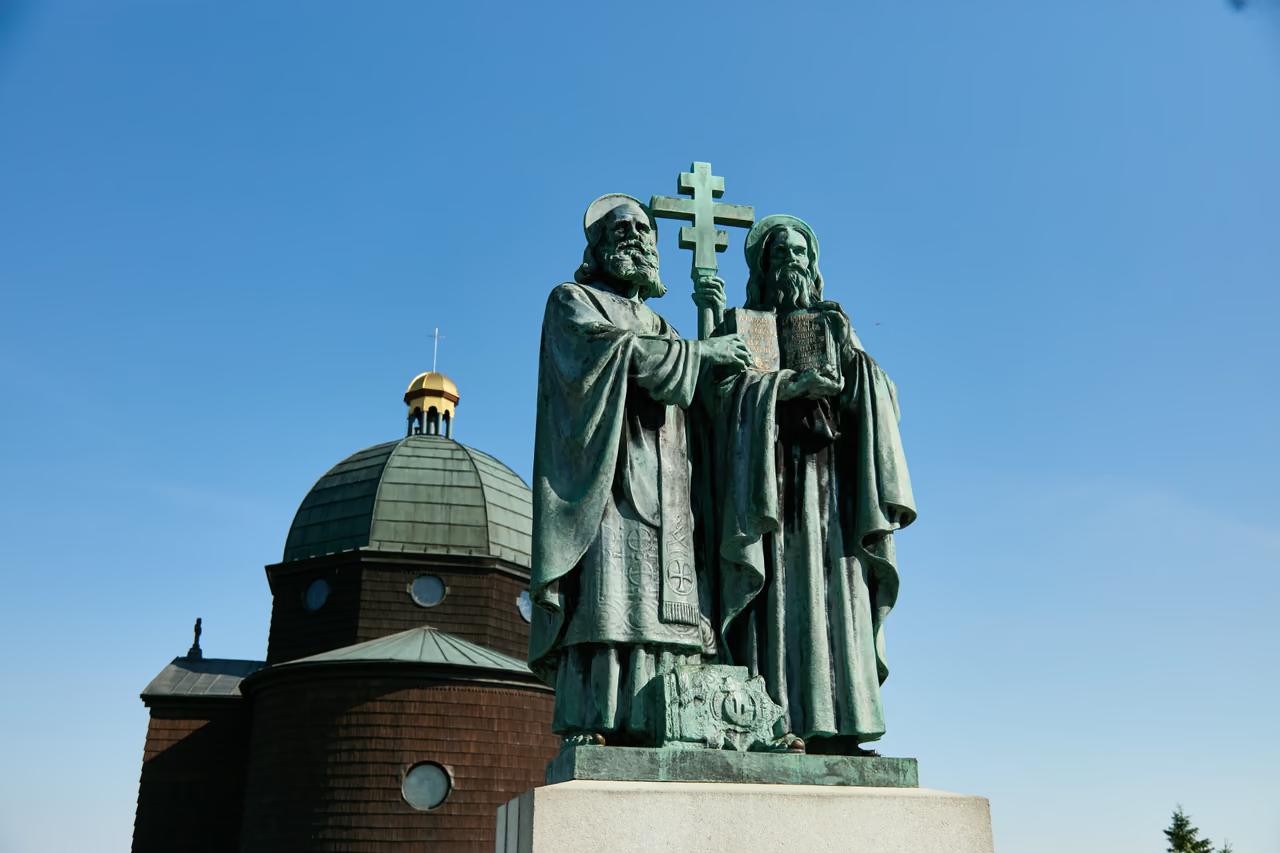
In 1930, he gave Matice Radhošťská bronze statues of the two missionaries, expressly “for Mount Radhošť alone, in everlasting remembrance for all generations to come”. A few years earlier, he had made the original marble statues for the cathedral in Saint Paul, USA, where they still stand. He had the bronze replica, cast in Czechoslovakia, sent to Radhošť together with his Radegast statue, a gift to the Pohorská jednota Radhošť mountain association. Both works were unveiled at the Slavic pilgrimage on 5 July 1931.

Cyril holds an open book with an extended passage from the opening of John's Gospel, written in a mixture of Glagolitic and Cyrillic scripts. Methodius raises a Byzantine cross with three crossbars. The sinewy hands are deliberate: Polášek modelled them as the hands of working men.

“In the beginning was the Word, and the Word was with God, and the Word was God. He was with God in the beginning. All things came into being through him, and without him nothing came into being that exists. In him was life.”the opening of John's Gospel, written in a mixture of Glagolitic and Cyrillic scripts

Polášek returned home almost every year and hoped to settle there in old age. After the communist coup in 1948, he never returned to his homeland. He died on 19 May 1965 in Winter Park, Florida.

statues' height
2.60 m
hollow bronze casting
800 kg
granite pedestal
1.60 m
Albín Polášek's bronze statues of Saints Cyril and Methodius in front of the chapel
The statues stand where Janík's 1805 cross once stood – switch to a detail of the book's Glagolitic and Cyrillic text

Television transmitter

The signal Rožnov waited decades for

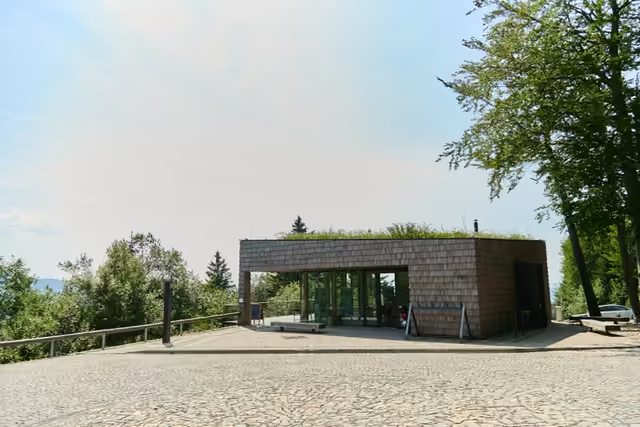
Television screens had been assembled since the 1950s at the state-owned Tesla Rožnov plant in Rožnov pod Radhoštěm. Yet the region lacked a good television signal: the aerial on nearby Hradisko (522 m a.s.l.) could not provide clear reception. The solution was a transmitter on Radhošť itself. It was built near the chapel in September 1966, replacing a mountain shelter older than the chapel. Among its uses, the shelter had been where visitors borrowed the chapel key. The first transmitter's concrete base, with the year carved into it, still lies there.

The first transmitter, built in 1966, was temporary. In 1985, it was replaced by more powerful equipment for television, radio and the telephone links of the time. In 1997, the mast was extended by 22 metres to its present 59.3 m. Its top now reaches 1,177.8 m above sea level, almost 49 metres above the mountain's summit. The transmitter forms the summit's second distinctive silhouette.

Aerial view of Radhošť's summit with the chapel, statues and television transmitter
Timeline

The whole story in dates

  1. Radegast and the crosses1710–1862

    1. 1710

      The Radhošť legend is born

      Historian Jan Jiří Středovský invents a story of the pagan Radegast and Cyril and Methodius's arrival on Radhošť. The legend catches on, takes root and later inspires the chapel and Radegast statue.

    2. 1735

      The first summit cross

      A wooden cross stands on Radhošť's summit – the first Christian symbol on a mountain associated with the pagan Radegast.

    3. 1805

      Michal Janík's stone cross

      Rožnov townsman Michal Janík has the wooden cross replaced with a stone one. Toppled in a storm in 1808, it is raised again and remains on the summit for over a century.

    4. 1862

      Patriotic celebration and first collection: 120 gulden

      A patriotic pilgrimage rally ahead of the thousandth anniversary of the missionaries' arrival in Moravia first raises the idea of a memorial in public. The first 120 gulden towards construction are collected at the celebration. Building it is still a long way off.

  2. Towards a chapel1881–1895

    1. 1881

      Hynek Fialka's proposal

      Hynek Fialka proposes a summit chapel at Frenštát's Občanská beseda civic society. The society votes in favour, turning an earlier general idea into a building plan. A new collection raises 500 gulden; the estimated cost is 10,000.

    2. 1888

      Count Kinský donates land

      Rudolf Kinský of the Rožnov estate donates building land in the Dolní Bečva cadastral area and masonry. Archbishop Theodor Kohn later adds land in the Trojanovice cadastral area. The chapel is deliberately planned half on the Rožnov side, half on the Frenštát side.

    3. 1889–1895

      Emil Kostelník takes the chair

      Frenštát industrialist Emil Kostelník takes over the building committee. It organises collections and prepares for construction; 8,000 gulden have been raised by this point.

    4. 1895

      Valašská madona helps fund the chapel

      Adolf Liebscher's triptych Valašská madona draws crowds to its own pavilion at Prague's Czechoslavic Ethnographic Exhibition. He then sells it to the committee well below its value: 800 gulden instead of 4,000. A touring exhibition across Bohemia and Moravia builds on its Prague success, raising another 6,000 gulden.

  3. Building the chapel1896–1898

    1. 5 July 1896

      The foundation stone

      The foundation stone is blessed on the missionaries' feast day. Kroměříž architect Felix Skibiňský designs the stone chapel in Romanesque-Byzantine style, reflecting the brothers' Byzantine origins.

    2. 1896

      A bell older than the chapel

      Frenštát industrialist Josef Calasanz Bumbala and his wife Josefa commission a bell, two years before the building is finished. The same bell still rings from the mountain.

    3. 11 September 1898

      Consecration

      The chapel is complete, at a cost of 20,000 gulden. Theodor Kohn, Archbishop of Olomouc, consecrates it and opens it to the public. Around 1900, a cow cost roughly 200–250 gulden: the chapel cost the equivalent of 80–100 cows.

  4. The chapel changes1904–1931

    1. 1904

      A side altar for the Madonna

      A right-hand side altar is added for Liebscher's Valašská madona. The main marble altar is the work of sculptor Neumann from Kroměříž.

    2. 1905

      Matice Radhošťská is founded

      The volunteer association succeeds the building committee, maintaining and running the chapel and fostering devotion to Cyril and Methodius. Apart from an enforced break, it continues to this day.

    3. 1924–1926

      Shingles and a bell tower

      Damp penetrates the white stone chapel. It is clad in treated wooden shingles, and a wooden bell tower is added. The chapel takes on its familiar appearance.

    4. 1930–1931

      Polášek's statues

      Frenštát-born Albín Polášek, a sculptor living in the USA, gives the association bronze statues of the two missionaries. They are erected where Janík's cross stood. The cross moves to the chapel entrance.

  5. Modern restoration1951–2009

    1. 1951

      The association is dissolved

      The communist regime dissolves the association. In the following decades, local volunteers care for the chapel outside its former structure.

    2. 1994

      The association returns

      Local enthusiasts revive the association. Among them is self-taught painter František Gajdušek, who painted several modern works in the chapel.

    3. 1995–2009

      Major restoration

      New wiring, a full overhaul and restoration of the bell tower (2000–2003). Carpenters carve “Valaši sobě” – “Wallachians for themselves” into a beam. A Carrara marble altar table is added and the stained-glass windows are restored.

  6. Television transmitter1966–1997

    1. 1966

      A transmitter beside the chapel

      The aerial on nearby Hradisko cannot provide a good signal, so a transmitter is built on Radhošť. A mountain hikers' shelter older than the chapel makes way for it.

    2. 1985

      A more powerful replacement

      The temporary transmitter is replaced by more powerful equipment for television, radio and the telephone links of the time.

    3. 1997

      Further reconstruction

      The transmitter undergoes another technical overhaul. Beside the chapel, it remains the summit's second distinctive silhouette.

Interior and gallery

Inside the chapel, down to the details

Stained glass

Eight windows, three themes

Eight windows feature paintings on glass: two scenes from the lives of Cyril and Methodius, four patron saints and two written prayers with a patriotic message rooted in the Czech National Revival.

Altars

Ferdinand Neumann's altar and the altar table

Sculptor Neumann from Kroměříž carved the main altar when the chapel was built. A century later, during the major restoration, the association commissioned the Carrara marble altar table in front of it.

Valašská madona

The painting that helped build the chapel

A copy of Liebscher's triptych by Otakar Pavlovský hangs on the side altar. The original, whose touring exhibition raised substantial funds for construction, is in Saint Martin's Church in Frenštát.

Interiér kaple sv. Cyrila a Metoděje360°

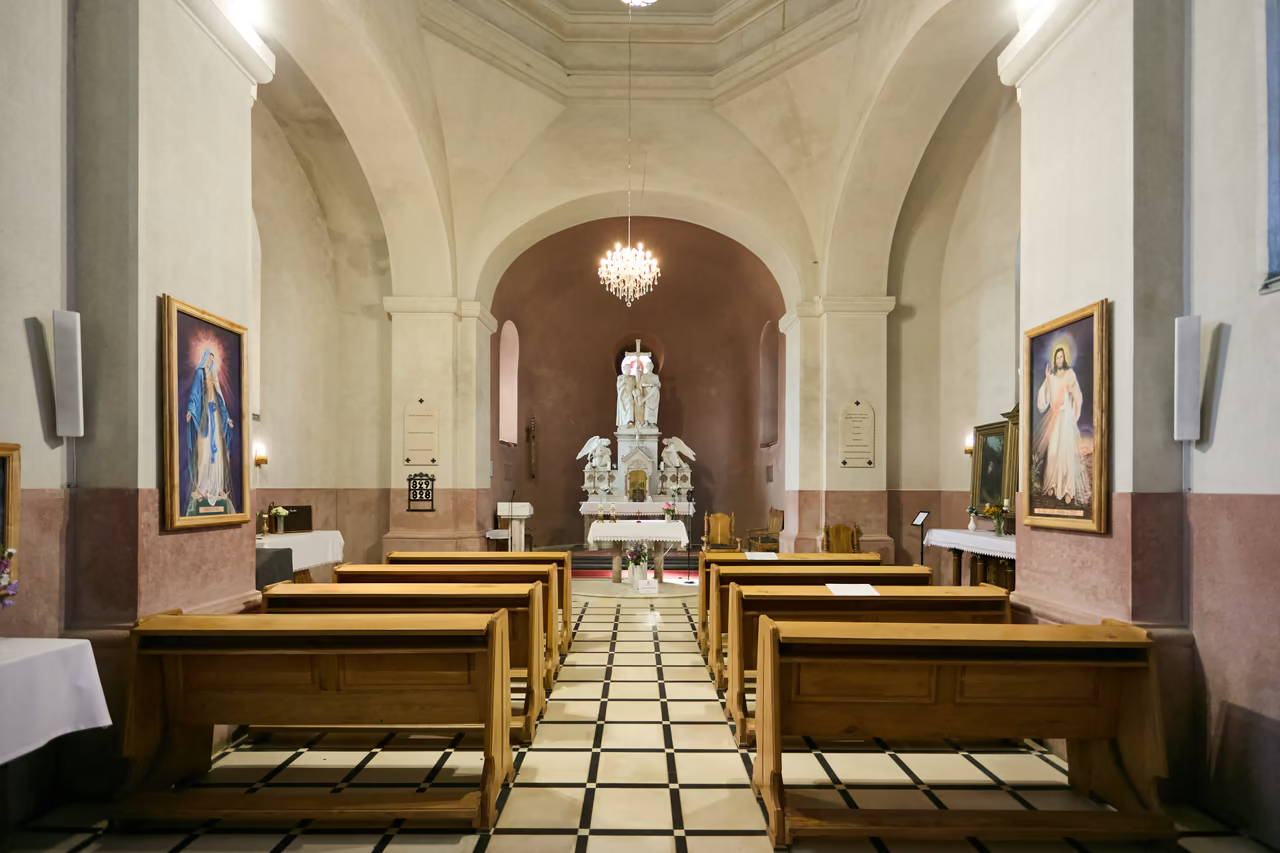
The chancel with Ferdinand Neumann's original altar from 1898: two kneeling angels adore the tabernacle. A modern Carrara marble altar table stands in front, with light shining through stained-glass windows on either side.

View along the chapel nave towards the altar – black-grid floor tiles, a barrel vault and paintings on the sides
The chapel nave: the altar and stained-glass windows date from 1898; the plasterwork and tiles from the 1924–1926 alterations. The modern paintings on the sides are by František Gajdušek, who helped revive Matice Radhošťská in 1994.
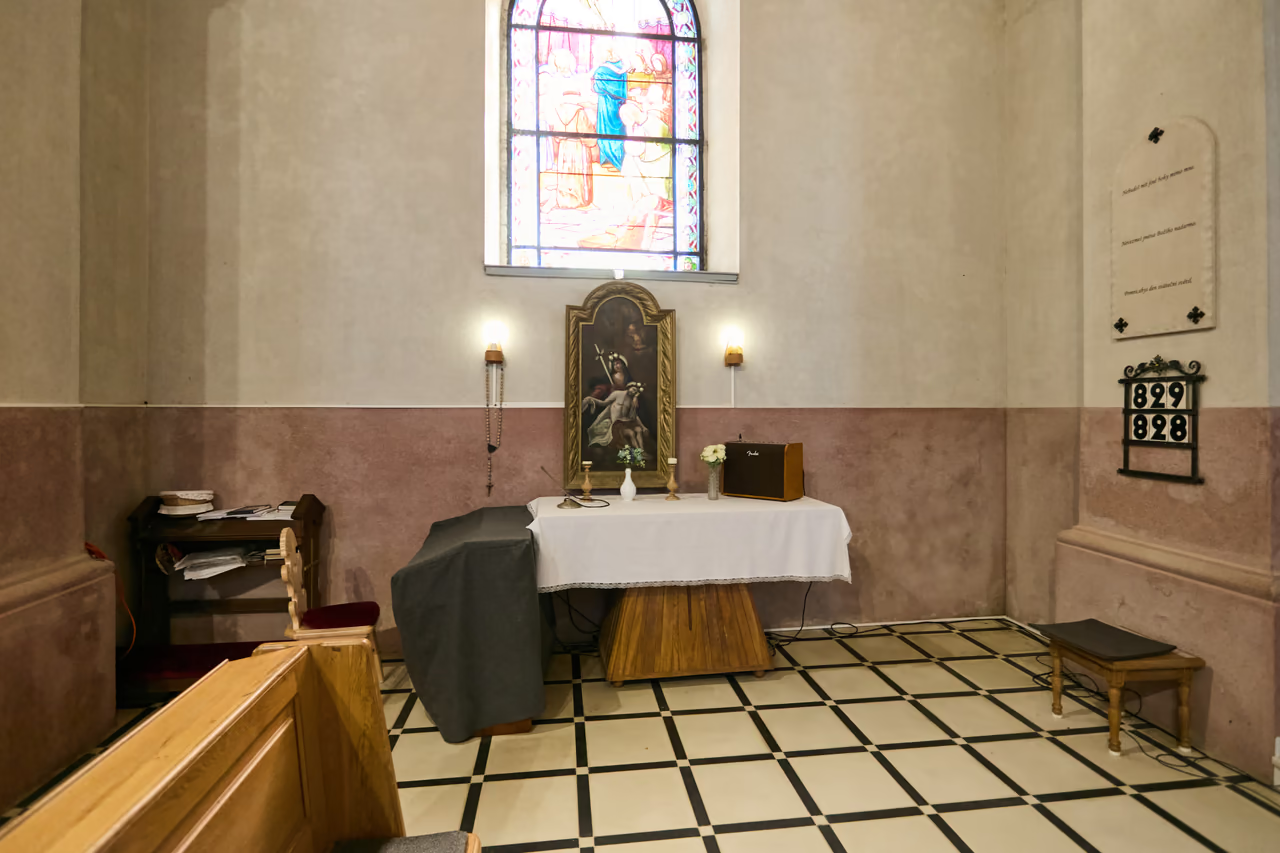
Side altar with a painting of Our Lady of Sorrows and a stained-glass scene of Saint Cyril's death in Rome
Side altar with a Pietà, or Our Lady of Sorrows; the window above depicts Saint Cyril's death in Rome on 14 February 869.
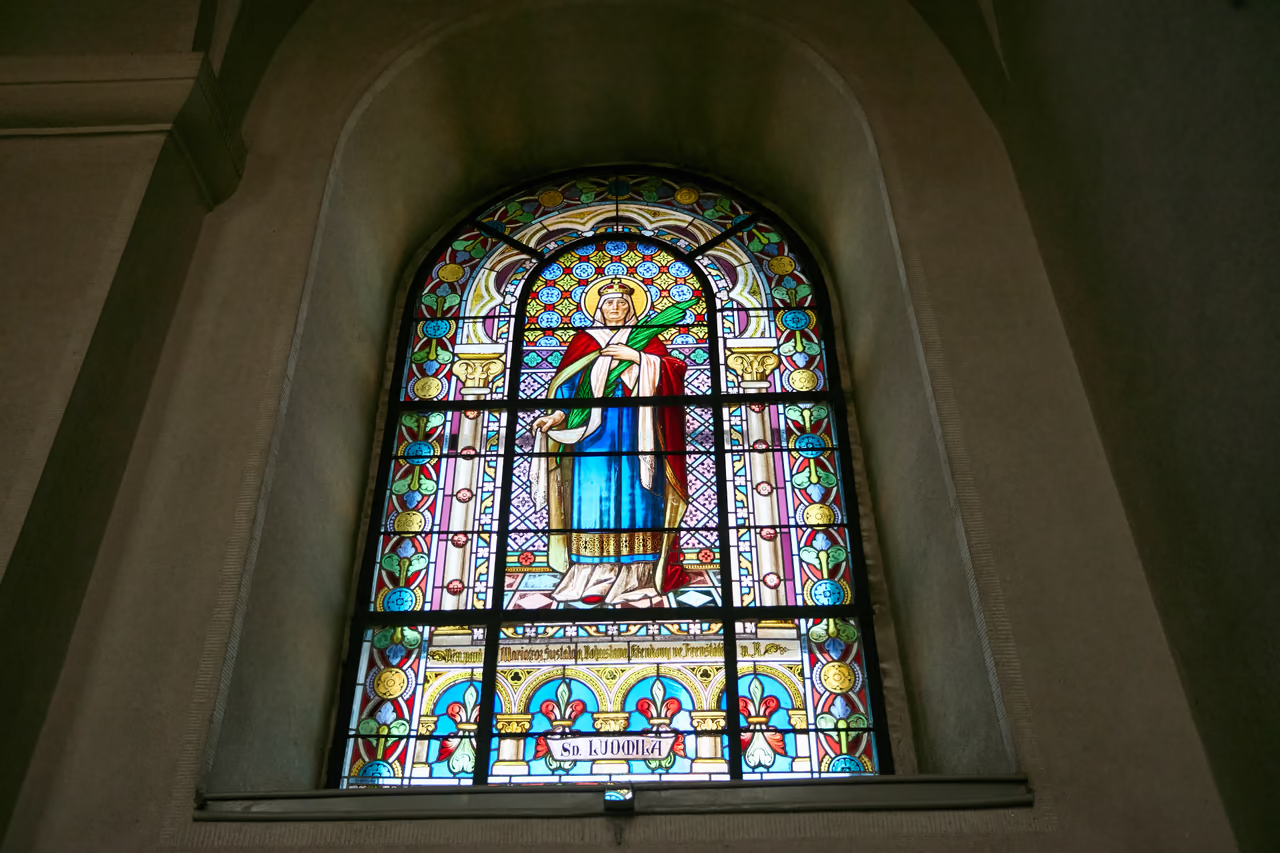
Saint Ludmila depicted in a side window of the chapel
Saint Ludmila – one of four stained-glass windows depicting patron saints
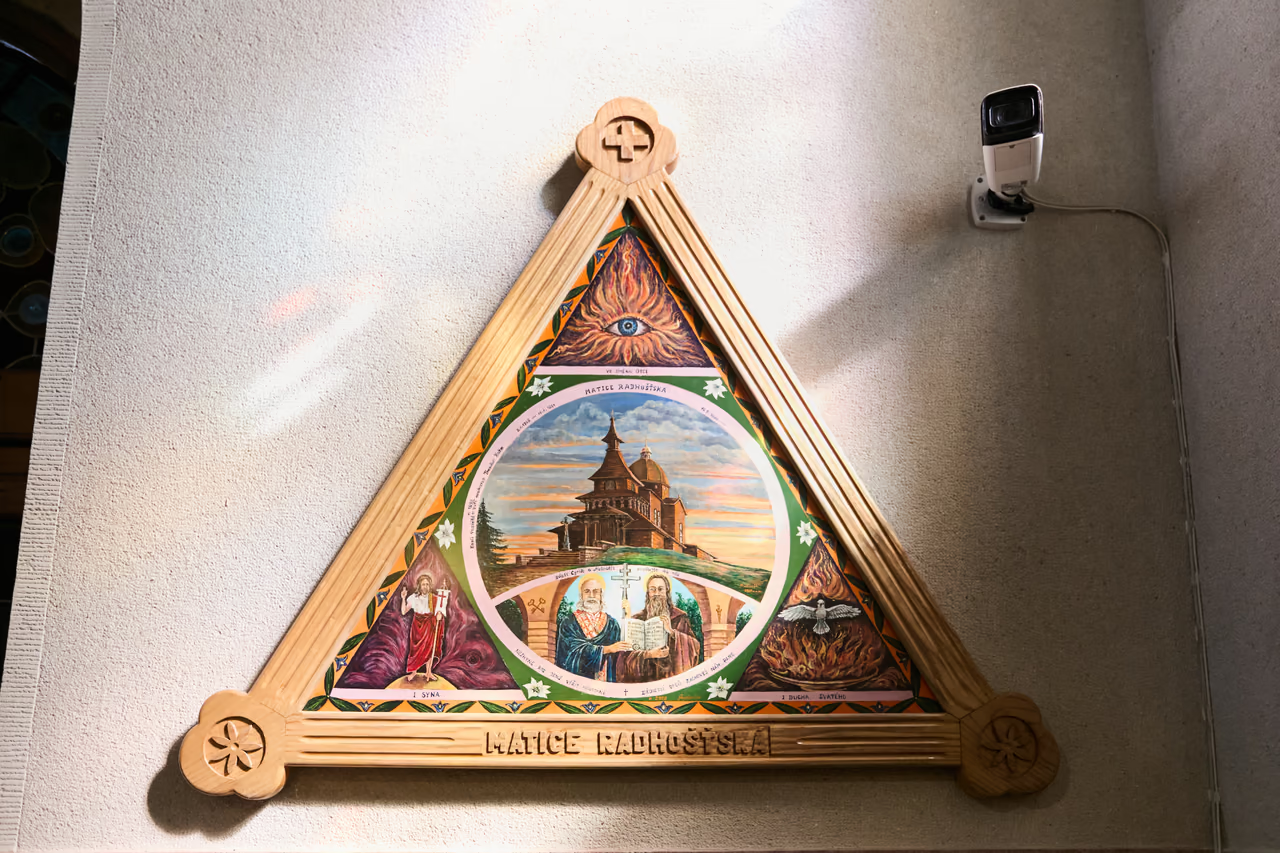
Carved triangular emblem of Matice Radhošťská inside the chapel
Carved emblem of Matice Radhošťská with Saints Cyril and Methodius inside the chapel
Events on Radhošť

A year on the mountain: pilgrimage, Mass and a New Year's climb

The year's main event

5 July

every yearThe feast of the Slavic missionaries – the busiest day of the year on Radhošť's summit.

Pilgrimage Mass at the chapel has been held since its consecration in 1898, always on 5 July, the feast of Cyril and Methodius. The same date was chosen deliberately for the blessing of the chapel's foundation stone in 1896. The pilgrimage draws crowds from both sides of the mountain and continued even while Matice Radhošťská was dissolved.

Other events during the year

Sat11:00 • July–mid-September

Saturday pilgrimage Mass

Mass every Saturday at 11:00, without the main pilgrimage's crowds. The chapel is usually open for visits afterwards.

1 Jantraditional New Year's climbs

New Year's Day climb to Radhošť

The year's first view: walkers head for the summit on New Year's Day itself. The chapel is usually closed; the snowy ridge is the draw.

Na závěr

Doplňující info a test znalostí

Rychlá rekapitulace

How high is Radhošť?

Radhošť rises to 1,129 m above sea level. It is the westernmost thousand-metre peak in the Moravian-Silesian Beskids and the range's seventh-highest mountain.

What stands on Radhošť's summit?

The Chapel of Saints Cyril and Methodius from 1898, Albín Polášek's bronze statues of the missionaries, a stone cross from 1805 and a television transmitter.

How do I get to Radhošť?

The usual approach is on foot along the ridge from Pustevny (about an hour). You can reach Pustevny by chairlift from Trojanovice-Ráztoka or by bus. You cannot drive to the summit.

Is there food available on Radhošť, and are there toilets?

There is a portable toilet by the chapel. Food and drink are available at Pustevny.

When is the chapel on Radhošť open?

The chapel has no publicly guaranteed regular opening hours. Access depends on weather and the availability of Matice Radhošťská's volunteers. The summit is worth visiting even when the chapel is closed. When it is open, the bell tower viewpoint is usually accessible too, conditions permitting.

Why is Radhošť linked to Radegast?

A Baroque legend first recorded by Jan Jiří Středovský in the early 18th century spread the link between Radhošť, Radegast and a visit by Cyril and Methodius. It is no historical source, but became so firmly rooted that it later inspired the chapel and Polášek's Radegast statue.

Who looks after the chapel?

The volunteer association Matice Radhošťská maintains the chapel and opens it to visitors. Founded in 1905 as the building committee's successor, it was forced to suspend its work in 1951–1994. Today it also keeps the site's Cyril and Methodius tradition alive.

Závěrečný kvíz

Otázka 1 z 6

Albín Polášek's bronze statues of Saints Cyril and Methodius in front of the chapel

Who first recorded the legend of Cyril and Methodius coming to Radhošť?

RysíkRysík→

There is a quiz a little further up. Shall we try it?

A few quizzes and I get glasses, and I will feel properly educated.

Try the quiz

Your rank: Homebody. You do not have a single stamp yet. Visit any place and become a Pilgrim.

You can experience the Beskids and Moravian Wallachia with Rysík and without him. Rysík would love to be there for it. Whether you take him along and take on the challenges with him is up to you.

Save Radhošť and the Chapel of Saints Cyril and Methodius to your favourite places

You can find your favourite places in your account. On the Walking routes page you can use them to filter routes.

Something not right here?

Suggest a more accurate wording.