Why come here
To see a 130-year-old idea
It is the oldest surviving work of Beskid walkers in the saddle - older than Libušín and Maměnka. Three species of newt live in it today.
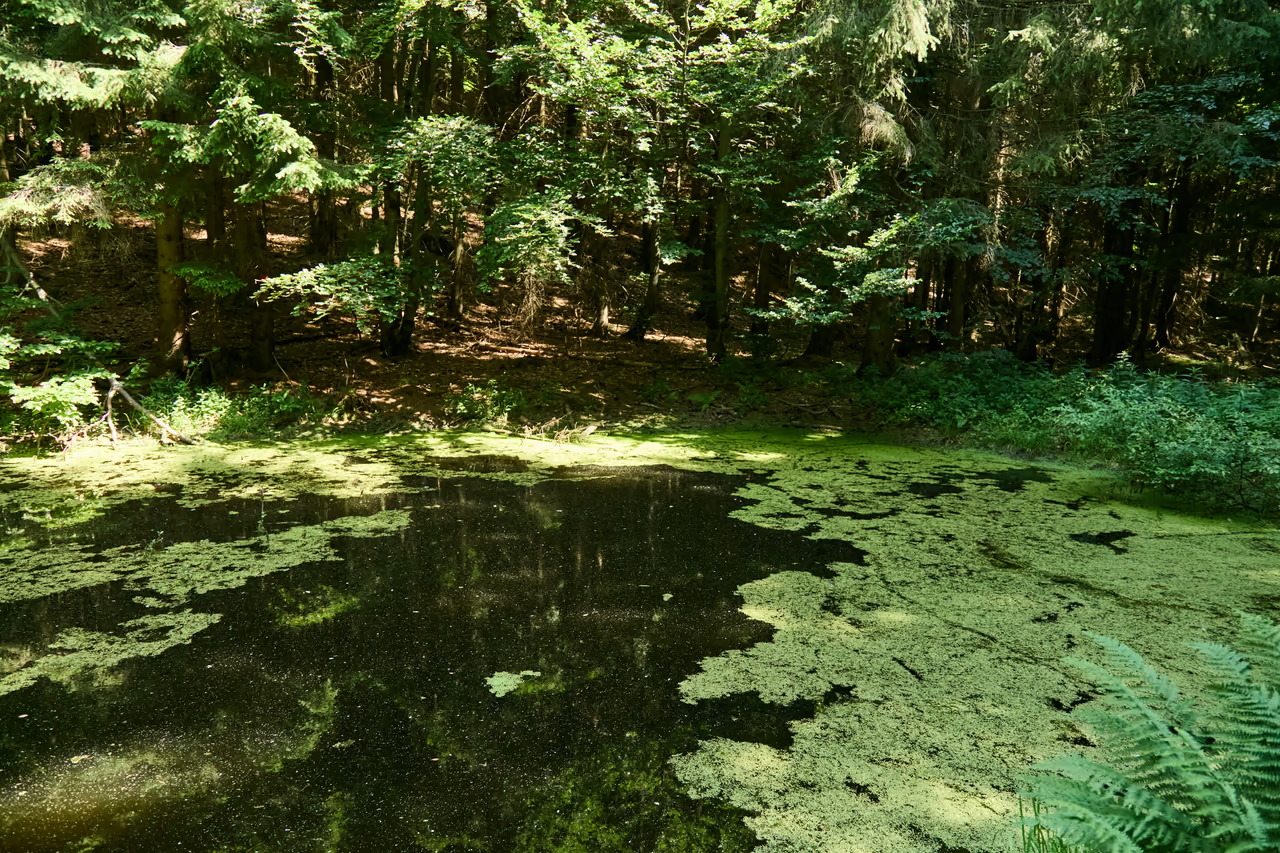
Small lake • Prostřední Bečva • 980 m a.s.l.
The Beskids had no lake. In 1894 walkers dug one themselves - today it belongs to the newts.
Just under half a kilometre from Pustevny, a dark surface of water called a mořské oko hides in the forest. Mountain lakes like these were usually formed by a glacier or a volcano. This one was dug by people.
They were members of Pohorská jednota Radhošť. It bothered them that the Beskids were the only mountains without a tarn, so in 1894 they made one themselves. Their attraction is now a protected pool with three species of newt.
Why come here
It is the oldest surviving work of Beskid walkers in the saddle - older than Libušín and Maměnka. Three species of newt live in it today.
Not to be missed
The lake is the second stop on the Čertův mlýn nature trail. From the railing you can see the whole surface - and if you wait quietly for a while, you will see what moves in it too.
When to go
Adult newts are most often seen in the water in May and June. In summer a green film often covers the surface; in autumn there is quiet and colour above it. In winter people ski around it.
The view from the wooden railing on the bank - for the newts' sake, nobody goes beyond it.

The only lake in the area was dug by walkers themselves. It survived because nature took it over.
Mountains without a tarn
In 1884 the people of Frenštát founded Pohorská jednota Radhošť - the first Czech hiking association in what was then Austria-Hungary. Its members built shelters, waymarked paths and led visitors into the mountains. Pustevny as we know it is largely their work.
According to historical records, however, one thing bothered them: unlike other ranges, the Beskids had no tarn. So in 1894 they made one themselves. They chose an older wetland in a hollow below the ridge, cleaned it out and deepened it. The name they borrowed from the mountain lakes formed by glaciers and volcanoes: mořské oko.
That was five years before the famous Jurkovič lodges went up in the saddle. Mořské oko is therefore older than Libušín and Maměnka and is among the oldest of the association's work still left at Pustevny and on the surrounding ridge.
When things at Pustevny were built
the oldest Czech hiking association
a wooden building with a dormitory
a lake dug out of a wetland
Probably the oldest tourist chalet still standing in the Beskids
A lookout on the ridge above the saddle
Jurkovič's Art Nouveau lodges
Today
Mořské oko is a shallow forest pool hidden among the trees. In summer it is largely covered by a green film of tiny water plants. The water is dark - the forest is reflected in it.
A worn area with a wooden railing leads to the bank. It is not a viewing point but a boundary - nobody goes beyond it. Beside it stands a board of the Čertův mlýn nature trail. The lake is its second stop; the whole trail is seven kilometres long and continues along the flank of Čertův mlýn to Martiňák. Its first part runs along the red waymarks to Čertův stůl.
The lake is most interesting for anyone who waits by it for a while. In spring newts move in the water and dragonflies hunt above the surface. During the day hundreds of people pass by from the chairlift.
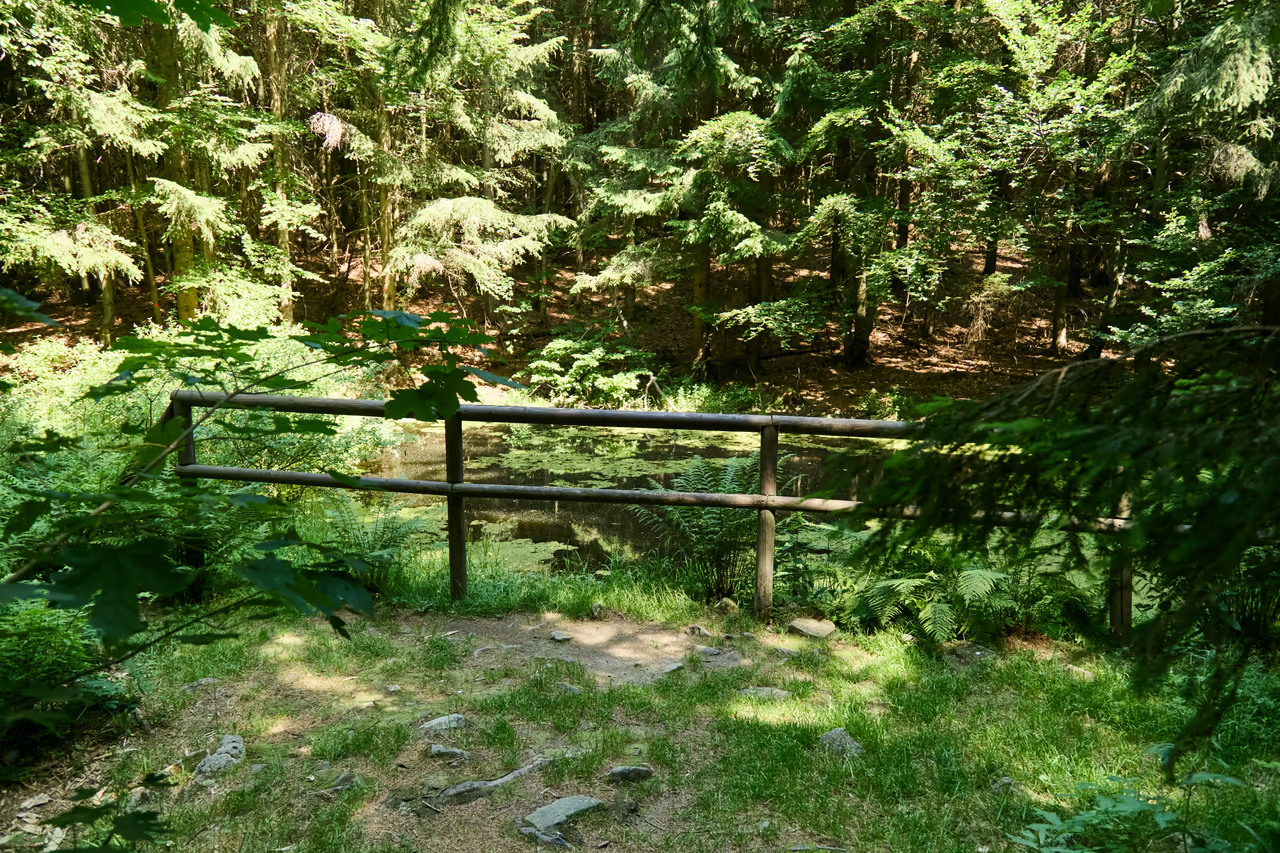
Roles reversed
A hundred and thirty years is a long time for a mountain pool. The lake that was meant to be an ornament for visitors has meanwhile been taken over by amphibians. Standing water is a rarity in the mountains, so for miles around there is no more important place for amphibians than this pool, which does not dry out even in summer.
The roles have thus been reversed. The water belongs to the newts now: nobody goes into it and nothing is released into it. The lake lies in the Beskydy Protected Landscape Area and is cared for by conservationists together with foresters.
Who lives in the pool
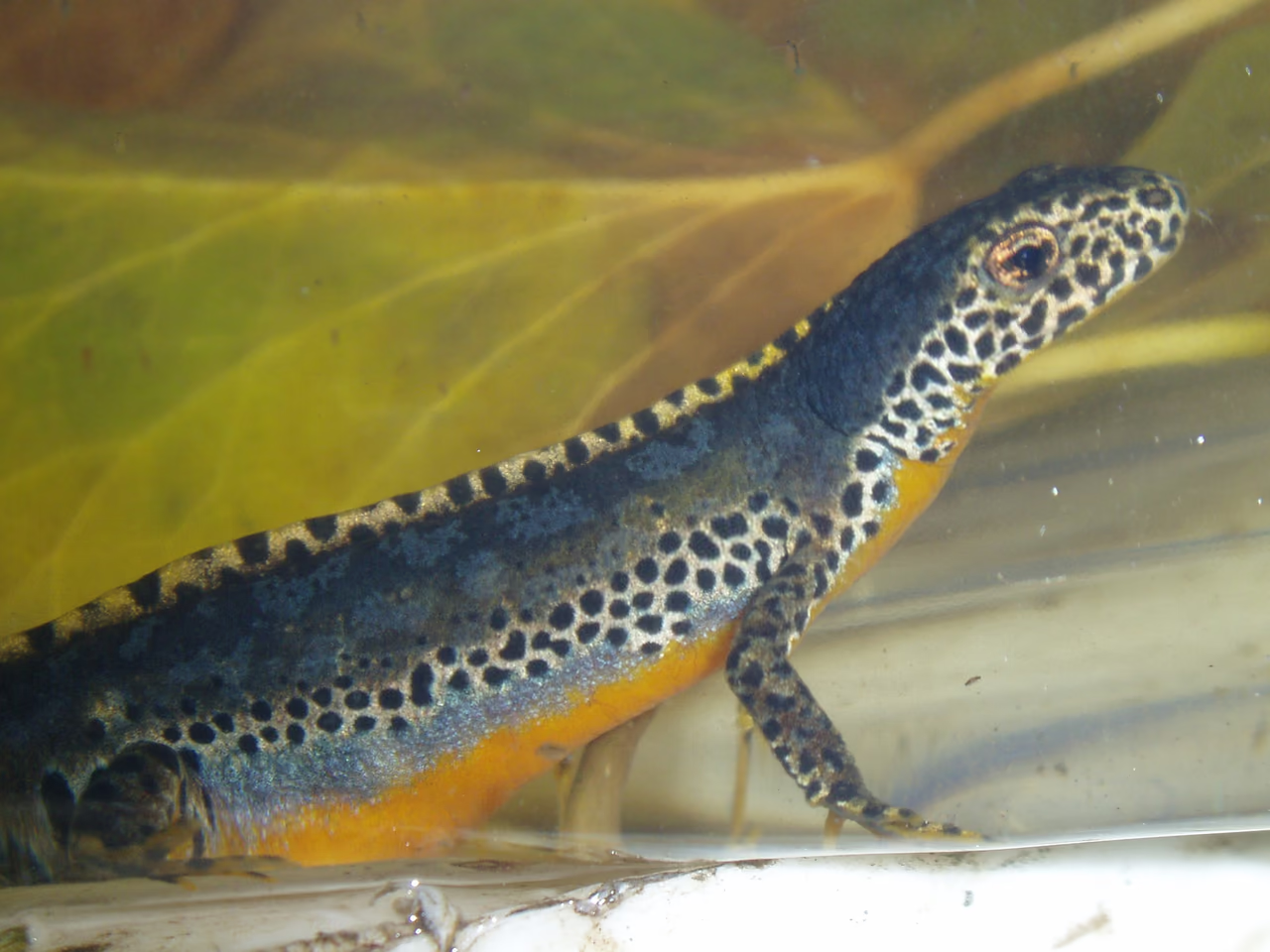
Ichthyosaura alpestris
The most striking of the three. In the breeding season the male has blue-grey flanks and a bright orange belly. Out of the water it hides under stones and wood.
Foto: Anevrisme, Wikimedia Commons, CC BY-SA 3.0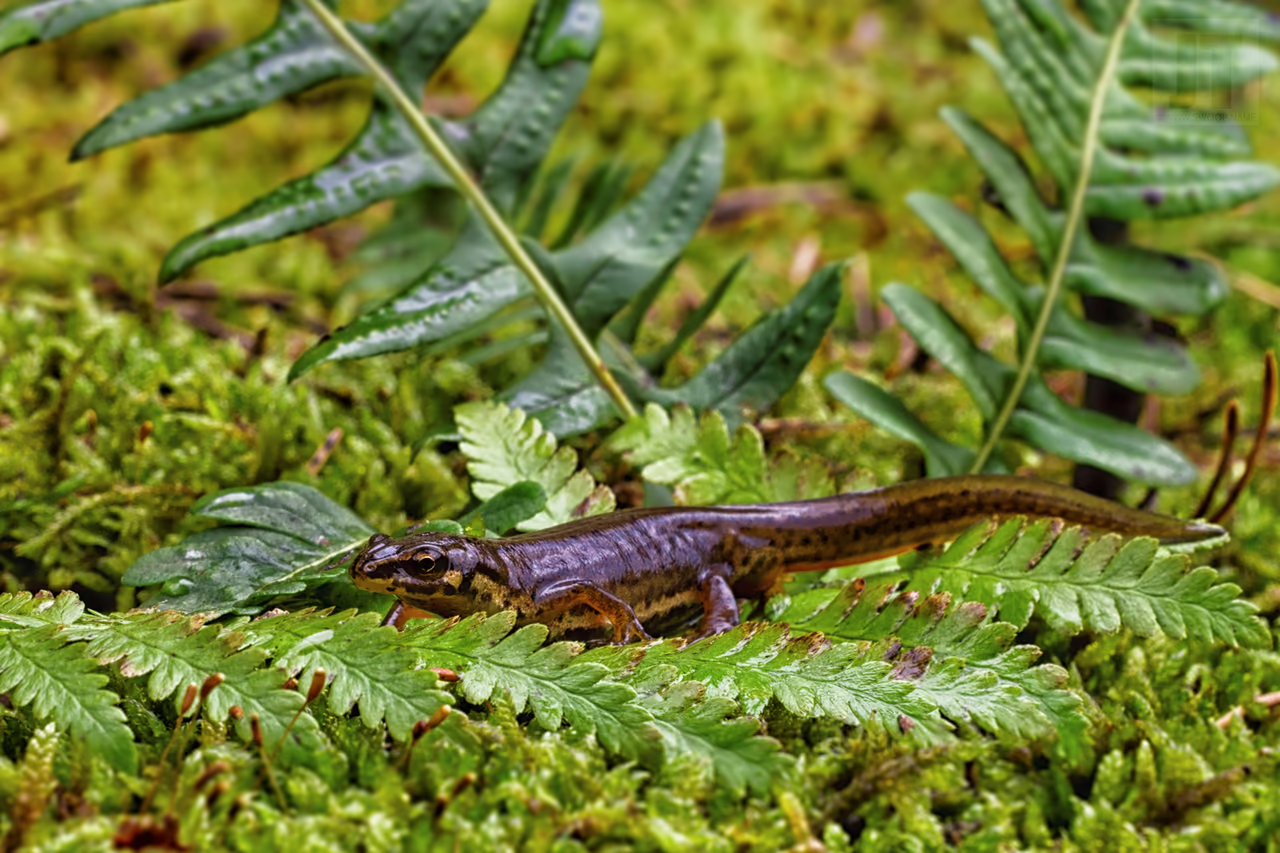
Lissotriton vulgaris
The most widespread newt in Czechia, small and brownish. In the breeding season the male has a tall, toothed crest running the length of its back.
Foto: Jaromír Trautmann, Wikimedia Commons, CC BY-SA 4.0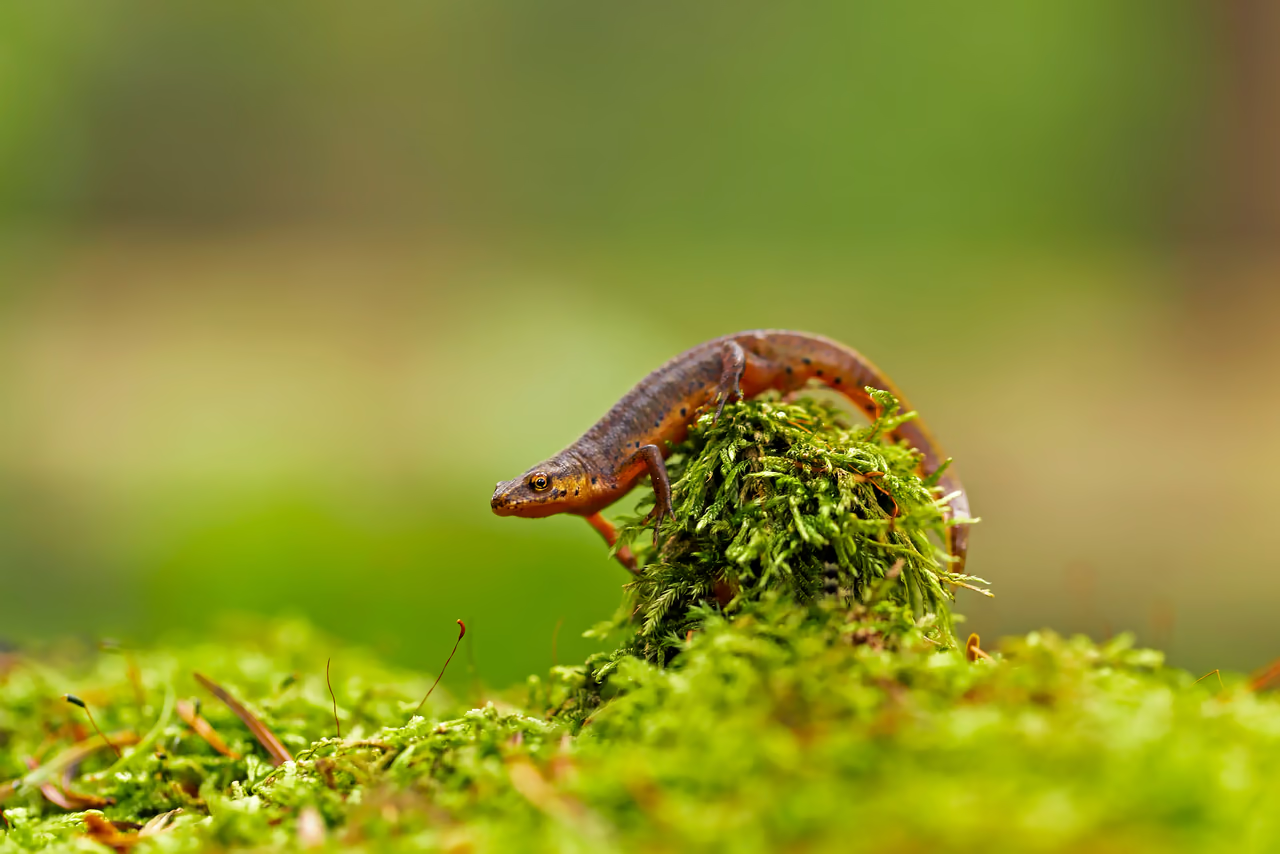
Lissotriton montandoni
A Carpathian endemic. It lives only in the Beskids and their surroundings - you will not meet it anywhere else in Czechia. It is what makes an ordinary pool a rare place.
Foto: Ihor Hvozdeckyj, Wikimedia Commons, CC BY-SA 4.0Above the water
Dragonflies grow up in the water as predatory larvae and then hunt above the surface - further proof that the pool works. From the bank you will spot them best on a sunny day.
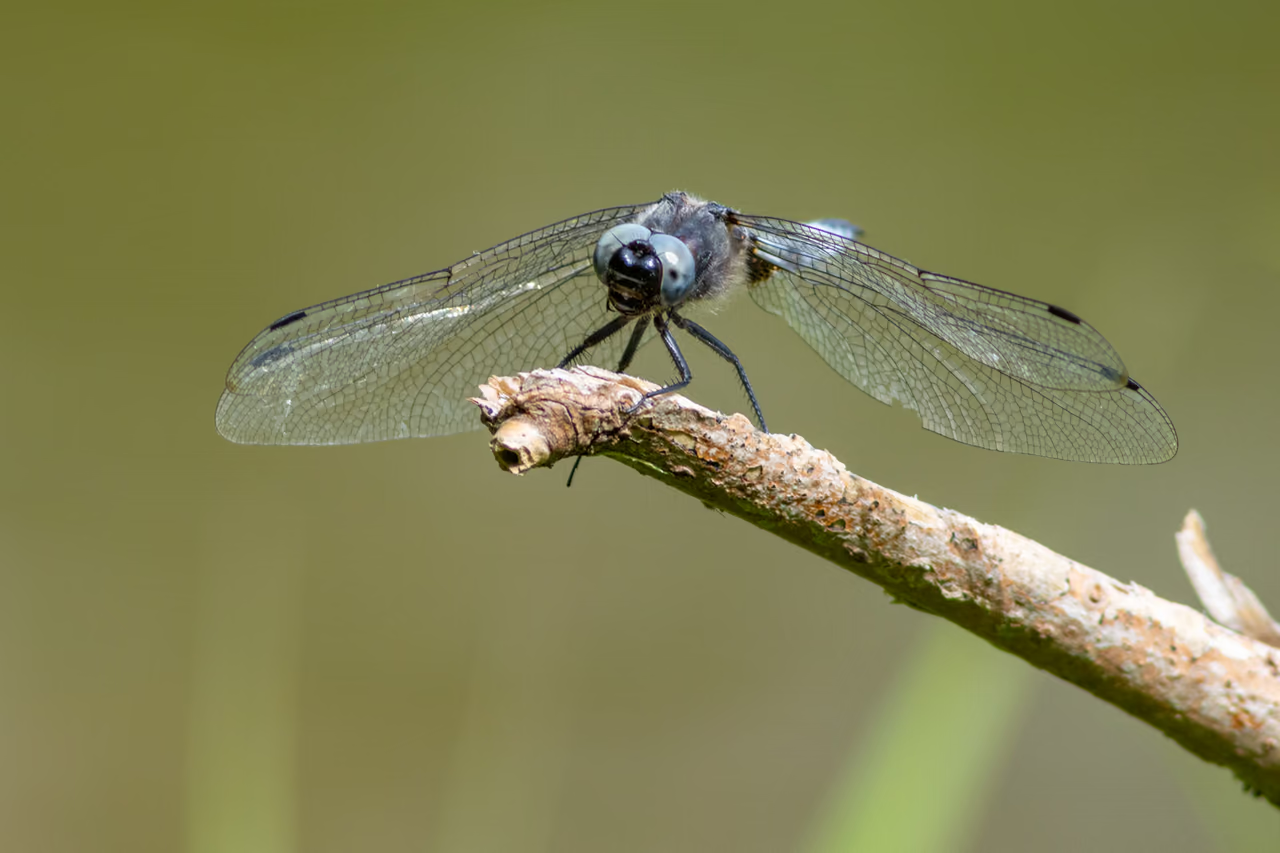
Libellula depressa
A stocky dragonfly with a broad, flattened abdomen, powder blue in the male. It likes to settle on protruding twigs and set off from them to hunt again and again.
Foto: slezo, Wikimedia Commons, CC BY-SA 2.0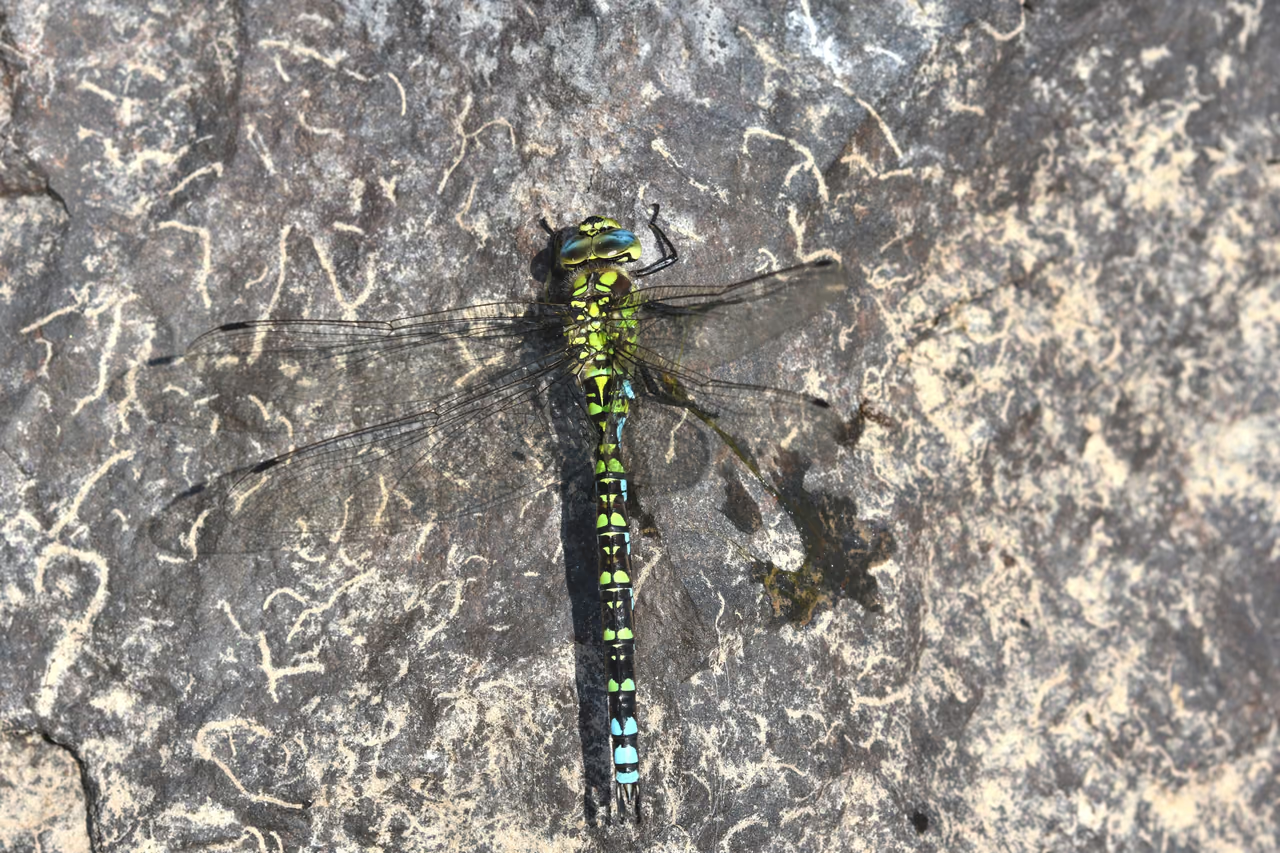
Aeshna cyanea
A large hawker with blue-green markings. It circles tirelessly back and forth above the water and flies even at dusk. It returns to small pools to lay its eggs.
Foto: Klaus Krahn, Wikimedia Commons, CC BY-SA 4.0The photographs show the species, not a particular individual from Mořské oko.
Timeline
1884
Local people in Frenštát pod Radhoštěm found the first Czech hiking association in Austria-Hungary. It waymarks paths, builds shelters - and turns Pustevny into a place for visitors.
1894
According to historical records, the association's members were bothered that the Beskids had no tarn. So they took an older wetland in a hollow below the ridge, cleaned it out and deepened it into a lake.
the late 19th century
The saddle is named after the hermits who had lived here for a few decades before. The famous Libušín and Maměnka lodges to Dušan Jurkovič's designs are several years younger than the lake.
today
The lake is the second stop on the Čertův mlýn nature trail and home to three species of newt. It is cared for by nature and forest conservationists; it lies in the Beskydy Protected Landscape Area.
Beskids passport
Are you here in person?
This page has already been added to your Beskids passport as a digital visit. To collect a badge for visiting in person, use the button below while you are there.
Your browser asks for your location once when you click. Verification happens offline on your device and your location is not sent anywhere.
Head east from the saddle, with Radhošť behind you. A short way from the junction by Libušín, the small lake Mořské oko lies hidden in the forest – a refuge for newts and other amphibians.
Po téže červené se dá jít dál hřebenem přes sedlo pod Tanečnicí na Čertův mlýn, nejvyšší horu Zlínského kraje. Celou trasu popisuje stránka výletu.
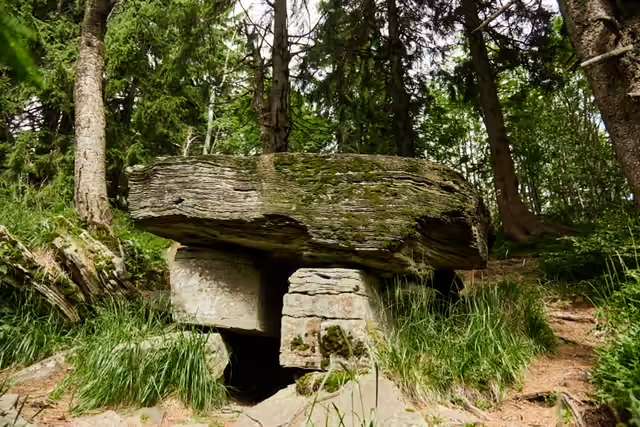
The nature trail: the lake is the second of the nine stops on the Čertův mlýn nature trail. The official trail then carries on along the red waymarks to Martiňák (7 km, 9 stops); the later stretch runs on asphalt.
From Brána Pusteven you reach the lake in ten to fifteen minutes on foot. A quarter of an hour is enough to stop by the water and read the board.
The lake is a refuge for newts and other amphibians. Stay behind the railing, do not enter the water, do not reach into it and do not release anything into it - fish and terrapins do not belong here. Keep your dog on the bank and on a lead.
Adult newts are seen in the water most often in May and June. In summer the surface is largely covered by a green film of tiny water plants - the normal state of a shallow pool.
There is neither a bench nor a bin by the lake - the facilities are back at Pustevny.
People dug it. In 1894 members of Pohorská jednota Radhošť cleaned out and deepened an older wetland below the ridge - it bothered them that the Beskids were the only mountains without a tarn.
On foot from Pustevny along the red waymarks eastwards, just under half a kilometre - ten to fifteen minutes' walk.
At 980 m a.s.l., in a hollow below the ridge between Pustevny and Tanečnice.
Three species of newt - the alpine, the smooth and the Carpathian. Adults are seen in the water most often in May and June, their larvae from June to August.
No. The lake is a refuge for amphibians - visitors stay behind the railing and nobody enters the water.
There is nothing at the lake itself. The facilities (refreshments, toilets) are back at Pustevny.
Otázka 1 z 4
 Rysík→
A few quizzes and I get glasses, and I will feel properly educated.
Your rank: Homebody. You do not have a single stamp yet. Visit any place and become a Pilgrim.
You can experience the Beskids and Moravian Wallachia with Rysík and without him. Rysík would love to be there for it. Whether you take him along and take on the challenges with him is up to you.
You can find your favourite places in your account. On the Walking routes page you can use them to filter routes.
Suggest a more accurate wording.