Why come here
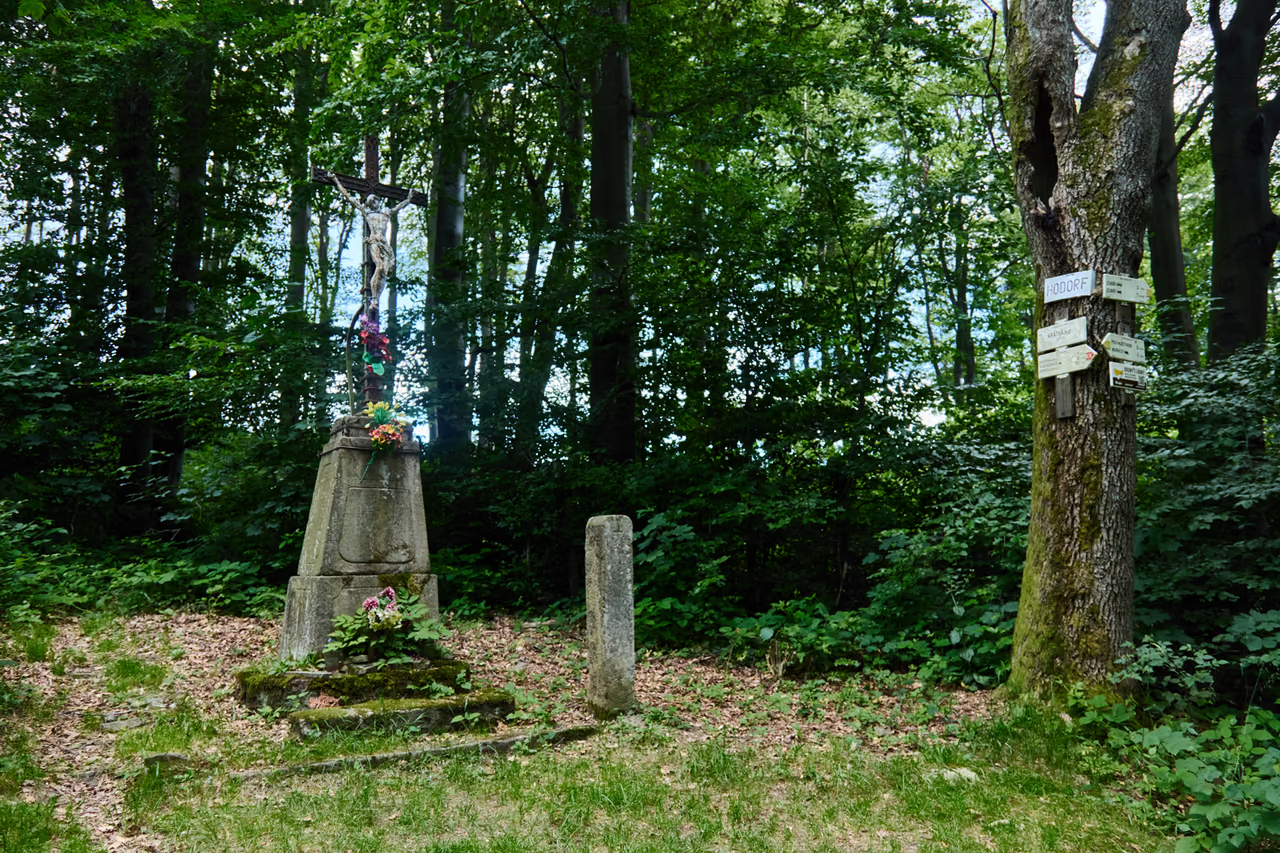
A clearing with a cross and a boundary stone
No ruins, no foundations. Just a clearing in the wood, a cross and a stone. Hodorf is a place to think about how easily a whole village disappears – and how long its name outlasts it.
A saddle in the Veřovické vrchy • Zubří • 685 m a.s.l.
A village that disappeared. A saddle people still walk through.
Hodorf is a saddle. That is most likely why the village of Hondorf – “the high village” – stood here in the Middle Ages. But it is gone.
All that is left of it is a garbled name on a metal sign, a boundary stone between two estates and a cross by the road that pilgrims from Zubří took to Mořkov.
Why come here
No ruins, no foundations. Just a clearing in the wood, a cross and a stone. Hodorf is a place to think about how easily a whole village disappears – and how long its name outlasts it.
What not to miss
The unremarkable stone post by the cross is a 17th-century boundary stone with carved letters. It divided two estates – and the boundary of two regions still runs through here today.
When to come
The saddle is wooded throughout. Instead of views there is shade and quiet. There is a rest area with benches, but no refreshments and no drinking water.

A saddle is a gap in a wall of mountains. Everything else on Hodorf follows from it – from the road that had to run this way.
A way through the ridge
The Veřovické vrchy are a ridge dividing the Wallachian side from the Nový Jičín side. It is easiest to cross at one of the lower points between the hill Hodorf (766 m) and the hill Krátká. The Hodorf saddle lies at 685 metres and has linked the southern and northern sides of the ridge since ancient times.
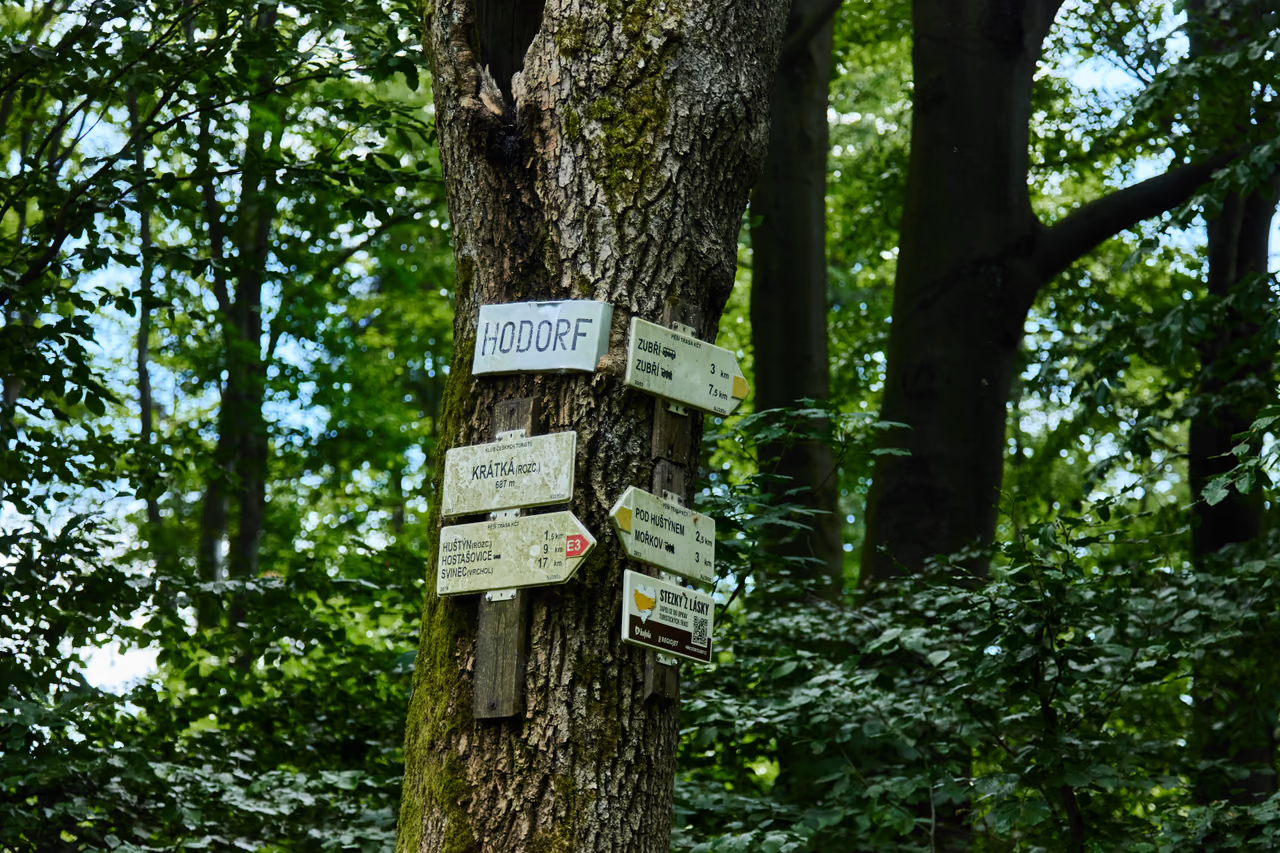
The road ran from Veřovice over the saddle to Zubří and on to the pilgrimage site at Zašová. It was the only sensible way to get from one valley to the other without a detour of several hours. Today the yellow waymarked route from Zubří to Mořkov passes through, crossed along the ridge by the red E3 long-distance path.
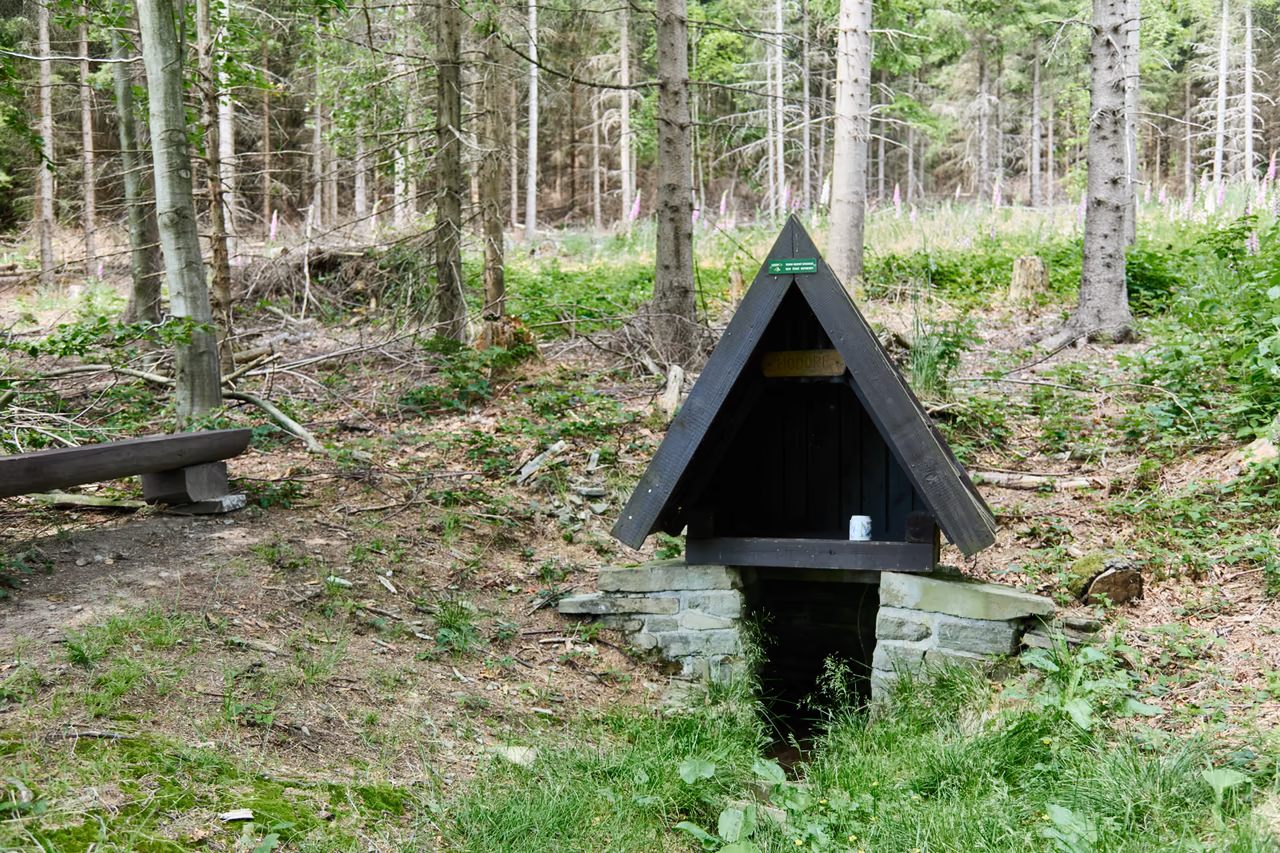
A little below the saddle rises the Hodorf spring. Water by the road and a way through the ridge – those are the two things that made it possible to live here in the Middle Ages.
The high village that left only its name
Somewhere below the saddle, most likely near the spring that still rises there, stood the medieval village of Hondorf – recorded in the sources also as Hochdorf, in Czech Vyšová, “the high village”. The Land Tables first mention it in 1348, and when the Rožnov estate was sold in 1502 the sources already record it as deserted. Why it emptied, they do not say.
What is left is the name. In local mouths Hondorf wore down to Hodorf and passed to the saddle, to the hill above it and to the spring – the very one the village probably stood by. Archaeology has yet to fix the exact spot: the four pottery sherds from a surface survey may, according to the finders, be connected as much with the old road over the ridge as with a settlement.
Nothing of Hodorf can be seen on the surface – no masonry, no earthworks. But the village made itself felt to archaeologists in 2017, when a surface survey was carried out here: a search for objects brought up by erosion, ploughing or animals, without a single stroke of a spade. It turned up fragments of medieval pottery – sherds of vessels that may have been left by the village, but just as easily by people passing along the old road over the ridge.
The boundary
Beside the cross stands an unremarkable stone post. It is a boundary stone from the second half of the 17th century and marked the place where two estates met: the Rožnov-Krásno one on the southern side and the Nový Jičín-Štramberk one on the northern.
In 1624 Emperor Ferdinand II gave the northern estate of Nový Jičín and Štramberk to the Jesuit order, and its income was to maintain the Ferdinand seminary in Olomouc, a school for Catholic youths. Whoever crossed the stone in the saddle passed from a noble estate to a church one.
Today the boundary of the Zlín and the Moravian-Silesian Region runs through here and follows the old manorial one exactly. The stone is also a rare epigraphic monument.
BFHVZ
Bernhard Ferdinand Herr von Zierotin – lord of the Rožnov-Krásno estate.
(F) FII IHS
The foundation of Emperor Ferdinand II and the abbreviation of the name Jesus, with the symbol of three nails and a cross rising from the letter H.
The reading and interpretation follow the study by J. Anlauf and P. Lasztovicza (Acta musealia, 2021).
The cross and the pilgrims
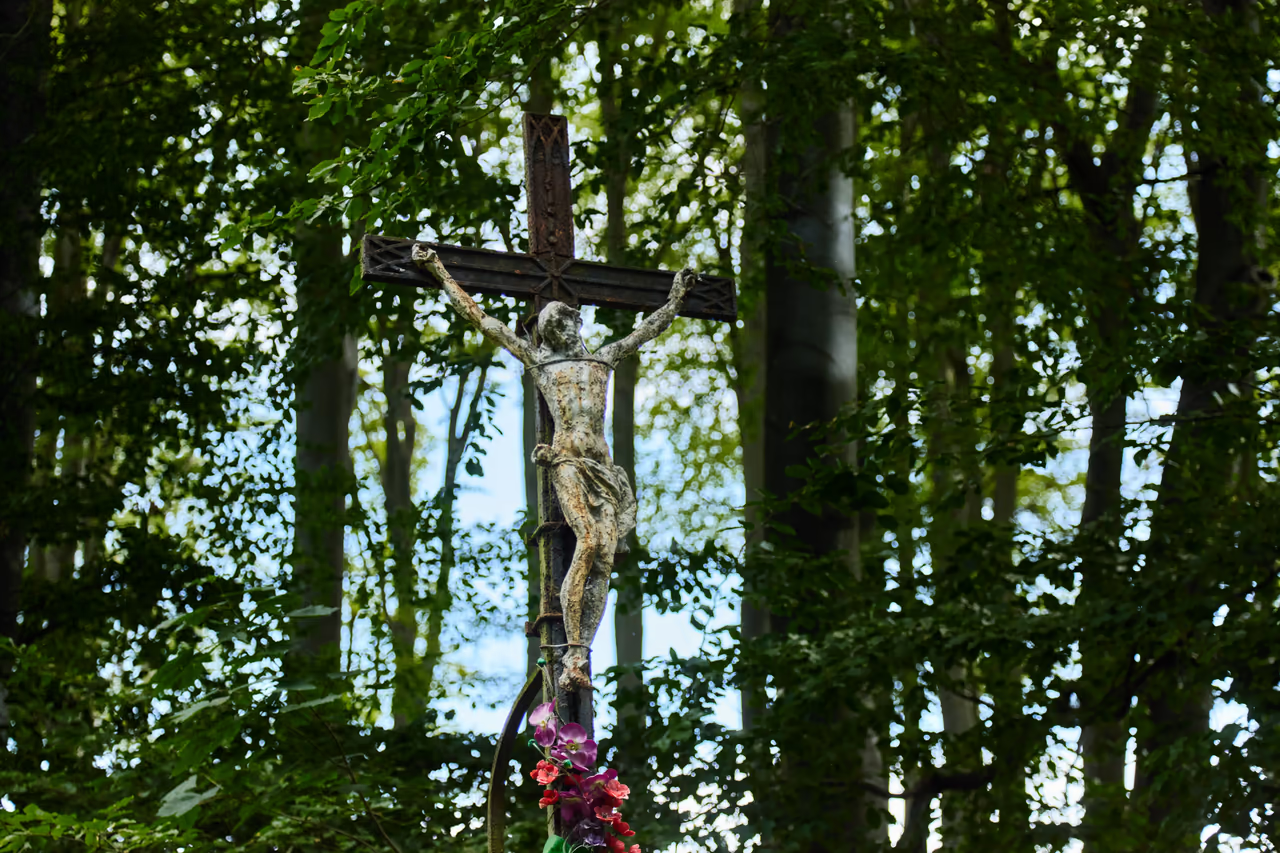
Above the saddle, by the road under the trees, an iron cross rises from a tall stone plinth. Legend says it was put up by a farmer from Mořkov. He was hauling logs along the slope when his horses bolted and set off downhill; in the confusion he is said to have managed to cry out a plea to the Virgin Mary, with a vow that if it ended well he would put up a cross here in thanks. It ended well – and the cross stands.
As late as the 1950s a wooden hut stood by the cross selling refreshments to the pilgrims who walked from Zubří over the mountains to the traditional April Saint George pilgrimage feast in Mořkov. The saddle was a stop halfway: a cross, water and something to eat.
Timeline
Six centuries in a saddle a road always ran through. From the first mentions of the village of Hondorf to today's boundary between two regions.
1348
The Land Tables first record the village of Vyšová – the one later sources call Hondorf. People live on the little a mountain site allows.
1502
In the sale of the Rožnov estate Hondorf is recorded as deserted. When exactly it fell empty and why, the sources do not say; all that remains is the name, worn down to Hodorf.
1624
Emperor Ferdinand II gives the estate of Nový Jičín and Štramberk to the Jesuit order. Its income is to maintain the Ferdinand seminary in Olomouc.
2nd half of the 17th c.
A stone with the carved letters BFHVZ and FII IHS appears in the saddle – the boundary between the Rožnov-Krásno and the Nový Jičín-Štramberk estates.
1950s
A wooden hut with refreshments still stands by the cross for pilgrims walking from Zubří to the April Saint George feast in Mořkov.
2017
A surface survey of Hodorf brings up fragments of medieval pottery – tangible proof that a village really stood here.
today
The yellow route from Zubří to Mořkov passes through the saddle, the red E3 long-distance path along the ridge – and the same line the estate boundary once followed now divides the Zlín and the Moravian-Silesian Region.
A saddle in the Veřovické vrchy, the lowest point of the ridge at 685 m a.s.l. A road between the Wallachian and the Nový Jičín side of the mountains has run through here since ancient times.
From the medieval village of Hondorf (“the high village”), recorded in 1348. By 1502 it is listed as deserted – all that is left of it is the garbled name.
The stone from the second half of the 17th century divided the Rožnov-Krásno and the Nový Jičín-Štramberk estates. The same line forms the boundary of the Zlín and the Moravian-Silesian Region today.
A wooden hut stood here for the pilgrims who walked from Zubří over the mountains to the April Saint George feast in Mořkov.
Otázka 1 z 6
 Rysík→
A few quizzes and I get glasses, and I will feel properly educated.
Your rank: Homebody. You do not have a single stamp yet. Visit any place and become a Pilgrim.
You can experience the Beskids and Moravian Wallachia with Rysík and without him. Rysík would love to be there for it. Whether you take him along and take on the challenges with him is up to you.
You can find your favourite places in your account. On the Walking routes page you can use them to filter routes.
Suggest a more accurate wording.