Why come here
A demolished house imprinted in an old tree
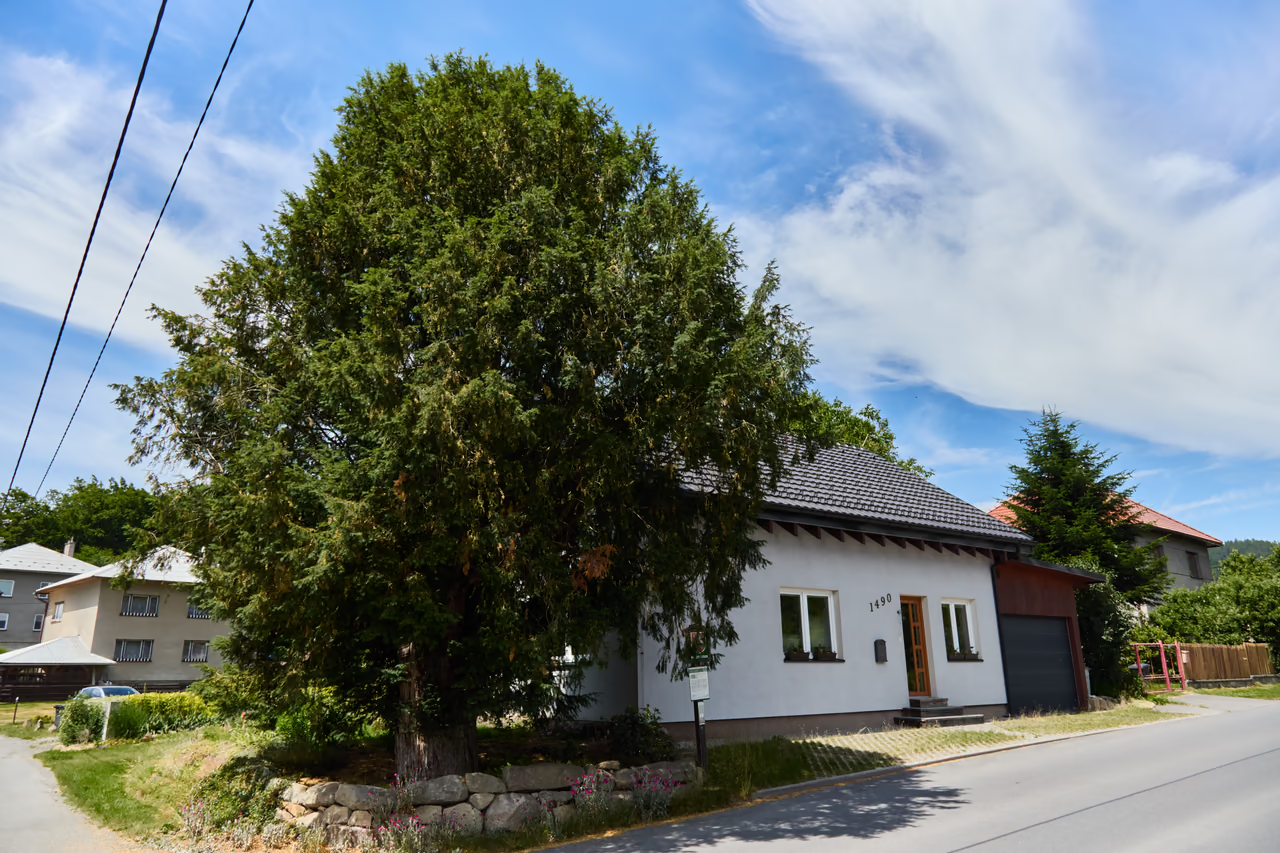
The yew's crown is lopsided – the west side was shaped for years by the shade of cottage no. 181, which stood right by the trunk until 2006 to 2010. The tree keeps that shape still.
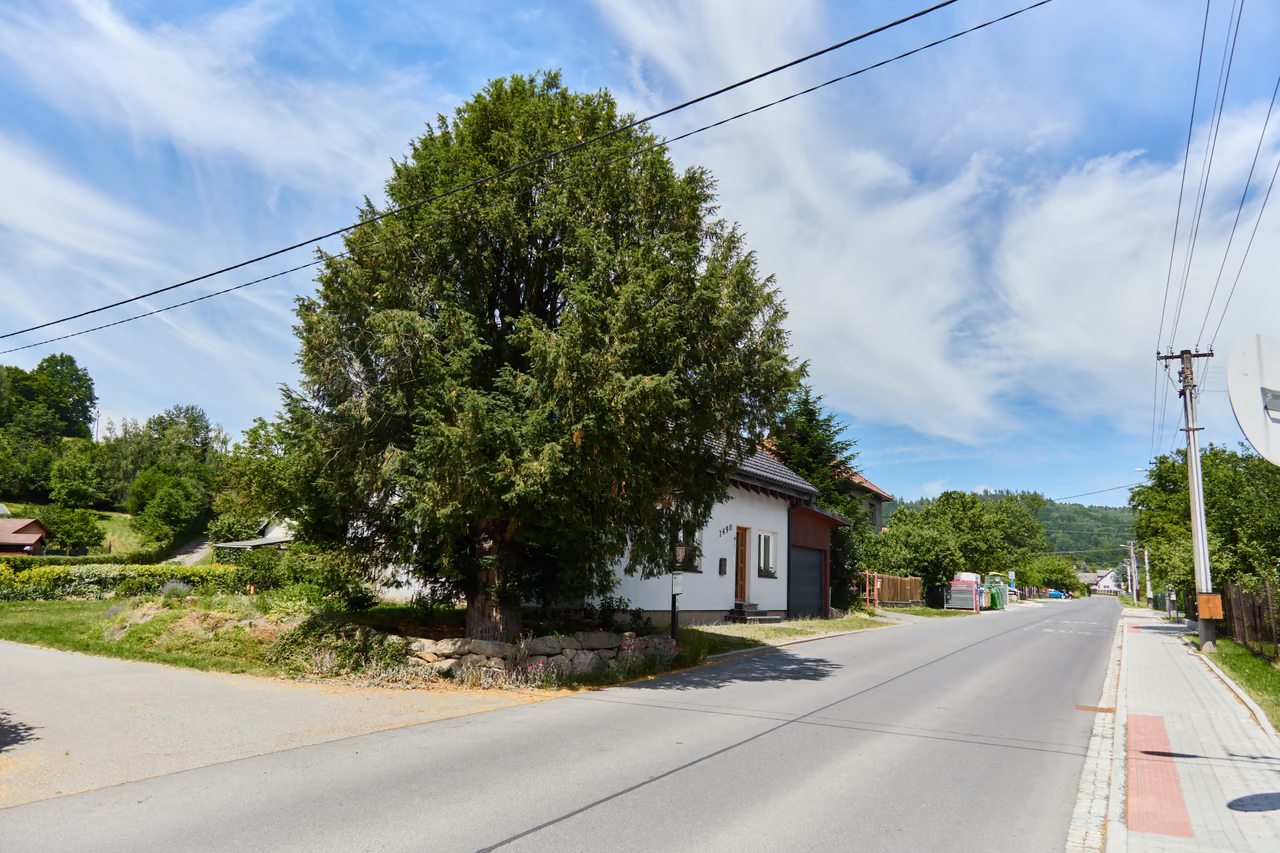
Memorial tree • Zubří, U Tisu street • 385 m a.s.l.
A memorial yew that outlived the house it was shaped by.
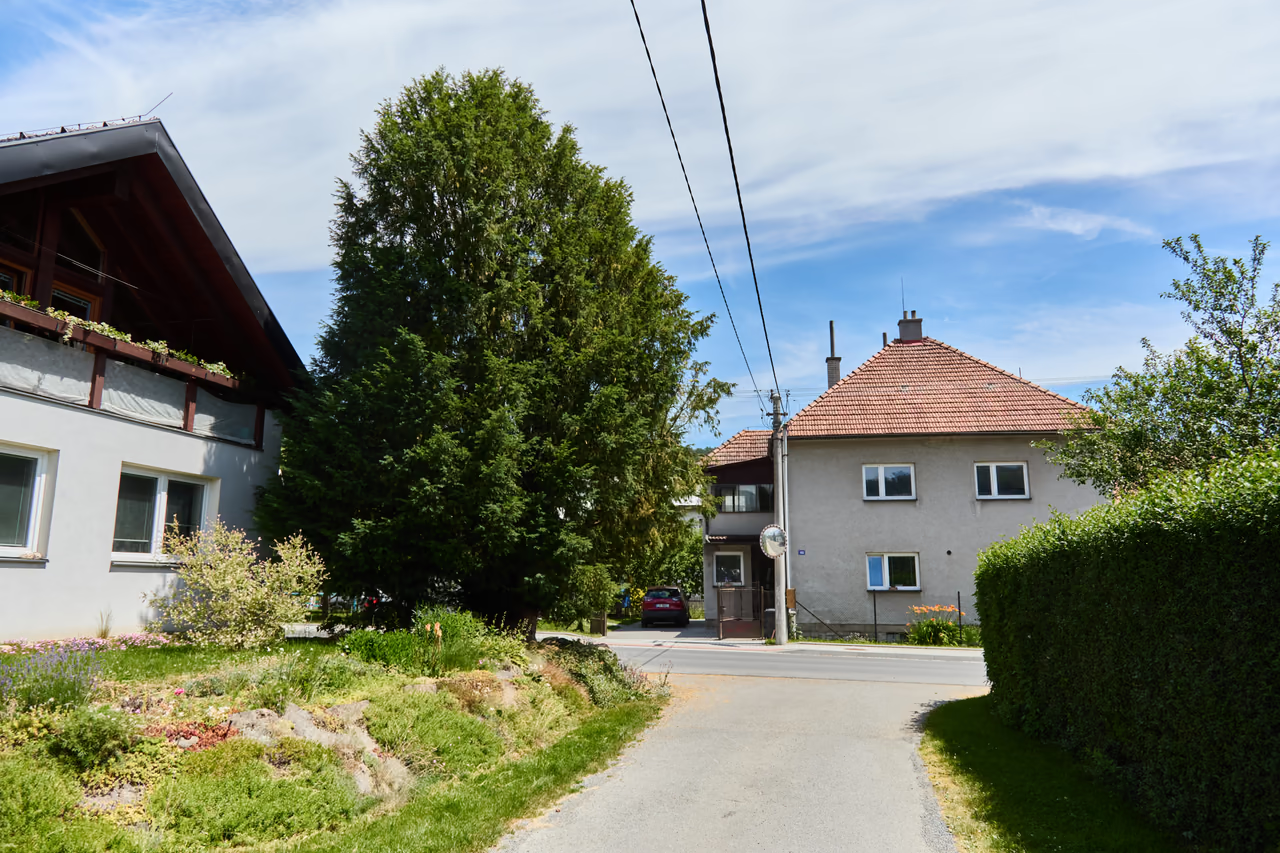
In the upper part of Zubří, at the junction of Horní and U Tisu streets, a common yew grows in a garden by a house – one of the oldest in Wallachia.
Its crown is lopsided: for years the west side was shaped by the shade of the cottage it grew pressed against. The house disappeared between 2006 and 2010; its shape stayed in the tree.
Why come here
The yew's crown is lopsided – the west side was shaped for years by the shade of cottage no. 181, which stood right by the trunk until 2006 to 2010. The tree keeps that shape still.
When to come
The yew is an evergreen conifer, so the dark crown looks the same in February as in August. It releases pollen in late winter and early spring; the Zubří yew is recorded as a male tree, so do not look for the red arils on it.
What not to miss
A metre above the ground the trunk splits in two, and one of them is cut off at about five metres, with the hollow at the cut covered over. Gustav Adolf Říčan described the rot in the fork as early as 1931 – the tree has lived with it for almost a century.

It is named after a man who wrote about it. Shaped by a house that stood beside it. And with an age estimate that has been corrected.
Name and address
The tree stands in the upper part of Zubří at the junction of Horní and U Tisu streets, in a garden by a house, between the wall and the building.
It is called Koláčkův, the Koláček yew, though not after the owner of the cottage that used to stand by it – even if that cottage belonged to a family of the same name. It takes its name from the písmák Jan Koláček–Zárubský, who wrote about the Zubří yew repeatedly for the regional press. The owners' family still lives on the spot – only now in a newer house nearby.
According to those who remember, Count Kinský once wanted to move the yew to his park, but the roots were so extensive and so firm that the tree could not be dug out. It was granted the same weight decades later, when gas was brought to the village: the pipeline was diverted around it.
Estimates of age
In 1931 the Zubří yew was described by Gustav Adolf Říčan in his study Staré tisy na Moravském Valašsku: twelve metres tall, trunk girth 242 to 251 centimetres, a spreading crown ten metres across. He put its age at a thousand years. He was working from the tables of the botanist Ladislav Čelakovský, according to which a yew with a trunk 80 centimetres across is 1,000 to 1,500 years old.
Today's estimates for central European yews are two to five times lower – and in 2006 the Zubří yew came out at 346 to 361 years, about a third of Říčan's figure. It was not one man's mistake: the tables assumed slower growth than a yew actually has in central Europe. And the exact age cannot be measured from growth rings anyway: the trunks and branches of a yew grow together and the inside of the trunk rots away with time.
Shape and size
At first sight the tree does not match its age: the crown does not look massive, and 14.5 metres is little for three and a half centuries. The explanation stood right beside it until recently – the yew grew pressed against cottage no. 181, which shaded it until it was demolished between 2006 and 2010. The house is gone; the shape the shade gave it stayed in the tree.
That closeness also took something away: a branch reaching over the roof was once damaged by a barn fire. The trunk, though, gives the age away. A metre above the ground it splits in two, one of them cut off at about five metres, with the hollow at the cut covered over. The rot in the fork is nothing new – Říčan described it back in 1931.
In trunk girth the Zubří yew is a record holder all the same. In 1931 it measured about 250 centimetres, in 1958 it was 260, in 2002 already 347 centimetres and at the next measurement in 2009 353 – six centimetres in seven years. It is the largest yew in the Vsetín district, and in the list of Czech yews with a girth over three metres it holds fifth place.
Drought and care
The common yew does not tolerate too much drought – and the Zubří one stands in a tight space between a house and roads. That, together with the long droughts of recent years, was named by the dendrologist Zina Klečková as the main cause of its dieback.
The dieback first showed around 2002: the tree was watered repeatedly, given boric acid and had its dead branches cut away – and the dieback stopped at the time. In August 2007 it began again. Conservationists spread sodium tetraborate around the tree and asked the town hall for regular slow watering, so that the water would have time to soak down to the roots. Two two-metre bores showed at the time that the soil is practically without water down to a metre and that heavy rain does not penetrate it.
In Czechia the common yew is specially protected as a strongly endangered species – even where it is not declared a memorial tree. In the Middle Ages demand for its wood for bows, the heaviest that central Europe has, nearly wiped it out of European forests; later foresters got rid of it as a poisonous tree. Apart from the red fleshy aril around the seed, the whole tree is violently poisonous.
Timeline
1931
In his study Staré tisy na Moravském Valašsku: height 12 metres, trunk girth 242 to 251 centimetres, crown ten metres across – and an age estimate of 1,000 years. He also mentions the rot where the trunk forks.
1958
Trunk girth 260 centimetres.
11 April 1972
The tree is declared protected under the state nature protection act of the day; from 1992 it is registered as a memorial tree (registration number 100065).
2002
A new measurement: 14.5 metres, trunk girth 347 centimetres. At the same time dieback shows for the first time, followed by repeated watering and treatment with boric acid.
2006
An expert estimate of the age: 346 to 361 years, about a third of what Říčan gave the tree.
August 2007
Conservationists spread sodium tetraborate and find in two-metre trenches that the soil is without water down to a metre. The town hall promises regular slow watering.
2009
In seven years the girth grew by six centimetres.
2006–2010
Cottage no. 181, which shaded the yew from the west, is removed. The tree keeps the shape of its crown all the same.
today
The yew stands at the junction of Horní and U Tisu streets, a few dozen metres from the Zubří, kovárna bus stop, and in dry years the town waters it.
An expert estimate from 2006 gives 346 to 361 years, so people commonly speak of about 360. In 1931 Gustav Adolf Říčan gave the same tree a thousand years. It cannot be measured exactly: the trunks and branches of a yew grow together and the inside of the trunk rots away, so there are no growth rings to count.
After the písmák Jan Koláček–Zárubský, who wrote about the Zubří yew repeatedly for the regional press. So it is not the name of the owner of the cottage that used to stand by the tree – even if that cottage belonged to a family of the same name.
Cottage no. 181, which shaded the tree from the west, stood right by the trunk until it was demolished between 2006 and 2010. That side of the crown developed differently in its shade, and once the house was gone the yew kept the shape.
The 2009 measurement gave a height of 14.5 metres and a trunk girth of 353 centimetres – six centimetres more than at the previous measurement in 2002. It is the largest yew in the Vsetín district, and in the list of Czech yews with a girth over three metres it holds fifth place.
It has been protected since 11 April 1972, at the time under the state nature protection act. Since 1992 it has been in the central register as a memorial tree under number 100065.
Yes, violently so – the whole plant is poisonous, including dry and fallen needles, and the toxins are absorbed through the skin as well. (The one exception is usually the red fleshy aril around the seed, which the Zubří yew, being male, does not have at all.) The common yew is also specially protected in Czechia as a strongly endangered species.
It stands at the junction of Horní and U Tisu streets in the upper part of Zubří, about 1.3 kilometres from the Church of Saint Catherine.
Otázka 1 z 5
 Rysík→
A few quizzes and I get glasses, and I will feel properly educated.
Your rank: Homebody. You do not have a single stamp yet. Visit any place and become a Pilgrim.
You can experience the Beskids and Moravian Wallachia with Rysík and without him. Rysík would love to be there for it. Whether you take him along and take on the challenges with him is up to you.
You can find your favourite places in your account. On the Walking routes page you can use them to filter routes.
Suggest a more accurate wording.
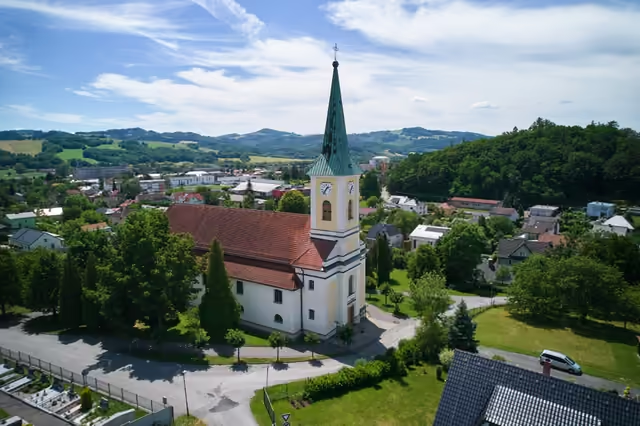
The town's landmark
The Church of Saint Catherine of Alexandria on the rise in central Zubří – the landmark the walk to the yew starts from.
Přejít na stránku →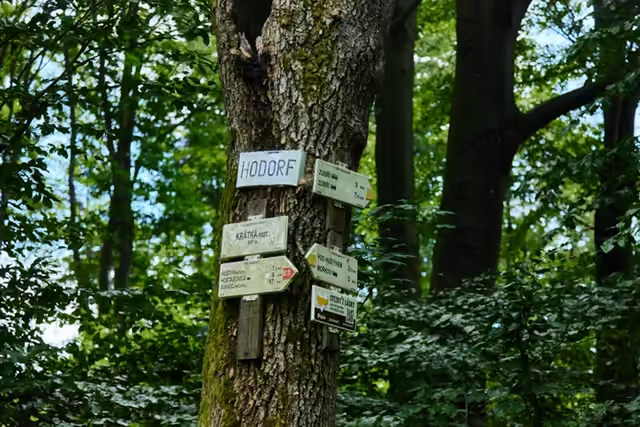
A saddle with an old track
Hodorf on the boundary between the cadastres of Zubří and Mořkov: a cross with a legend, a spring and the memory of a trade route.
Přejít na stránku →