Why come here
A rarity you can put your hand on
Sandstone balls of this size are a rarity in Czechia. Several of them stand out in the open in the village of Vidče – no fence and no ticket office.
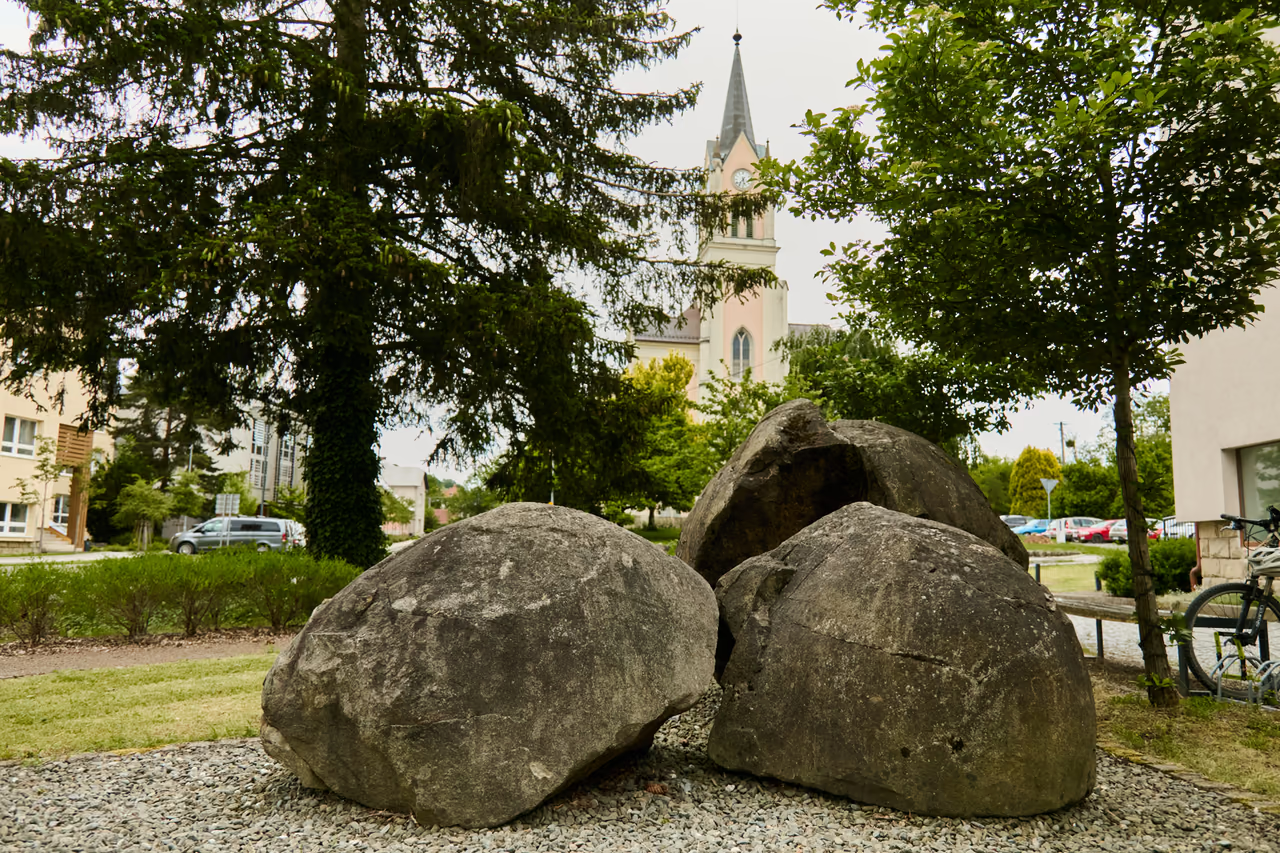
A geological curiosity • Vidče • Beskydy Protected Landscape Area
Stone that shaped itself into a ball. And for a long time nobody knew why.
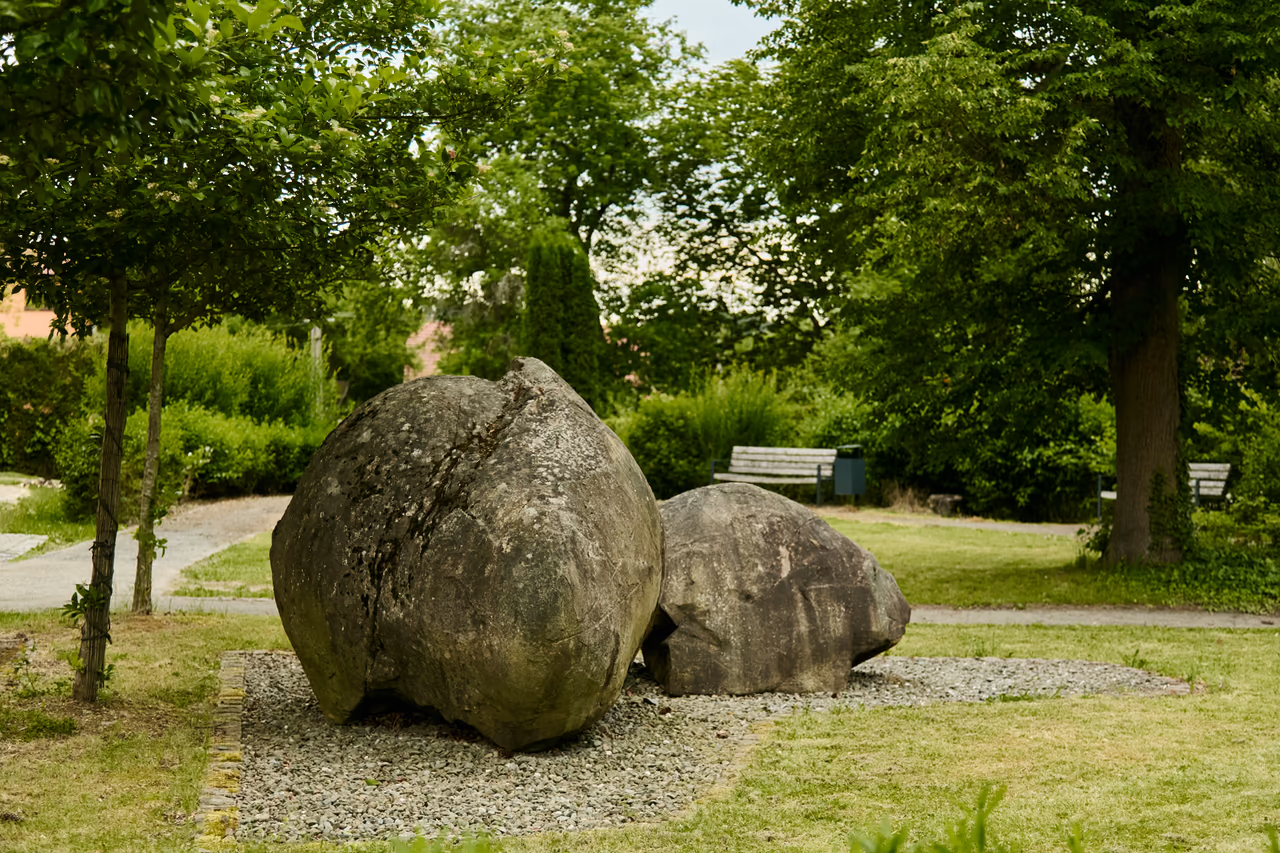
In the quarry above Vidče, stone balls kept falling out of the sandstone beds, some of them over two metres across. Nobody carved them, brought them or modelled them: they are concretions that shaped themselves inside the rock.
Three of the balls now lie in the village itself, a short way from the church.
Why come here
Sandstone balls of this size are a rarity in Czechia. Several of them stand out in the open in the village of Vidče – no fence and no ticket office.
What not to miss
Look closely at the surface of the balls. It is of coarse sandstone, the same rock as in the quarry above the village. It was that match that helped geologists explain how the balls formed.
When to come
The balls in the village are accessible all year and free of charge. The stop is worth half an hour and can be combined with a walk around Vidče.

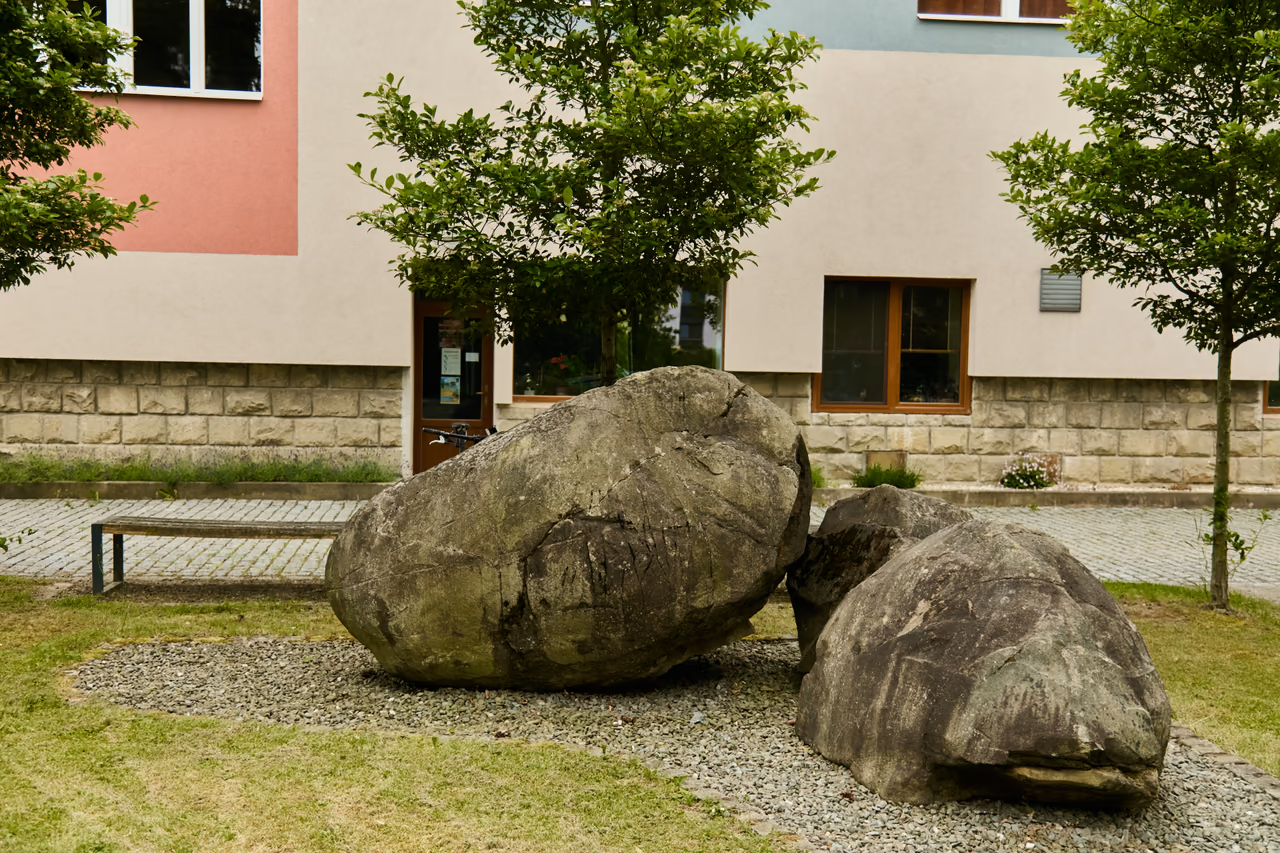
Fossilised eggs? The work of ancient inhabitants? Loaves of lava? The truth is different, and far older.
The find in the quarry
Sandstone was quarried above Vidče. In the 1990s the workers noticed that regular spherical bodies were falling out of the thick beds in the face – some of them over two metres across. Until then nobody had known anything about them.
The find set off speculation. Fossilised eggs of prehistoric reptiles? Stones worked by ancient inhabitants? Loaves of lava that had rolled down from a volcano? There was even talk of extraterrestrials.
Geologists took samples and came up with a more prosaic answer: the balls have exactly the same composition as the rock around them. They did not fly in, they did not roll in, they were not carried into the quarry. They formed in it.
“Over 2 metres”
How the balls formed
The sandstones above Vidče were laid down on the floor of an ancient sea – submarine currents brought the coarse sand here and deposited it in beds several metres thick. That was in the Palaeocene, roughly sixty million years ago. The age was determined by foraminifera, the shells of tiny marine organisms found in the claystones between the sandstone beds.
The balls did not get into the sand – they came into being in it. As the sediment hardened, the rock began to cement in some places faster than around them and grew into spherical bodies, concretions. That these are not cobbles carried in by a current was confirmed by an analysis of magnetic susceptibility. Weathering then gradually freed the balls from the beds until they fell out.
From the quarry to the village
The quarries above the village are disused and overgrown today. The Czech Geological Survey rates their condition as poor, mainly because of the removal of the balls for decoration. Yet the quarries are listed in the database of important geological sites: every ball taken away impoverishes the material on which the forming of concretions can be shown and studied. The balls left in the quarries are best left where they are.
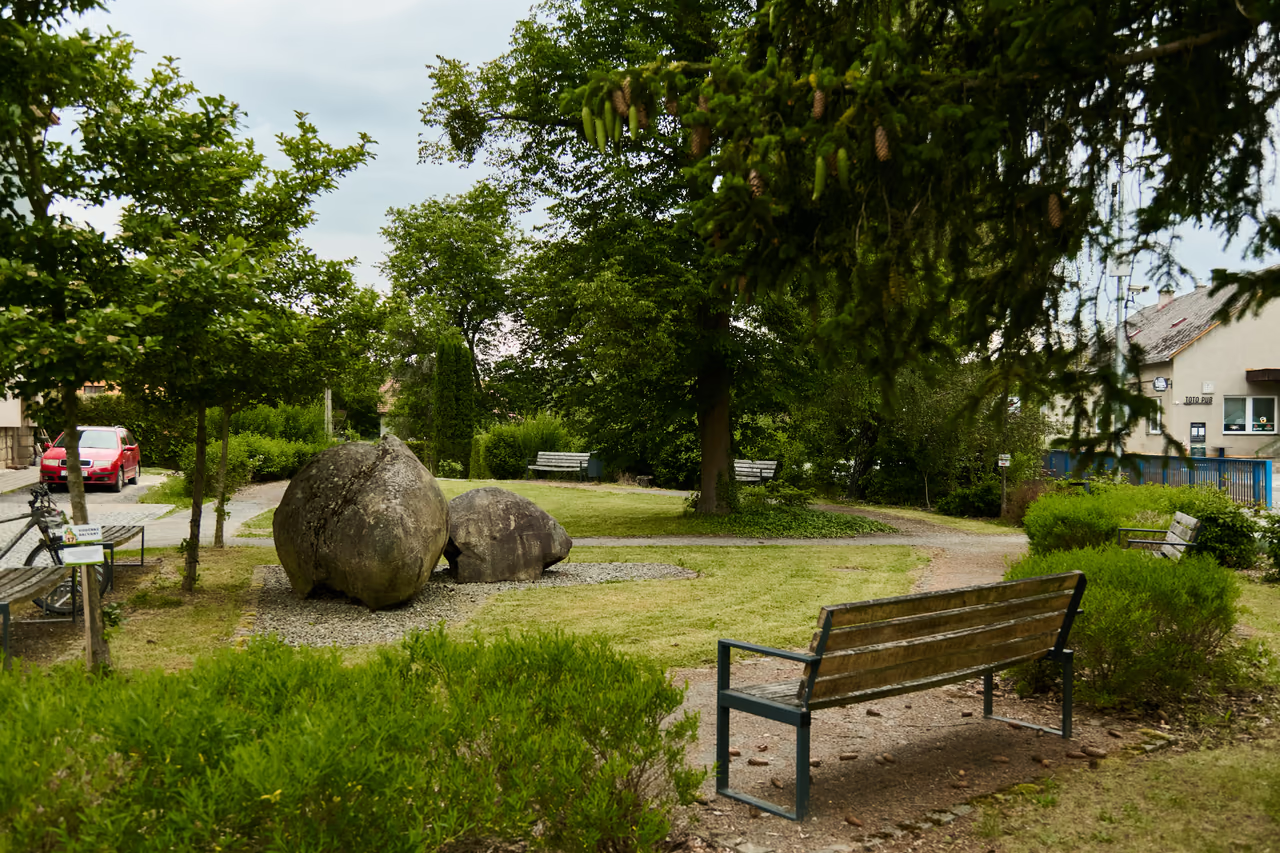
Several balls ended up in Vidče – the quarry's former owners had them brought here as an ornament. Today they lie in the open in the small park by the municipal office, a few steps from the Church of Saints Cyril and Methodius. You can sit on a bench in the shade of the trees and look at the balls for a while. There is also a sign with a short description under the name Videčské balvany.
Timeline
Palaeocene
Submarine currents lay down coarse sand in thick beds. The age is shown by foraminifera – the shells of marine organisms in the claystones between the layers.
after deposition
As the sediment hardens, the rock cements in some places faster than around them. Spherical bodies – concretions – come into being.
1990s
Workers in the quarry above Vidče come across balls falling out of the sandstone beds. The find sets off speculation about their origin.
2012
The site “Vidče – kamenné koule” enters the Czech Geological Survey's database of important geological sites. The quarries are disused and overgrown today.
On a gravel bed in the centre of Vidče, by the municipal office – the Church of Saints Cyril and Methodius stands opposite across the road.
No. The balls lie in the open in a park. They are accessible all year.
They are concretions: as the sediment hardened, the rock in the sandstone cemented faster than around it and grew into a spherical shape.
We would not recommend it. The quarries above the village are overgrown, without a waymarked path, and the Czech Geological Survey rates their condition as poor. The balls in the village show the same thing without the risk.
Otázka 1 z 5
 Rysík→
A few quizzes and I get glasses, and I will feel properly educated.
Your rank: Homebody. You do not have a single stamp yet. Visit any place and become a Pilgrim.
You can experience the Beskids and Moravian Wallachia with Rysík and without him. Rysík would love to be there for it. Whether you take him along and take on the challenges with him is up to you.
You can find your favourite places in your account. On the Walking routes page you can use them to filter routes.
Suggest a more accurate wording.