Why come
A ruin swallowed by the forest
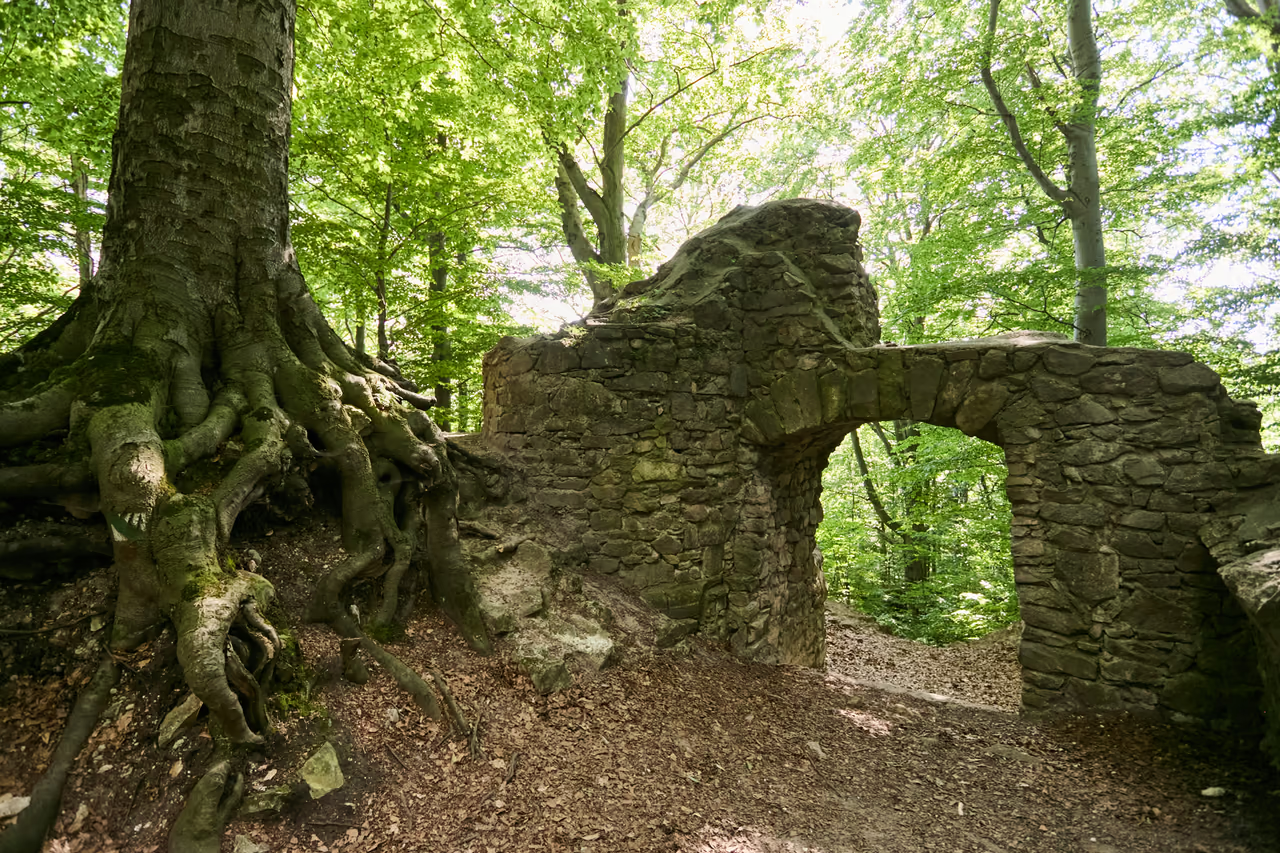
Beeches grow out of the walls and the ramparts disappear under leaves. A few hundred metres from the town stands a castle in the state that centuries without an owner left it in.
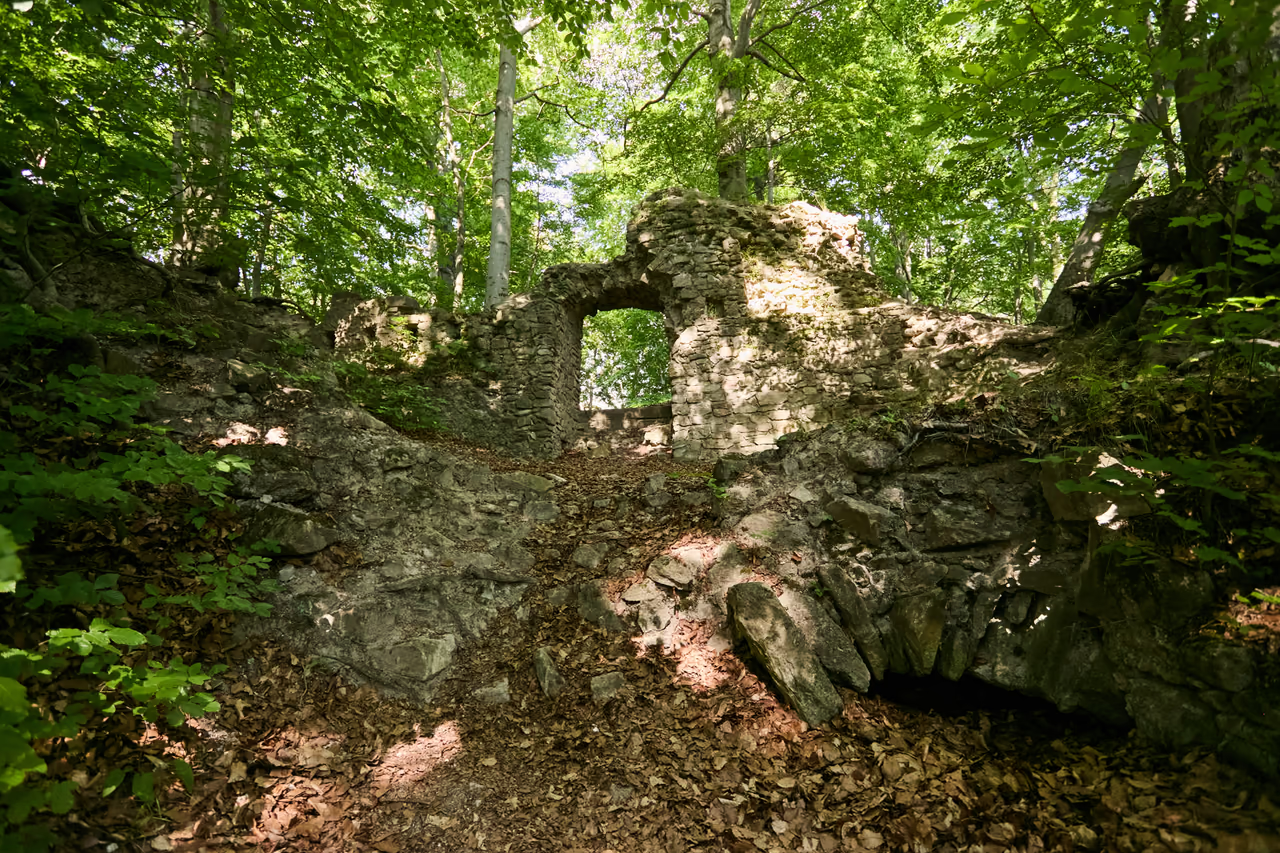
Hradisko hill • Rožnov pod Radhoštěm • Beskydy Protected Landscape Area
For three centuries it guarded the border of the land. Today beeches grow out of its walls.
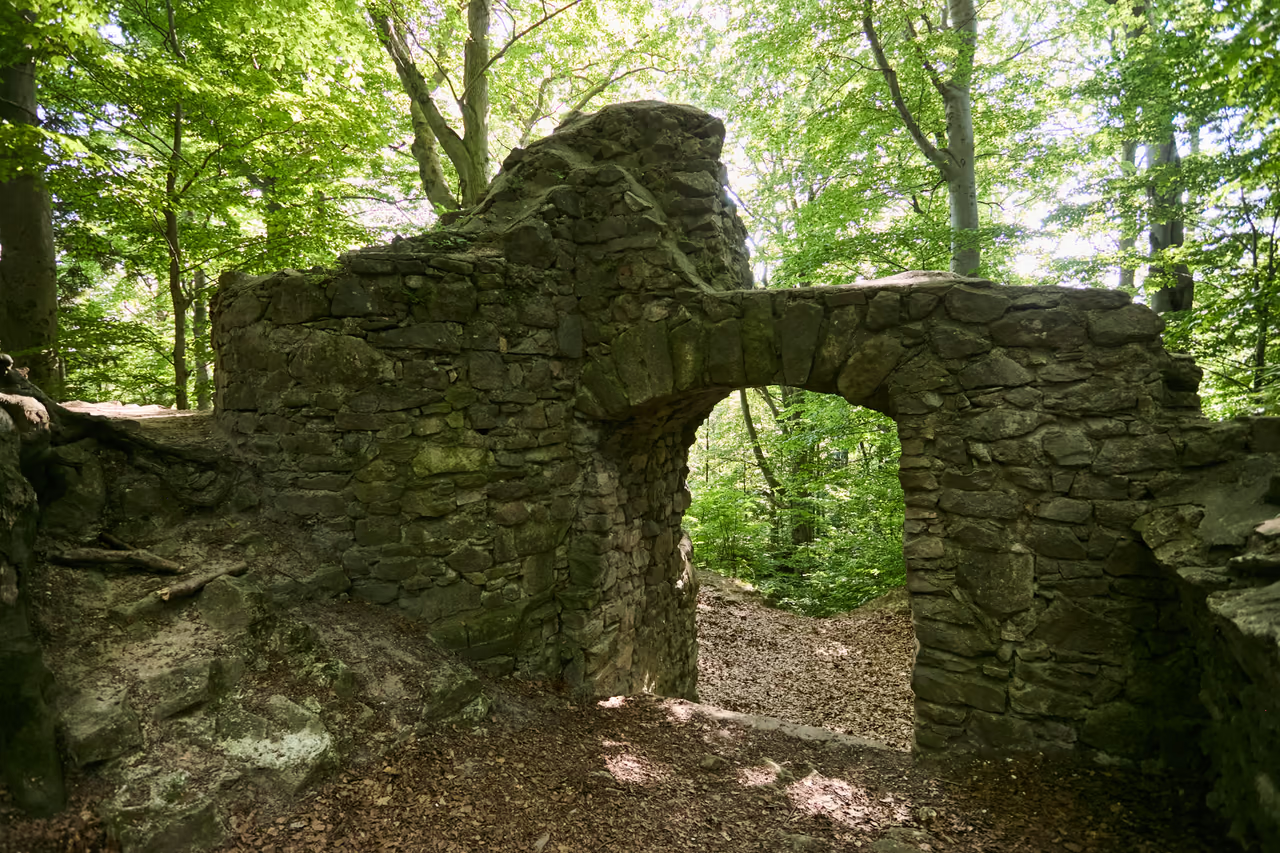
Of the medieval Rožnov Castle, what is left in the beech wood above the town are ramparts, ditches and the remains of walls with vaulted passages.
The castle guarded the border between Moravia and Hungary. It was pulled down on the king's order after a band of robbers settled in it.
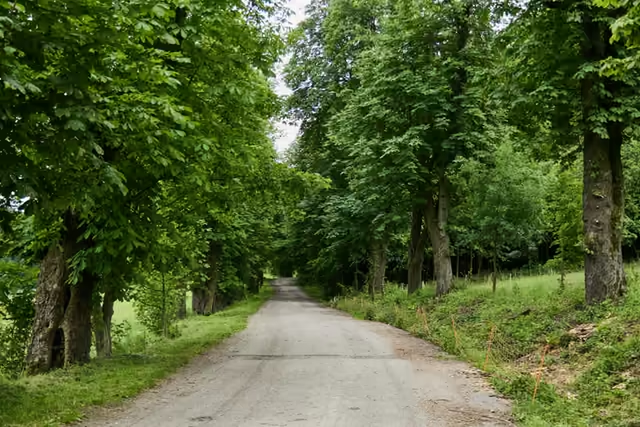
The way up to the castle ruins runs along tree-lined avenues.
Why come
Beeches grow out of the walls and the ramparts disappear under leaves. A few hundred metres from the town stands a castle in the state that centuries without an owner left it in.
When to come
The paths are forest tracks of earth and roots – slippery after rain. Spring brings the most light into the beech wood; in autumn the castle site is ankle-deep in leaves.
What not to miss
The best preserved part is the vaulted passage in the wall – elsewhere the masonry barely shows. The rest of the perimeter is given away by ramparts and ditches rather than by fragments of wall.

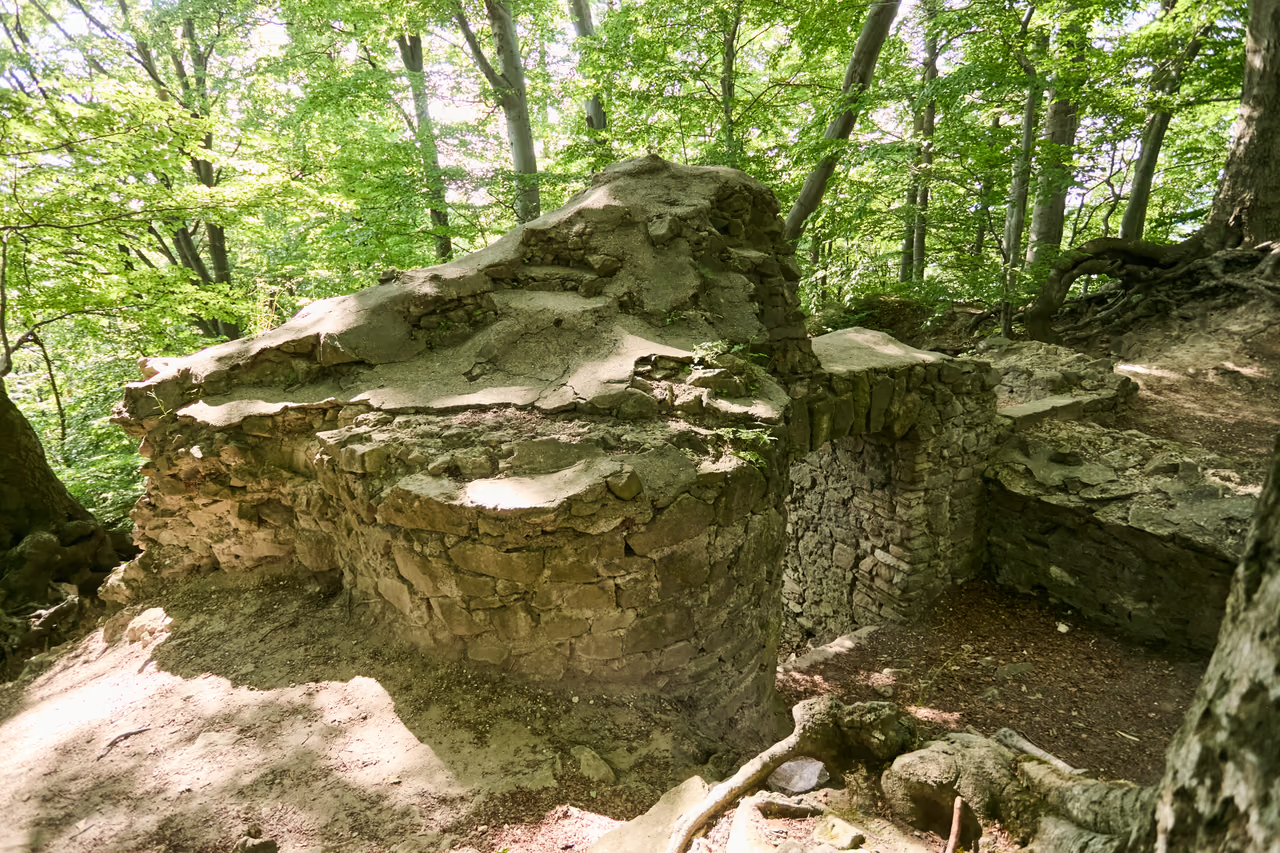
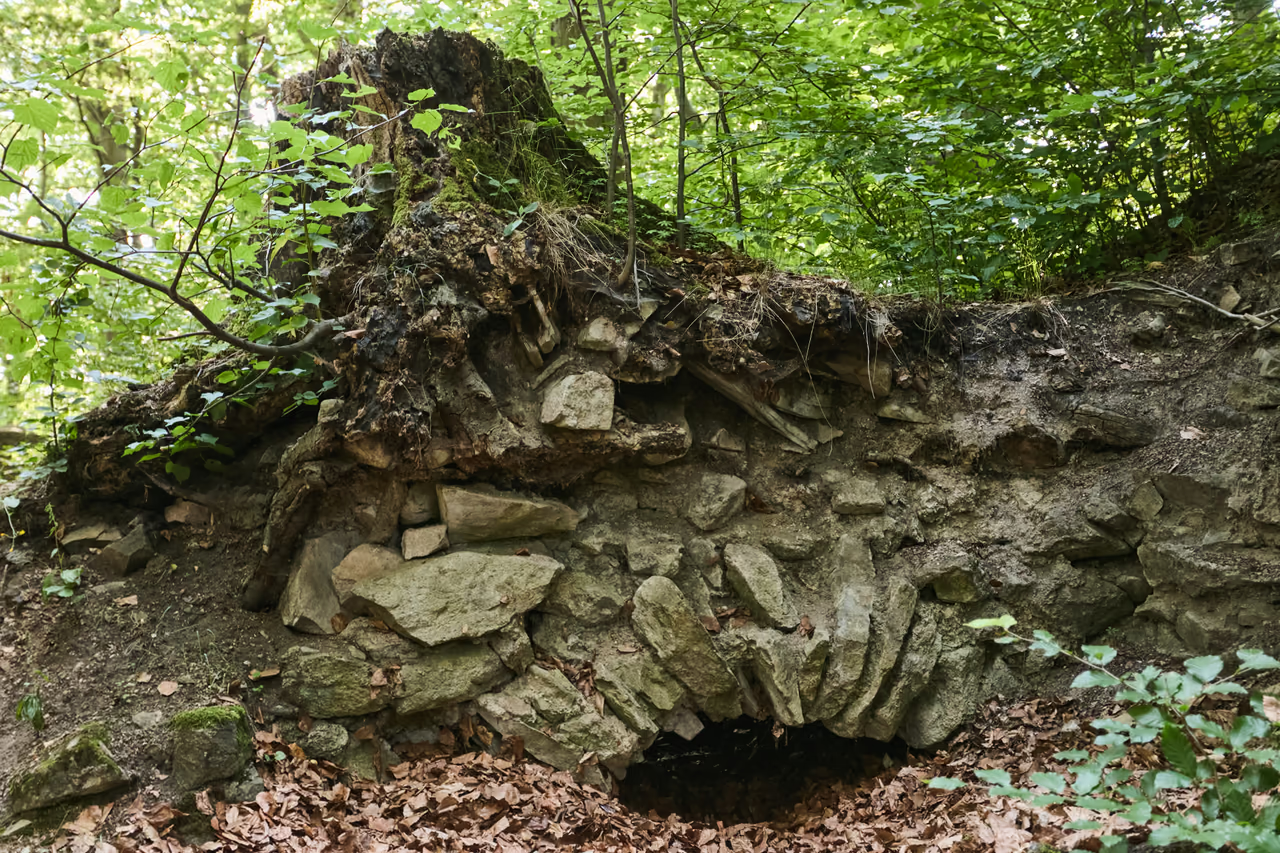
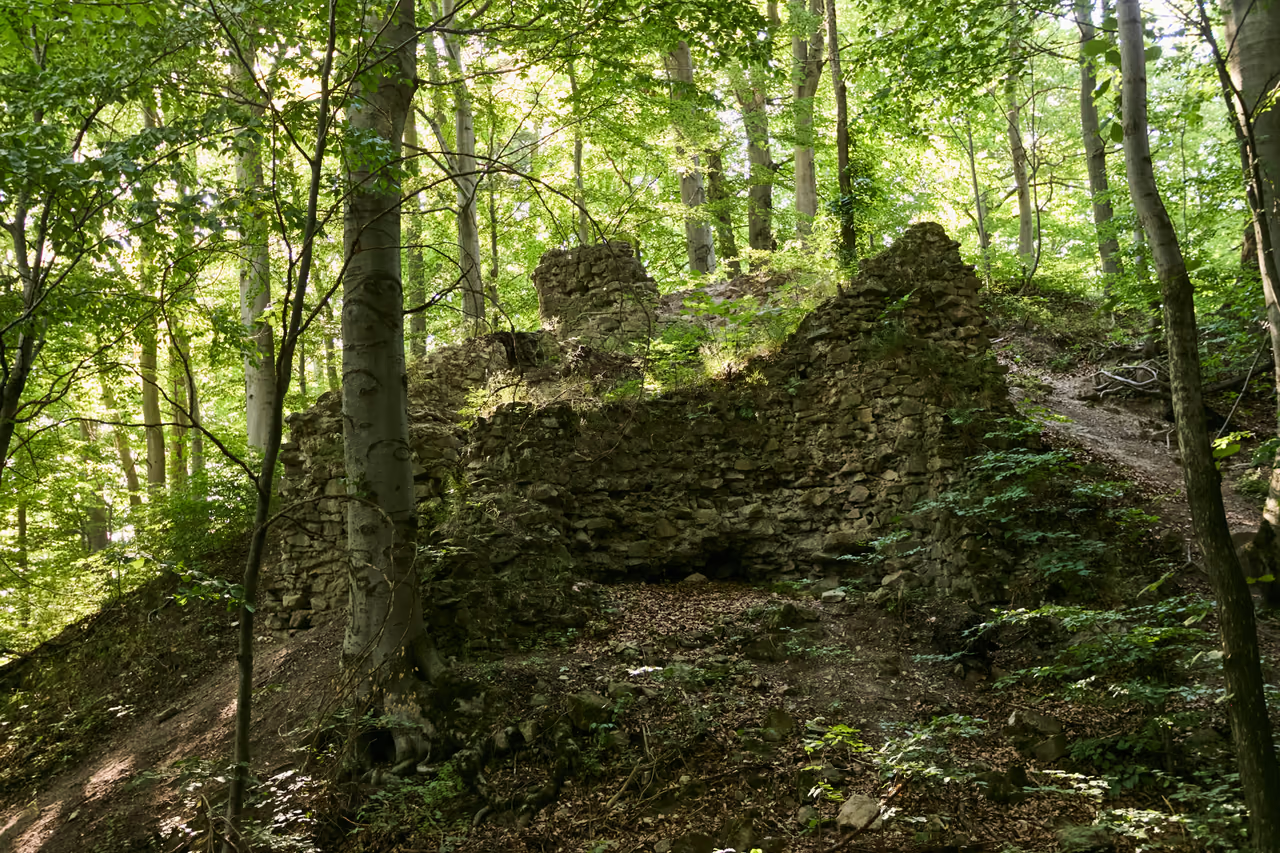
A castle that outlasted a king and a band of robbers was taken apart in the end by the people of Rožnov themselves.
13th–15th century
The castle went up on a wooded hill south-west of today's Rožnov pod Radhoštěm in the 13th century. The literature credits its founding to the Olomouc bishop Bruno of Schauenburg; the exact year has not survived. Its purpose was plain: to defend the border between Moravia and Hungary. It looked the part of a fortress: quarried stone laid in mortar, vaulted passages, no ornamental detail.
The first written mention dates from 1310. The castle was then held by the bishop's vassal Bohuslav of Krásno. After him came the lords of Kravaře, of Cimburk and of Pezinok, at the start of the 16th century the Kunštáts, and from 1535 the powerful Pernštejns.
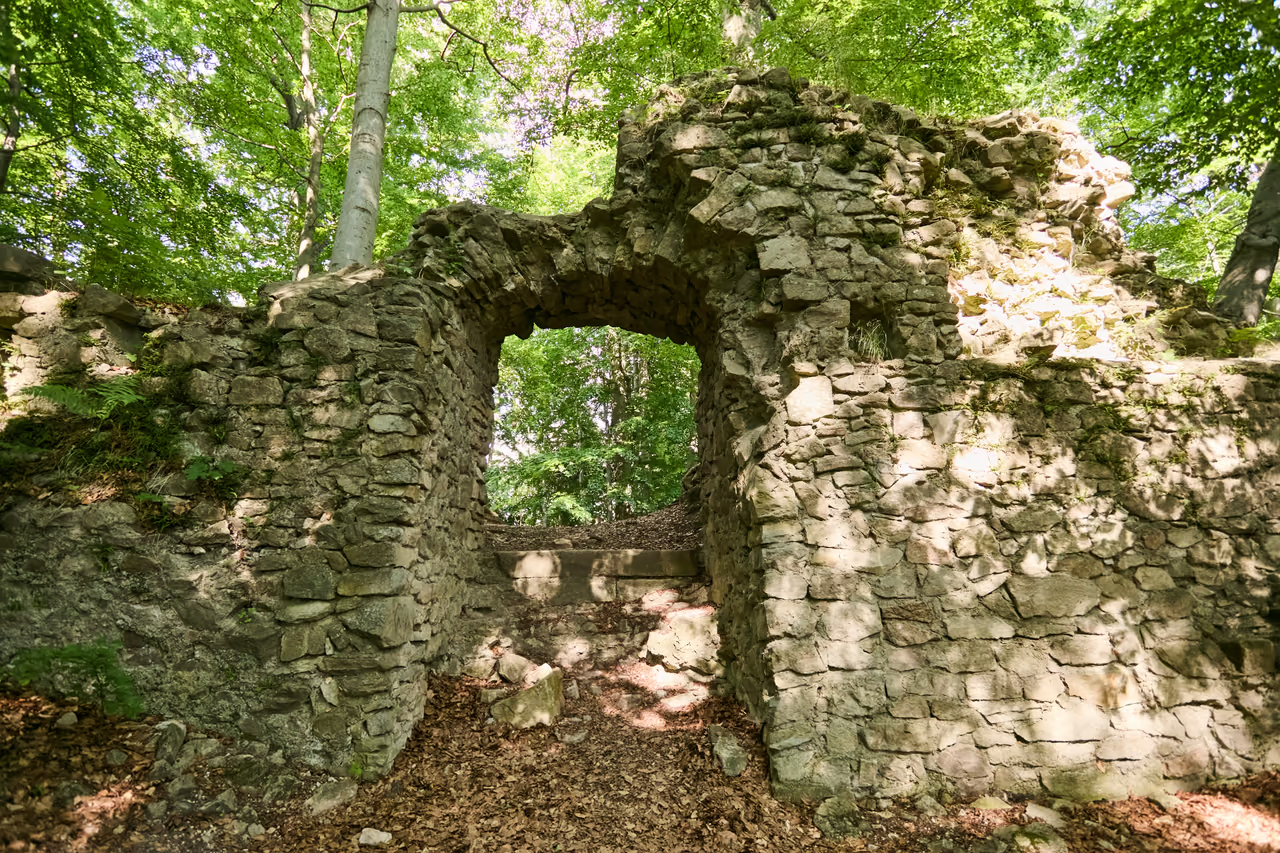
1539
The castle's end came not from an enemy outside but from what was going on inside: a band of robbers settled in it. In 1539 it was therefore taken and pulled down on the order of King Ferdinand I.
It was not left entirely empty, though: makeshift repairs kept the buildings in use by the estate's officials as late as 1660. The last people left only at the end of the 17th century.
19th century
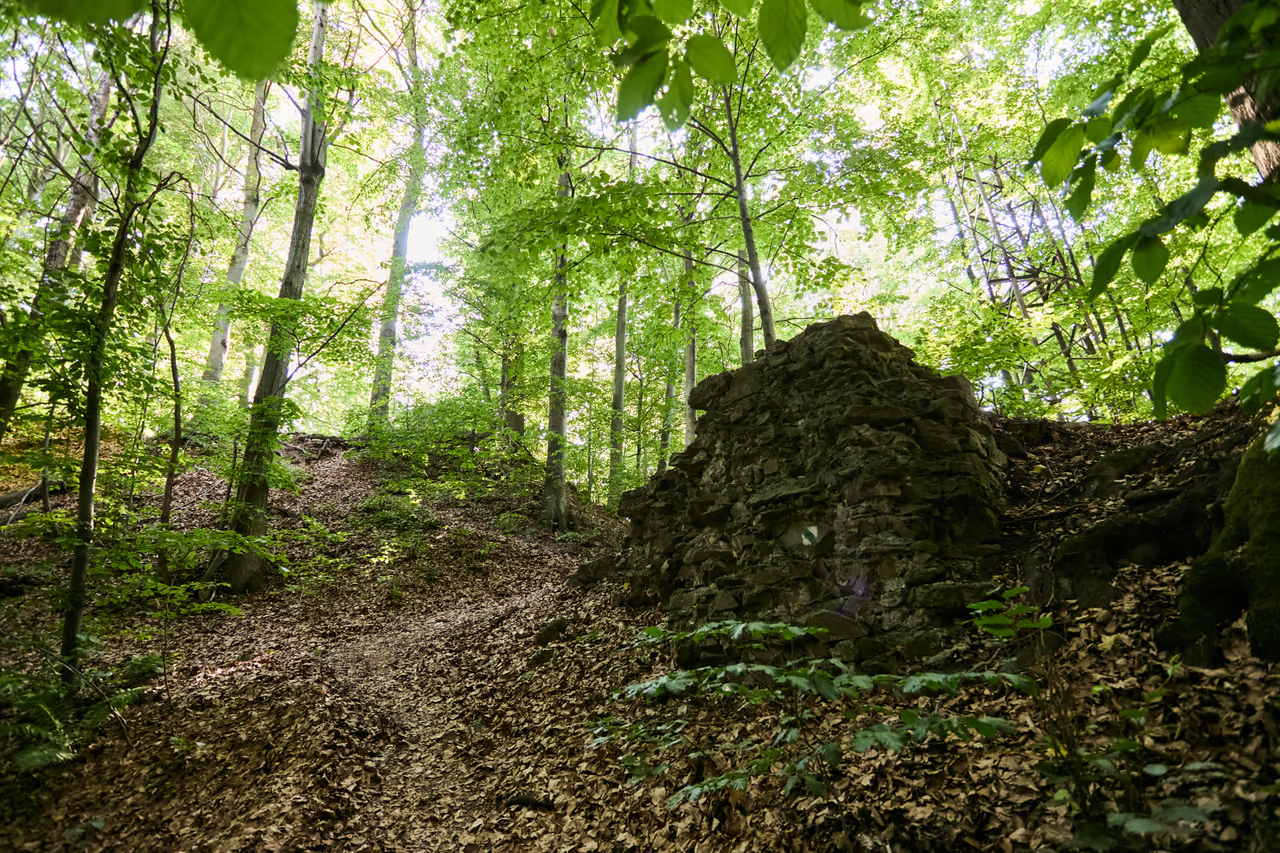
What the royal order did not finish, the neighbours did. In the second half of the 19th century the people of Rožnov were given permission by the municipal office to take the remains of the castle apart for building their own houses. Stone from up here is still to be found in the town below the hill.
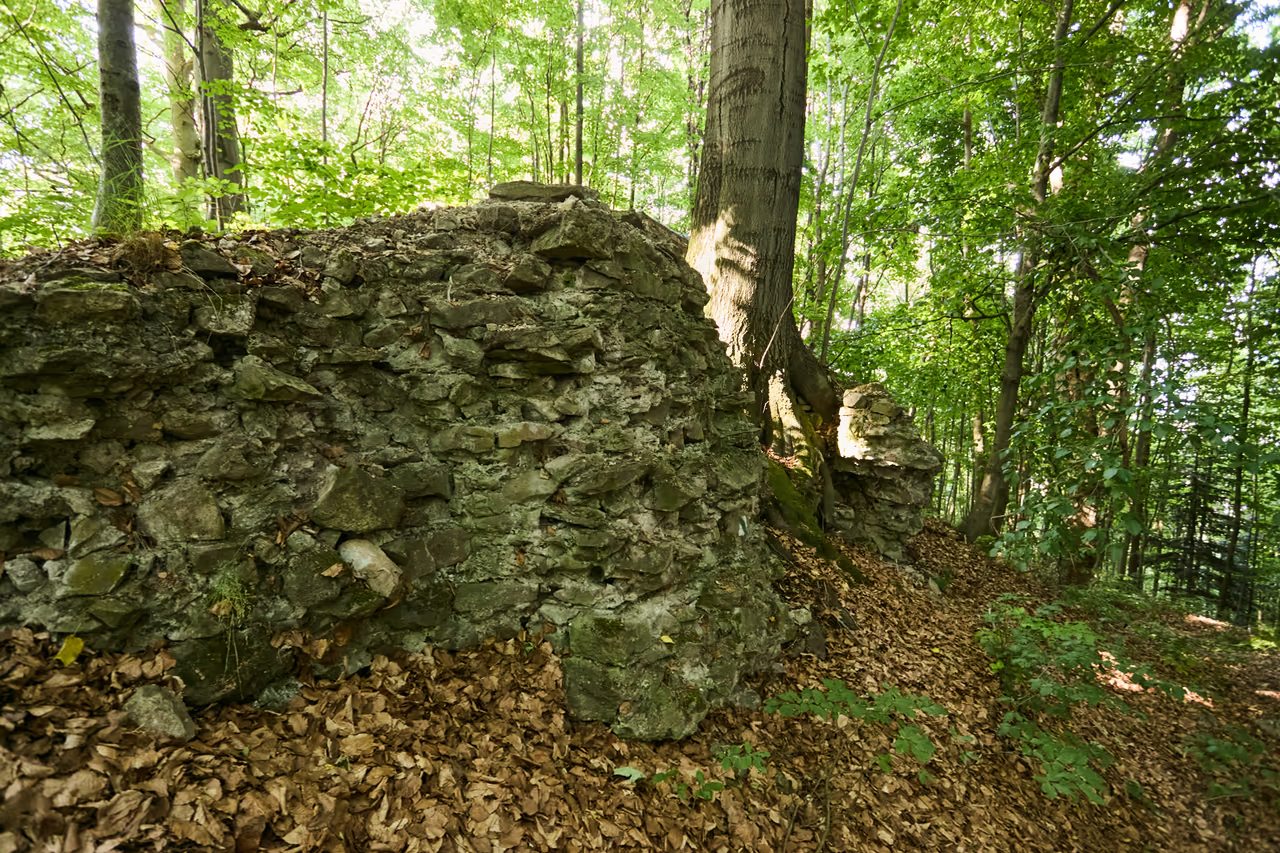
What was left is a fragment: the perimeter ramparts and ditches and parts of the walls with their vaulted passages. Since 1964 the ruins have been protected as a cultural monument, and the tops of the walls are held by a layer of mortar to stop the decay. Beeches now grow out of that same layer.
Today
The way to the top runs along a spur between ditches. The edges that look like natural ground are the castle's ramparts, and they ring its whole perimeter. The masonry is up on the platform.
The most photogenic part is the vaulted passage – the one place where you can walk through the masonry. From there you can go right round the perimeter: the remains of walls, the stone core and a cellar space below the edge.
Hradisko is freely accessible, with no tickets. A nature trail runs across it.
Timeline
13th c.
The castle rises on the hill above what later became Rožnov; the literature links it to the Olomouc bishop Bruno of Schauenburg. It guards the border between Moravia and Hungary.
1310
The castle is held by the bishop's vassal Bohuslav of Krásno.
1535
The estate passes to Jan of Pernštejn.
1539
A band of robbers has settled in the castle. King Ferdinand I therefore has it taken and pulled down; the estate stays with the Pernštejns.
1660
Makeshift repairs keep the buildings in use by the estate's officials. By the end of the 17th century the castle is abandoned altogether.
1820
Josef Drobník founds a climatic spa in Rožnov. The walk up the avenue to Hradisko becomes one of the recommended routes for health walks.
The avenues on Hradisko2nd half of 19th c.
The people of Rožnov are given permission to take the remains of the castle apart and build their own homes from them.
1964
The ruins are listed among protected cultural monuments.
Today
The ruins are freely accessible and the tops of the walls are capped against decay. The Hradisko nature trail, with nine stops, runs across the hill.
Beskids passport
Are you here in person?
This page has already been added to your Beskids passport as a digital visit. To collect a badge for visiting in person, use the button below while you are there.
Your browser asks for your location once when you click. Verification happens offline on your device and your location is not sent anywhere.
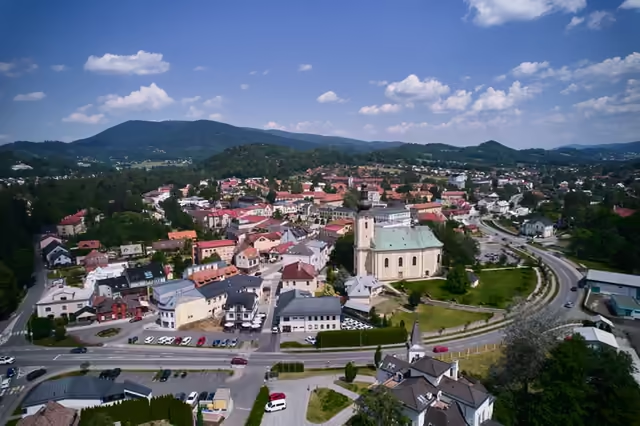
The way up the hill begins in the Bučiska district, within walking distance of the centre.
A climb between old trunks – a lime avenue along the old road to the castle.
Ramparts, ditches and the remains of walls with the vaulted passage. From here the trail loops back towards the town.
Going back: the nature trail is a loop – you come down the other branch and return to town by a different way than you came.
Free, open at any hour. The ruins are in the forest, neither fenced nor guarded.
Forest tracks with roots, earth and stones, slippery after rain. The walls are ruined and unsecured – do not climb on the masonry and keep children close. The route is not suitable for a pushchair.
The trail has 9 stops, the loop is 3 km long and takes about 2 hours.
Down in Rožnov.
Yes. The most striking part is the vaulted passage in the wall, which you can walk through. Around it stand the remains of walls, and ramparts and ditches ring the whole perimeter of the castle, easier to read in the ground than the masonry itself.
A band of robbers settled in it, and so King Ferdinand I had it taken and pulled down in 1539. Makeshift repairs kept the buildings in use by the estate's officials as late as 1660, and the last people left at the end of the 17th century. In the second half of the 19th century the people of Rožnov took the remaining masonry away to build their own houses.
On foot from Rožnov; the way up the hill begins in the Bučiska district. Hradisko is freely accessible and there is no charge.
The nature trail has 9 stops, is 3 km long and takes about 2 hours.
Not on Hradisko. The nearest refreshments and toilets are down in Rožnov.
Otázka 1 z 4
 Rysík→
A few quizzes and I get glasses, and I will feel properly educated.
Your rank: Homebody. You do not have a single stamp yet. Visit any place and become a Pilgrim.
You can experience the Beskids and Moravian Wallachia with Rysík and without him. Rysík would love to be there for it. Whether you take him along and take on the challenges with him is up to you.
You can find your favourite places in your account. On the Walking routes page you can use them to filter routes.
Suggest a more accurate wording.