Why come here
Czechia's only memorial to Ch. G. Masaryková
The wife of the first president has only one memorial of her own in Czechia – on the slope above the former school at Zákopčí, part of Hutisko-Solanec.
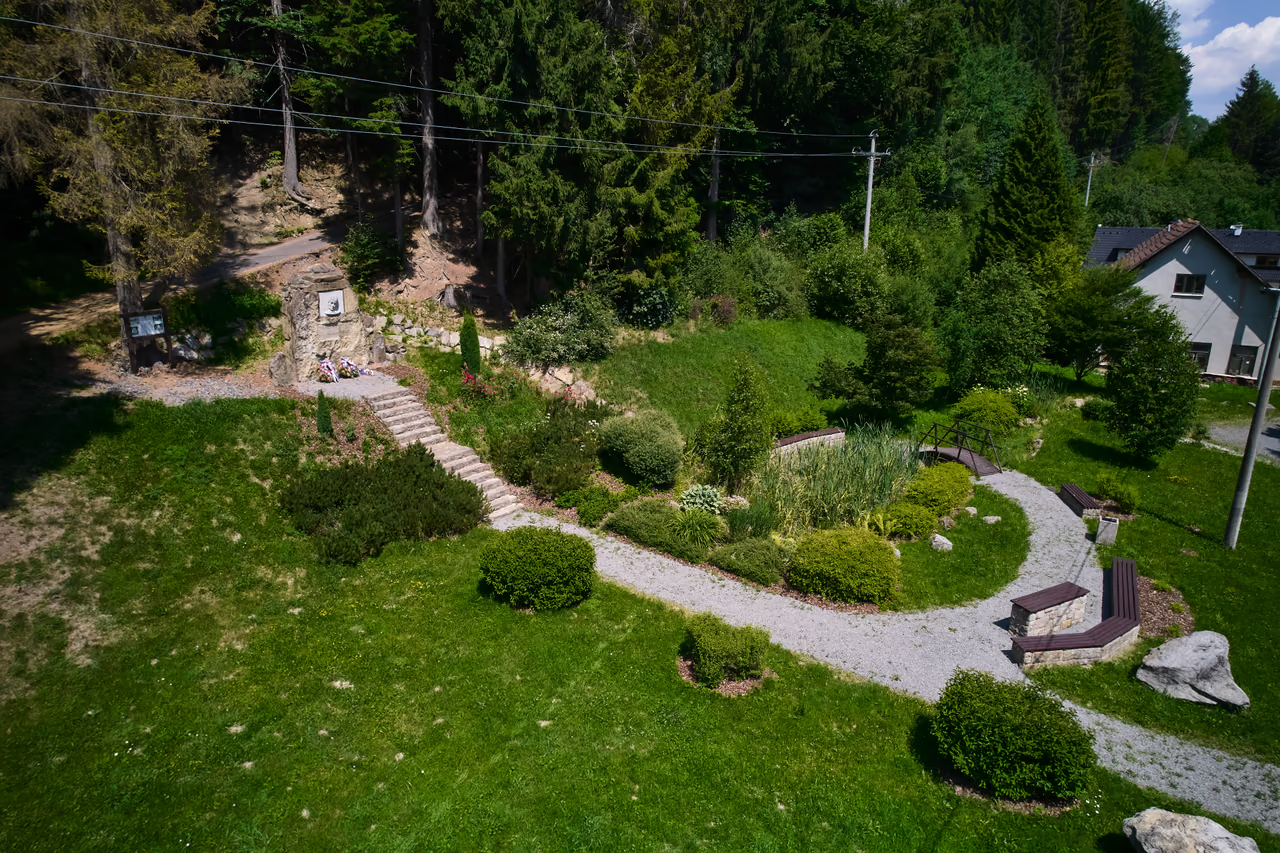
Memorial • Hutisko-Solanec, the Zákopčí quarter • unveiled in 1926
Czechia's only memorial to the wife of the first Czechoslovak president.
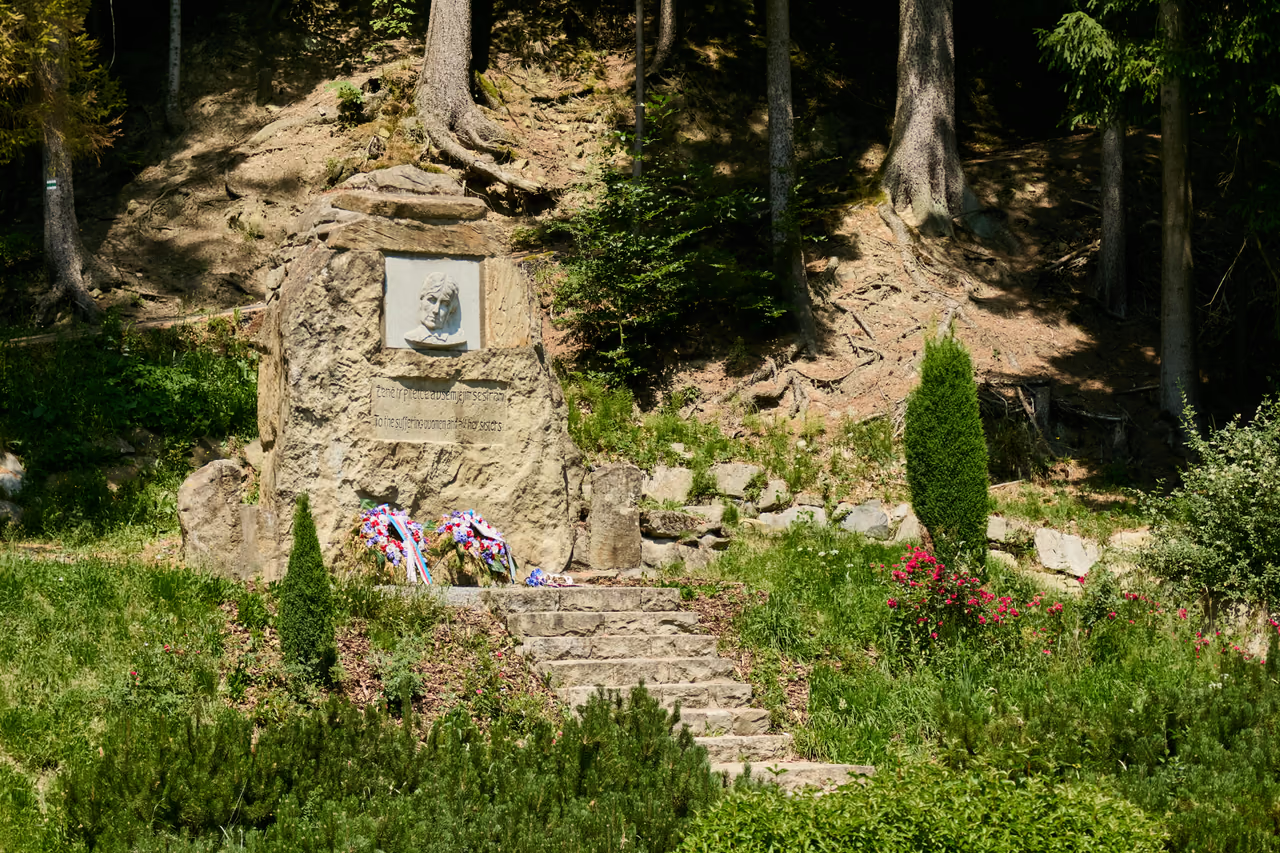
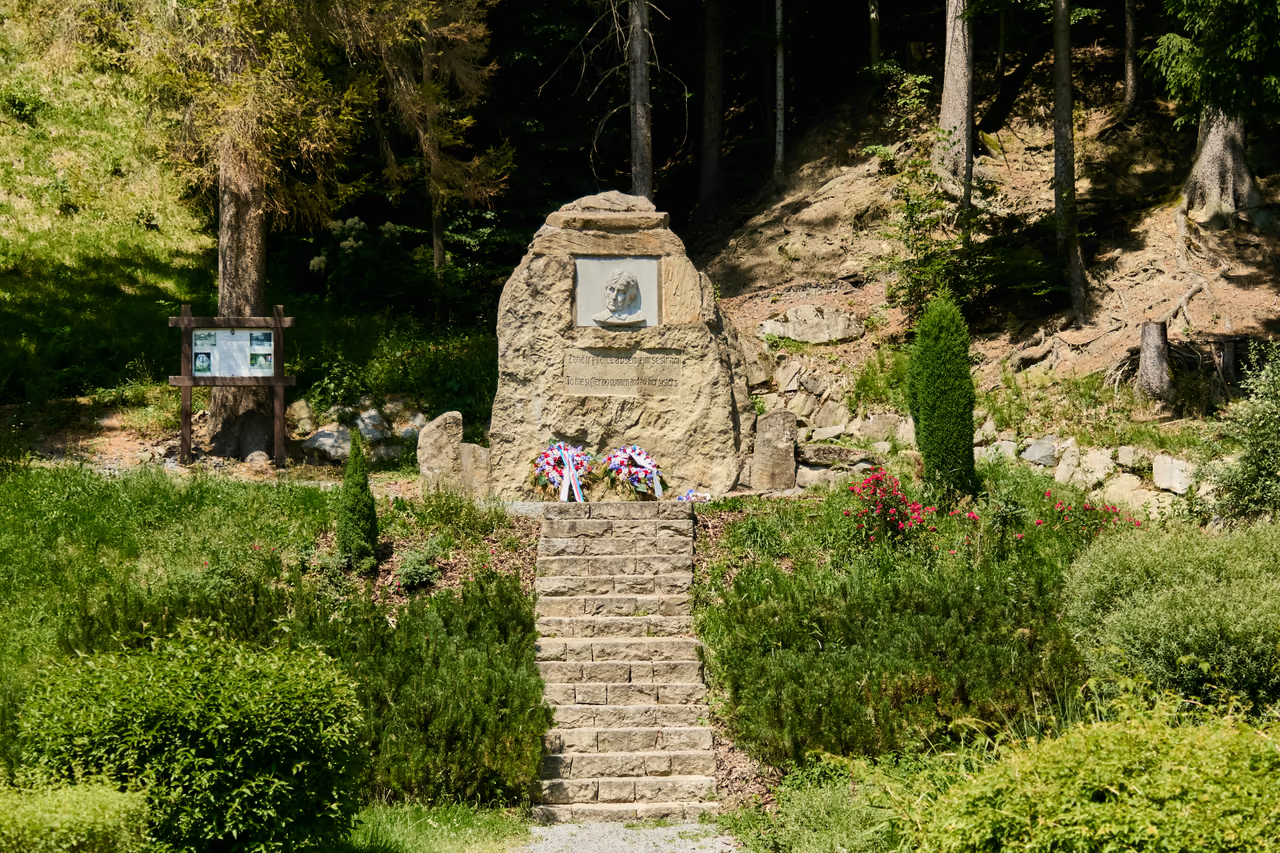
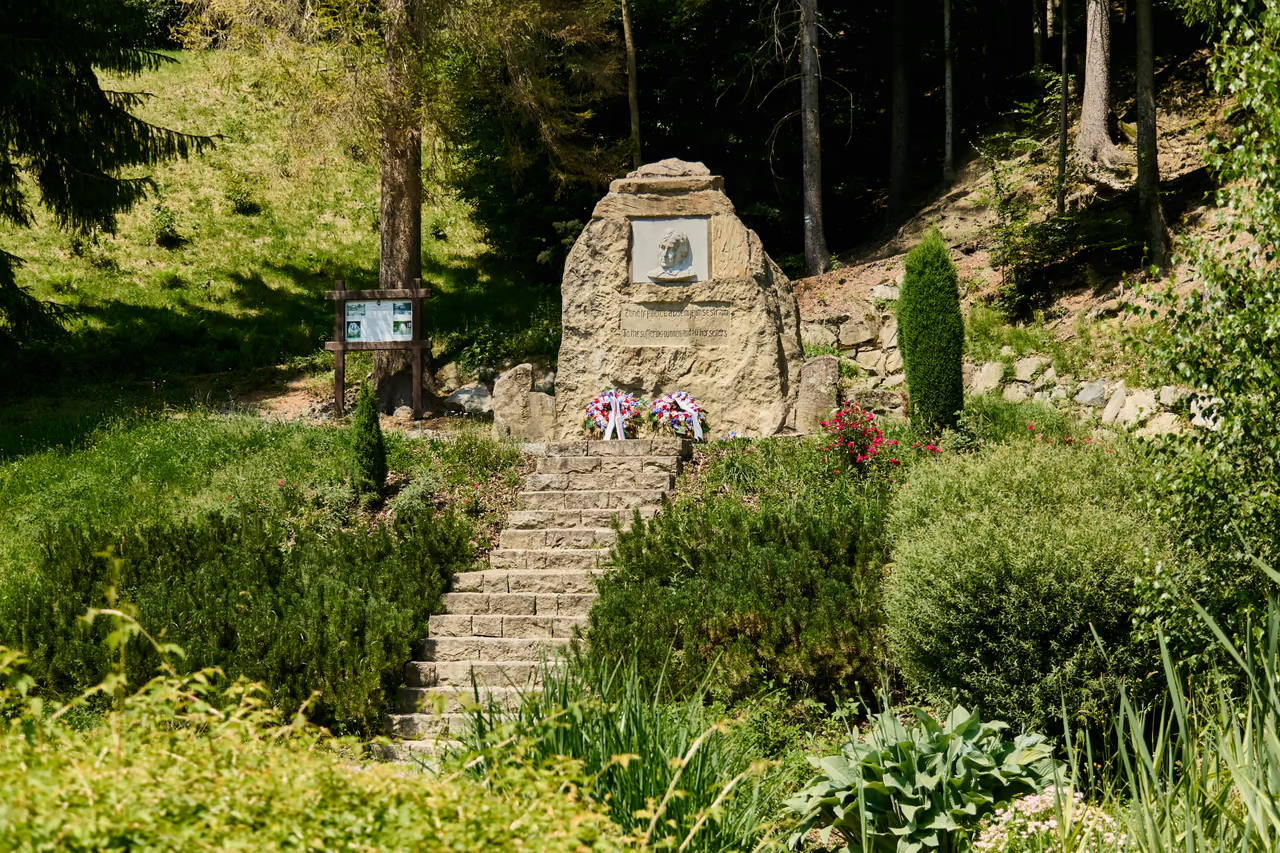
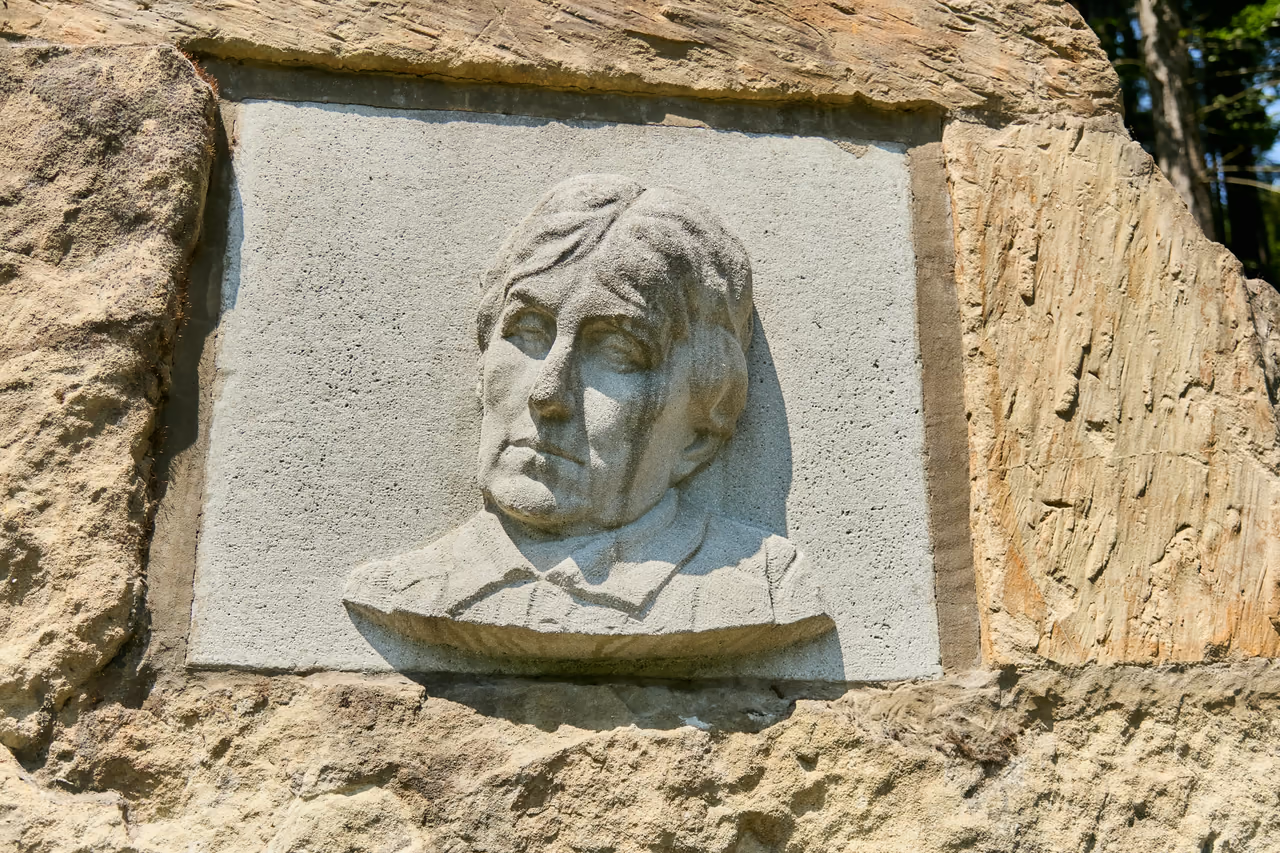
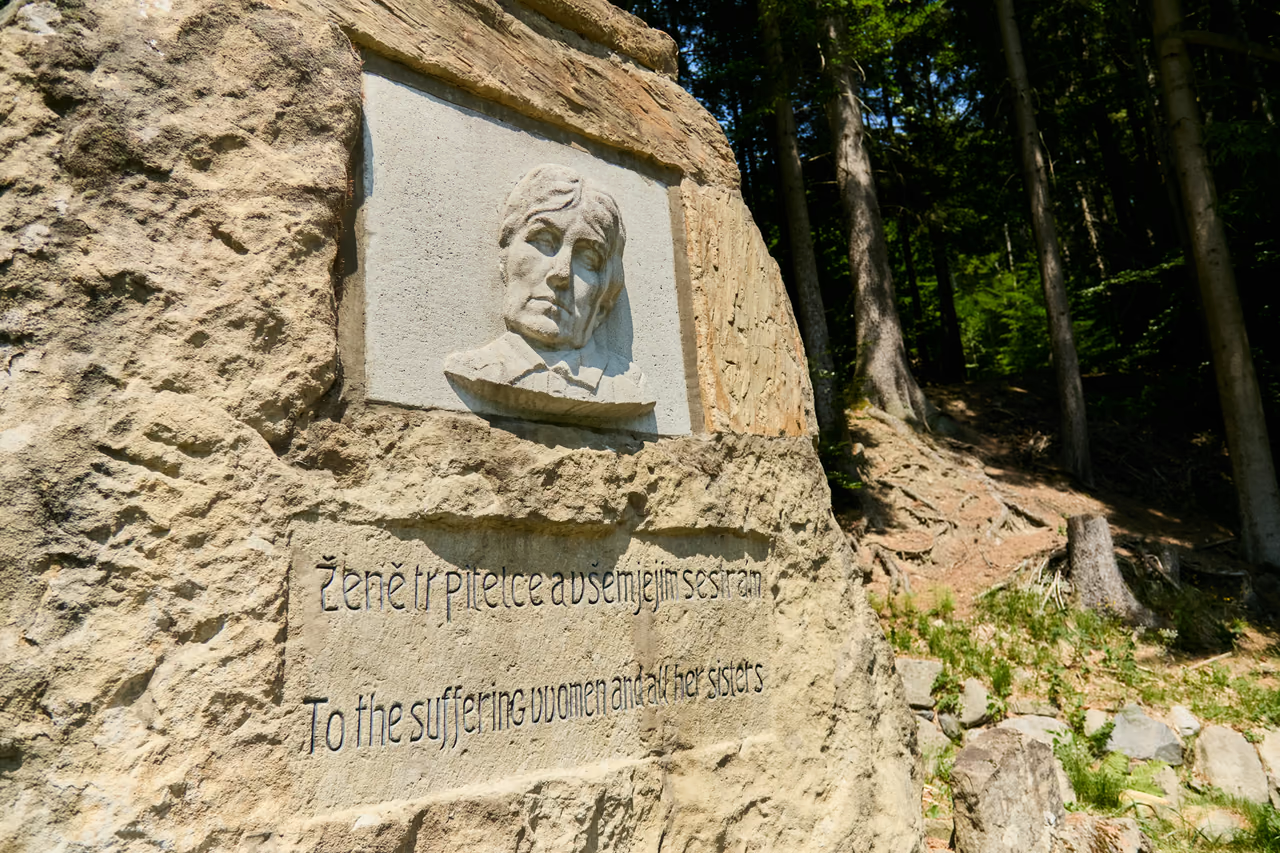
On the slope above the former school at Zákopčí, part of Hutisko-Solanec, stands a sandstone boulder with a plaque bearing a relief of a woman's face. It is Czechia's only memorial to Charlotta Garrigue Masaryková. It was raised by the head teacher of the local one-class school together with his pupils and his neighbours.
The stone lay half buried in the slope, and it was said among the people that the devil had brought it there. The teacher Cyril Mach set out to break that superstition by giving the boulder a new meaning – and so the memorial to Charlotta Masaryková came about.
Why come here
The wife of the first president has only one memorial of her own in Czechia – on the slope above the former school at Zákopčí, part of Hutisko-Solanec.
When to come
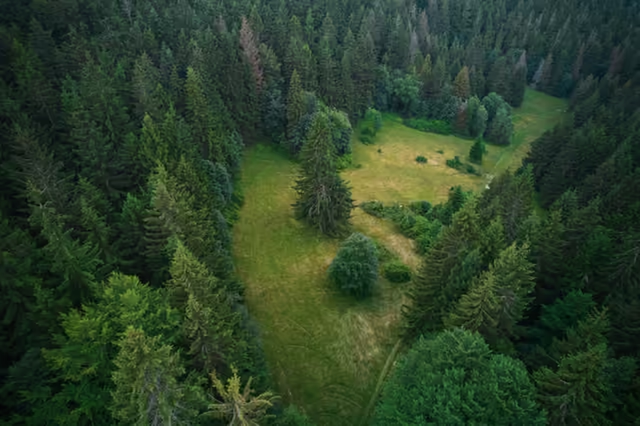
The memorial stands in open country beside the road. The surroundings are landscaped – steps lead up to it, with benches and flower beds around.
What not to miss
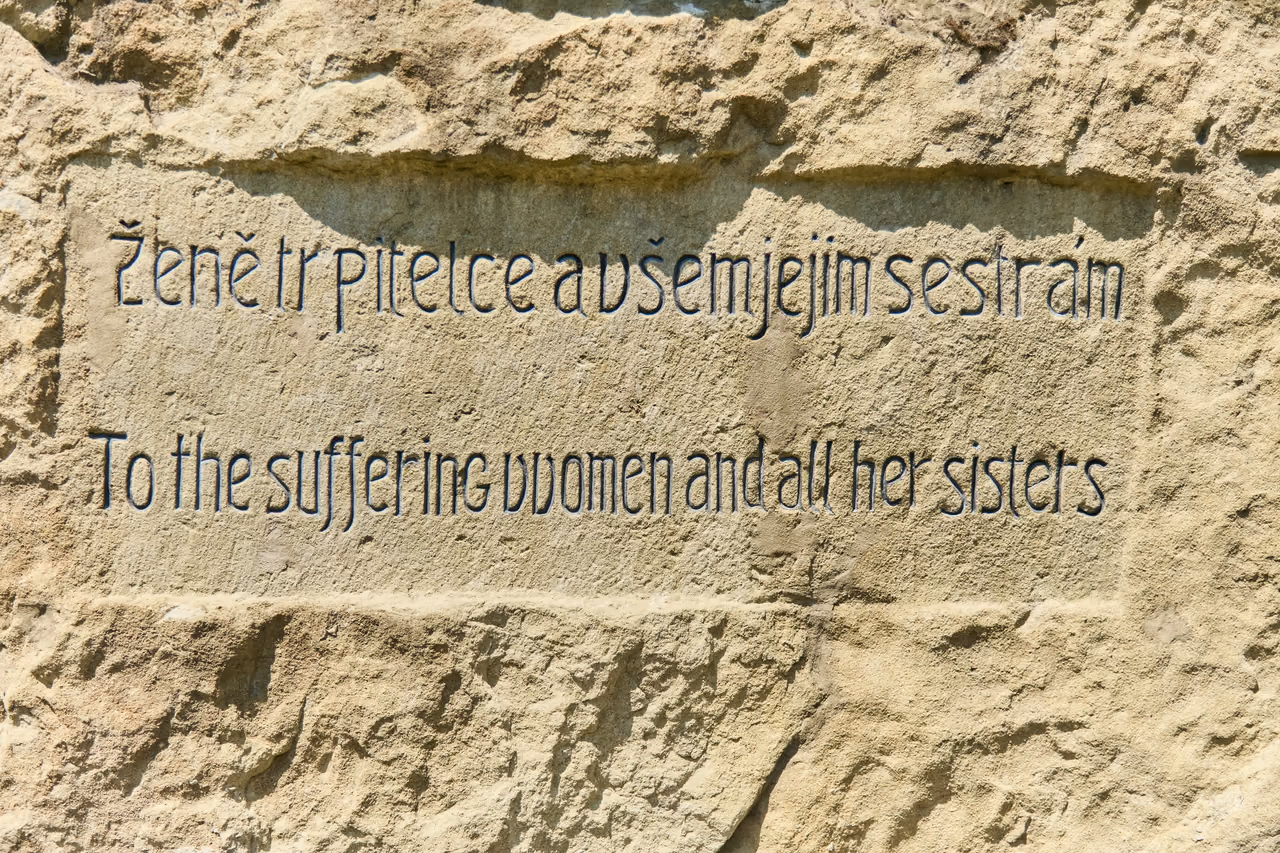
The same words stand below the relief in Czech and in English. In the English sentence the W is carved as two Vs – the stonemason had no W in the Czech alphabet.

Three years of work by one village school
1920–1923: the teacher and the boulder
A new head teacher, Cyril Mach, took over the one-class elementary school at Zákopčí near Hutisko in 1920. His start was hard twice over: as a non-believer and a progressive he made slow headway among devout neighbours, and the school itself had no textbooks, exercise books or teaching aids – at first the Machs bought them on credit.
Mach looked for money wherever he could: he wrote letters asking for support, advertised in the press of the day and put together a lecture programme on the poverty of Wallachia that he took around the whole republic. Among those who supported the school were Alice Masaryková and Tomáš Baťa. Poverty also kept the children away from lessons – so, working with a foundation that bore Charlotta Masaryková's name, Mach began drawing them into the classroom with a bowl of hot soup.
On the slope above the school lay a massive sandstone boulder, half buried in the ground. People said the devil had brought it there. Mach wanted to break that belief: he called children and adults to the boulder and explained that a stone like this could become the symbol of something equally great. Then he let the pupils vote on whom the monument should belong to. Some were for Hus, others for Žižka, but most of the children wanted Komenský.
13 May 1923
Charlotta Garrigue Masaryková died on 13 May 1923 at Lány. At the school in Zákopčí the name was familiar: the soup for children from poor families was cooked from the funds of the Charlotta Masaryková foundation.
Mach and his pupils decided the boulder would belong to her. The tribute was to go to a woman who had worked all her life for the equality of women and who had had her own share of suffering.
Twenty-one days, and on the last one the scaffolding gave way
The work began in October 1923 and was beyond the strength of a single village. Mach recorded in the school chronicle: “The work was very hard. The boulder, weighing over 180 q, was lifted only a few cm at a time. The joints were filled in. At last, after 21 days, the stone was set up.”
That was not the end of it. “But on the very last day the whole scaffolding gave way,” Mach recorded.
Finishing the whole monument took another two years. The rectangular plaque with the relief of Charlotta Masaryková was not set into the face of the boulder until late spring 1926. It was made by the Brno academic sculptor Václav Hynek Mach – according to Valašský deník the only man Masaryk personally allowed to model him from life at Prague Castle, so he knew his wife's likeness as well.
A ceremony that waited for the summer
Below the plaque with the relief the stonemason cut and gilded a bilingual inscription:
In Czech
Ženě trpitelce a všem jejím sestrám
In English
To the suffering women and all her sisters
It is addressed to women in general rather than to the first lady – to the women whose equality Charlotta worked for all her life. The English version is there because of where Charlotta came from: she was born in Brooklyn and English was her mother tongue. The lettering was gilded originally, and in the English sentence look at the letter W – the stonemason had none in the Czech alphabet, so he carved it as two Vs side by side.
The unveiling was to take place in May, the month in which Charlotta died. The work dragged on, so it moved to 17 and 18 July 1926 – shortly after the 8th all-Sokol rally, so that guests from abroad could call in on their way.
The ceremony was held under the patronage of Ženská národní rada, the national council of women, and the Zlín industrialist Tomáš Baťa supported it financially. The two-day celebration with music and folk costume culminated on the Sunday, when the monument was unveiled by leading figures of the women's movement.
That gave the village a second Masaryk monument: the one to the president had stood in front of the school building since 1922, also on Mach's initiative.
1939–1945: what became of the teacher
After the occupation of March 1939 Mach joined the resistance as an experienced mountain guide: he led soldiers across the Beskids into Poland on their way to the army abroad, among them the future fighter pilots Karel Mrázek and František Fajtl. The Gestapo tracked him down that same year – so Mach chose to leave and teach in Prague.
Cyril Mach died on 6 May 1945 defending the Český rozhlas radio building in Prague. The day before, he had heard the defenders' desperate call for help on the radio and set off for the spot at once. A court declared him dead only two years later, in 1947.
The school at Zákopčí unveiled a memorial plaque to him in 1959. Mach had wished to rest in Wallachia – so in 1981 a handful of earth from the grave of the radio's fallen defenders was symbolically laid at Valašský Slavín.
Timeline
1920
Cyril Mach takes over the one-class elementary school at Zákopčí near Hutisko. The school has no textbooks and no teaching aids; he raises money for it by lecturing across the republic.
1922
On Mach's initiative the people of Zákopčí unveil a monument to T. G. Masaryk in front of the school building.
13 May 1923
Mach and his pupils decide the boulder on the slope will belong to her. It was to have commemorated Komenský, who had won the vote in the classroom.
October 1923
After 21 days the boulder stands. On the last day the scaffolding gave way – it had to be built again.
spring 1926
A plaque by the sculptor Václav Hynek Mach is set into the face of the boulder, and a bilingual inscription is cut and gilded below it. The pupils plant the slope with young spruces and birches.
17–18 July 1926
Ženská národní rada takes the ceremony under its patronage, and Tomáš Baťa supported the unveiling with a gift of 1,000 crowns. Leading figures of the women's movement unveil the monument.
1930
A new building joins the one-class school, and the school at Zákopčí runs as a three-class school under the name Škola Charlotty Garrigue Masarykové.
6 May 1945
The head teacher dies defending the Český rozhlas building. He is declared dead only in 1947.
1959
A memorial plaque with a bust of Mach is unveiled on the school building at Zákopčí; it is still there.
1981
A handful of earth from the grave of the radio's fallen defenders is symbolically laid at Valašský Slavín in Rožnov.
2015
The ground around the memorial becomes a quiet zone with a pool, benches, ornamental beds and stone steps up to the monument.
July 2016
A public ceremony is held at the memorial for the 90th anniversary of the unveiling.
Beskids passport
Are you here in person?
This page has already been added to your Beskids passport as a digital visit. To collect a badge for visiting in person, use the button below while you are there.
Your browser asks for your location once when you click. Verification happens offline on your device and your location is not sent anywhere.
The green route leaves the village towards the slope above Zákopčí. By car you can skip this part and drive straight into the quarter – the walkable stretch of the waymarks is then only the last few minutes from the foot of the slope.
The monument stands right on the waymarked route, a short way above the former school. The last few metres to it lead up stone steps.
From the memorial the green waymarks climb on up the slope to Vsacká Tanečnice – with time to spare, you can keep going.
The monument stands in open country beside the road, with an information panel next to it. It is a place of remembrance – and wreaths with ribbons in the national colours are often laid at its foot.
The way up to the monument goes by stone steps on the hillside. After rain the surface is slippery.
There are benches by the monument. Refreshments and toilets are in Hutisko-Solanec.
At Hutisko-Solanec, in the quarter of Zákopčí, on the slope above the former school building. The green waymarked route from Hutisko to Vsacká Tanečnice passes it.
Yes. This is the only memorial of its own to the wife of the first Czechoslovak president in the country.
The teacher Cyril Mach let his pupils vote. Some were for Hus, others for Žižka, but most of the children wanted Komenský. When Charlotta Masaryková died in May 1923, they decided on her.
The English wording carved below it reads “To the suffering women and all her sisters”. The words are addressed to women in general rather than to the president's wife alone – hence the sisters. The English version is there because Charlotta was born in Brooklyn and English was her mother tongue.
The head teacher of the one-class school at Zákopčí near Hutisko from 1920, an organiser of hiking and skiing, an ethnographer and a member of the resistance. In 1939 he led soldiers across the Beskids into Poland on their way to the army abroad. He died on 6 May 1945 defending the Český rozhlas building in Prague.
Raising the boulder alone, which the school chronicle puts at over 18 tonnes, took 21 days, and on the last day the scaffolding gave way. The finishing work then dragged on; the unveiling planned for May 1926 moved to 17 and 18 July.
Not all the way – the last stretch climbs stone steps on the hillside. Zákopčí also lies away from the main built-up area of the village; the surest way is to walk the green waymarks.
Otázka 1 z 5
 Rysík→
A few quizzes and I get glasses, and I will feel properly educated.
Your rank: Homebody. You do not have a single stamp yet. Visit any place and become a Pilgrim.
You can experience the Beskids and Moravian Wallachia with Rysík and without him. Rysík would love to be there for it. Whether you take him along and take on the challenges with him is up to you.
You can find your favourite places in your account. On the Walking routes page you can use them to filter routes.
Suggest a more accurate wording.
The monument is only one point – the man who raised it has his name at Valašský Slavín, and the same green waymarks carry on to the ridge.
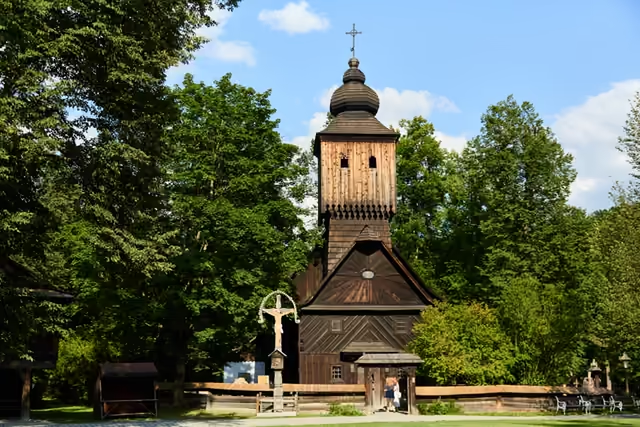
Where Cyril Mach has his name
The cemetery of honour at the open-air museum in Rožnov. In 1981 a handful of earth from the grave of the radio's fallen defenders was symbolically laid here.
Přejít na stránku →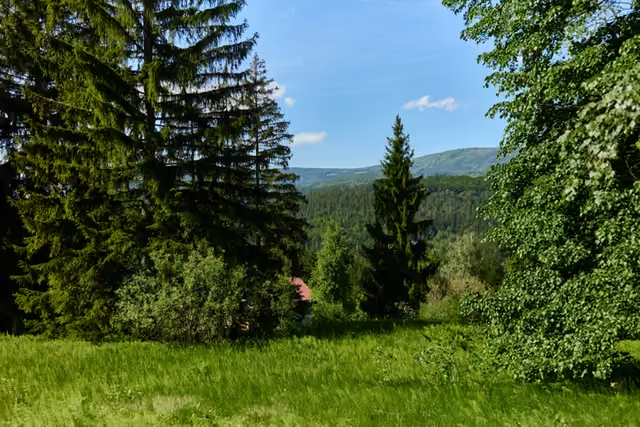
A nature monument in the same village
Three plots above Hutisko-Solanec, each with completely different nature. Ten minutes by car from Zákopčí.
Přejít na stránku →Where the green waymarks lead on
The remains of mountain meadows below the summit of Vsacká Tanečnice – the destination of the route that passes the monument.
Přejít na stránku →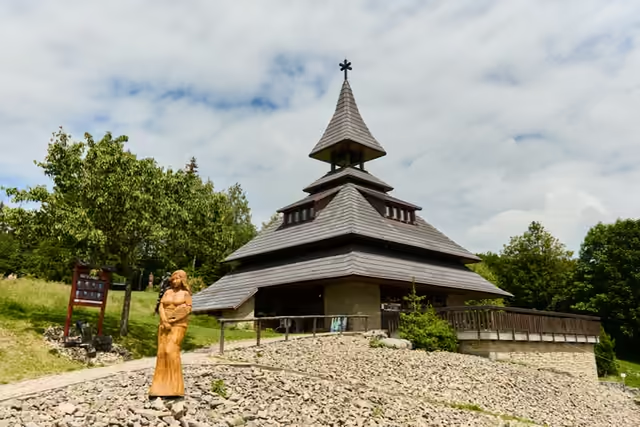
The saddle above the village
Soláň above Hutisko-Solanec, the best-known junction on this ridge.
Přejít na stránku →