Why come here
The two cottages left of the settlement
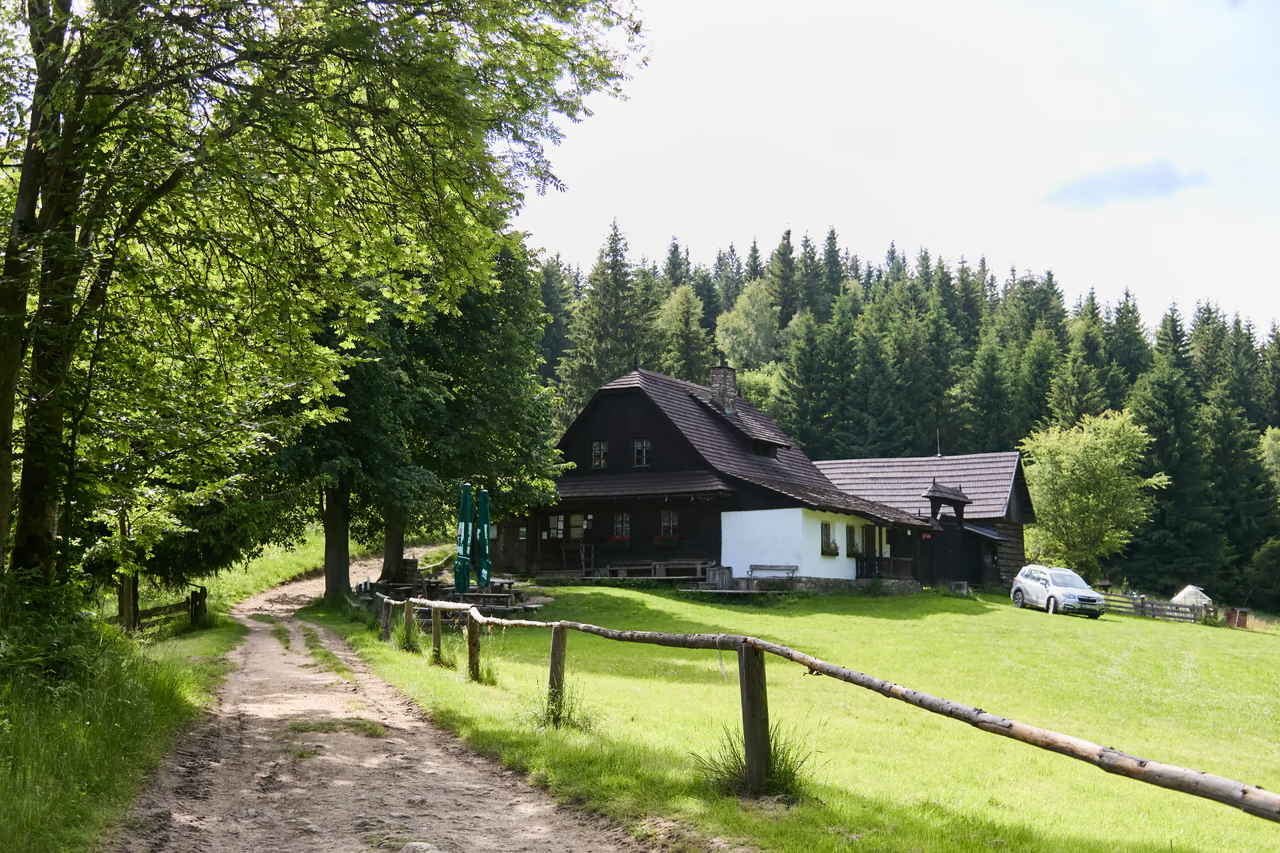
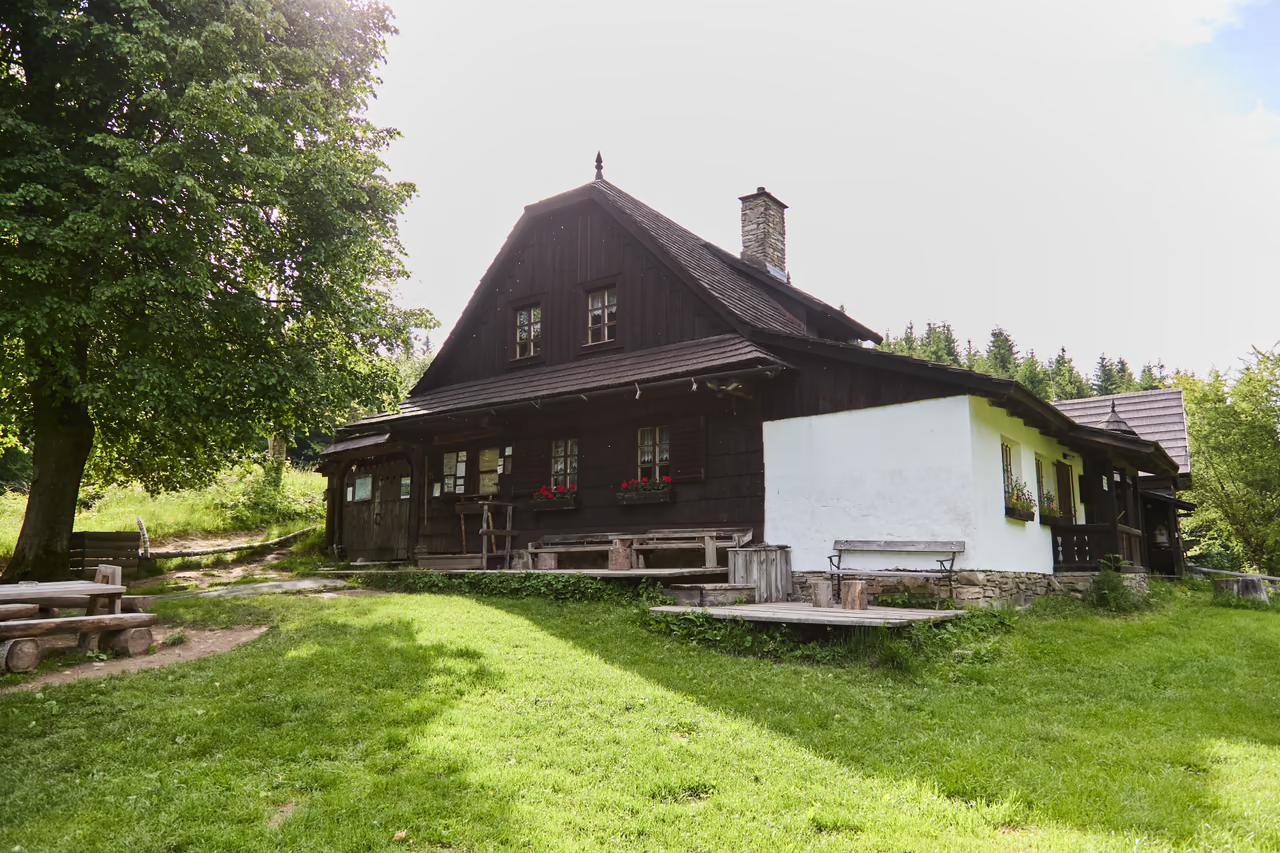
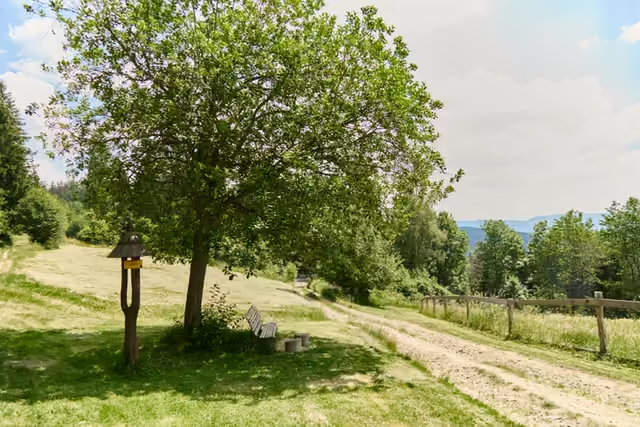
Of the three holdings that stood here, two are left in the saddle below the summit. In one of them you can now get refreshments in season – the last echo of the days when a walkers' hut ran here.
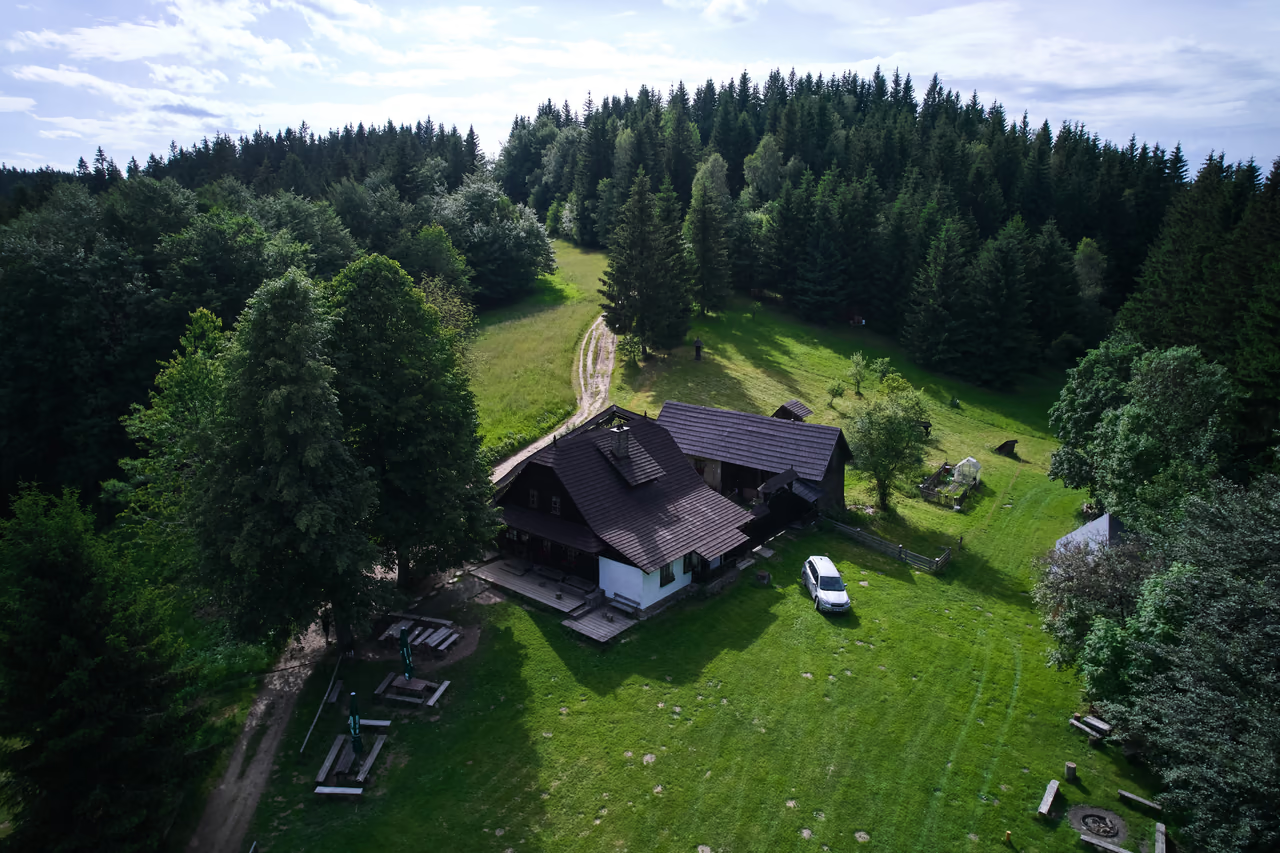
A summit of the Vsetínské vrchy • Horní Bečva and Velké Karlovice • 870 m a.s.l.
Of a settlement that stood here for three hundred years, two cottages are left. The wood swallowed the rest.
Kotlová is the least conspicuous point on the whole ridge walk between Soláň and Třeštík: the summit is grown over with wood and there is no view from it at all.
From the end of the 17th century the mountain settlement of Jezerné stood below Kotlová. It began as a javořina, three holdings grew up on it, and one of them went on to house a grazing co-operative and a walkers' hostel. It was that one that was pulled down in 1962, and the pastures around it were planted with wood; two cottages in the saddle still stand.
Why come here
Of the three holdings that stood here, two are left in the saddle below the summit. In one of them you can now get refreshments in season – the last echo of the days when a walkers' hut ran here.
When to come
In summer people come along the red ridge route between Soláň and Benešky. In winter 50 km of machine-groomed track of the Beskydská Hornovsacká magistrála runs through.
What not to miss
The views come from the ridge meadows between Benešky and Kotlová – the Javorníky Mountains on one side, the highest Beskids summits on the other. From the summit itself there is no view.

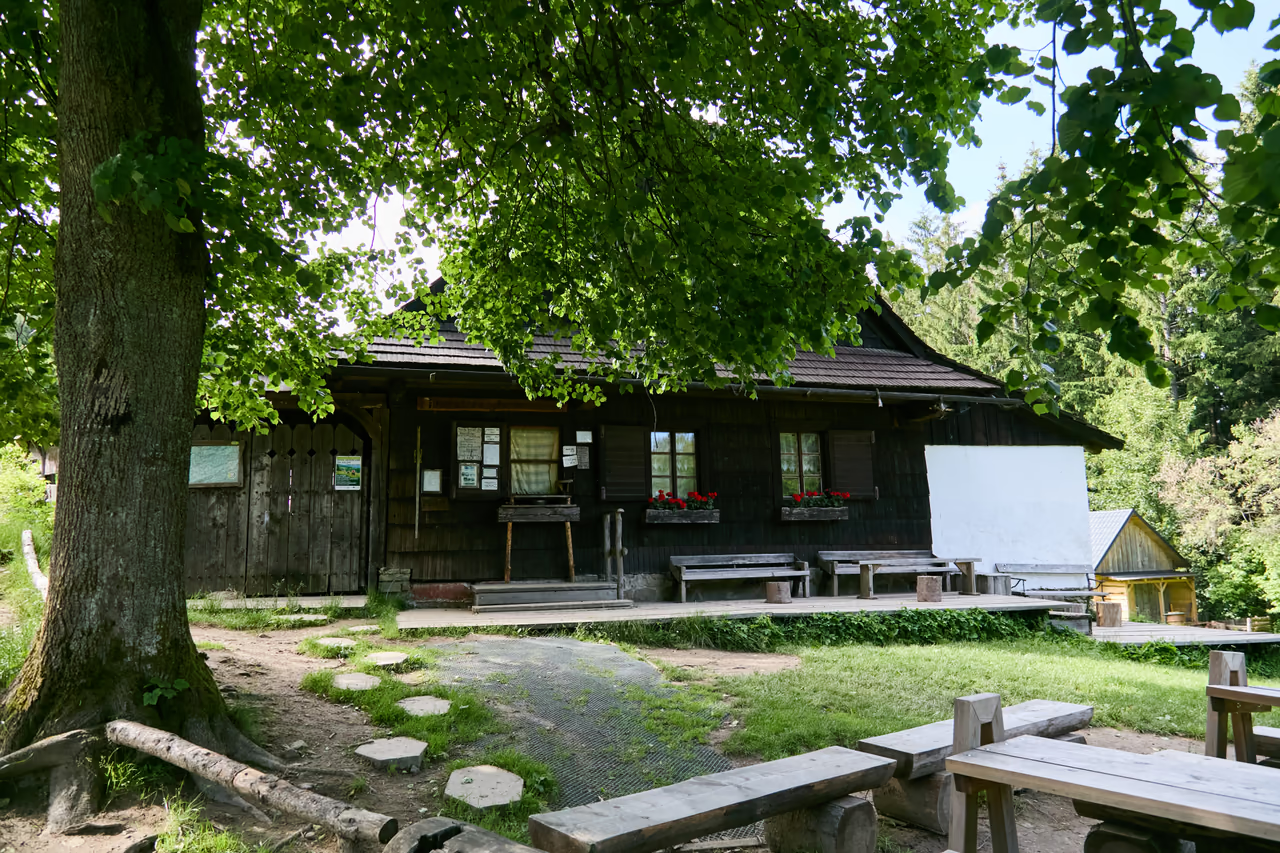
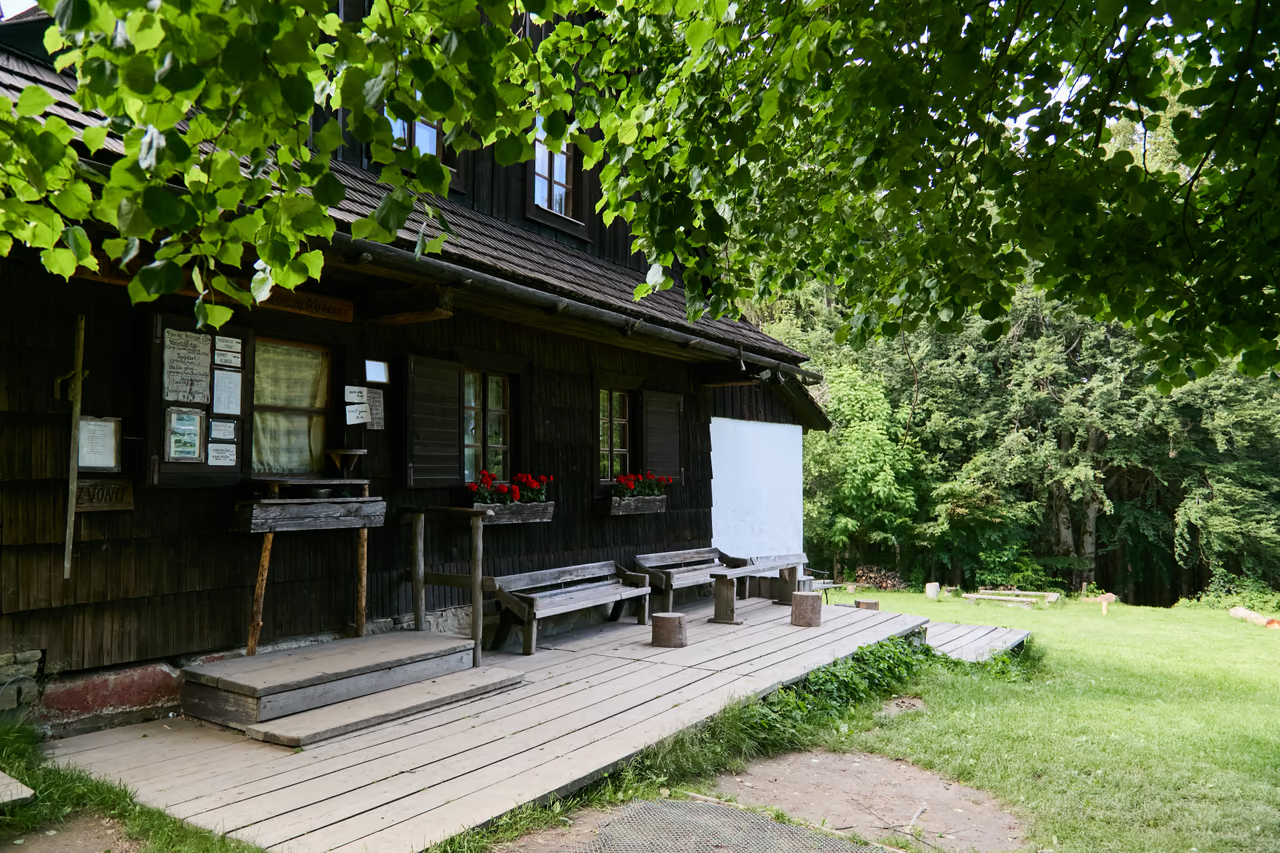
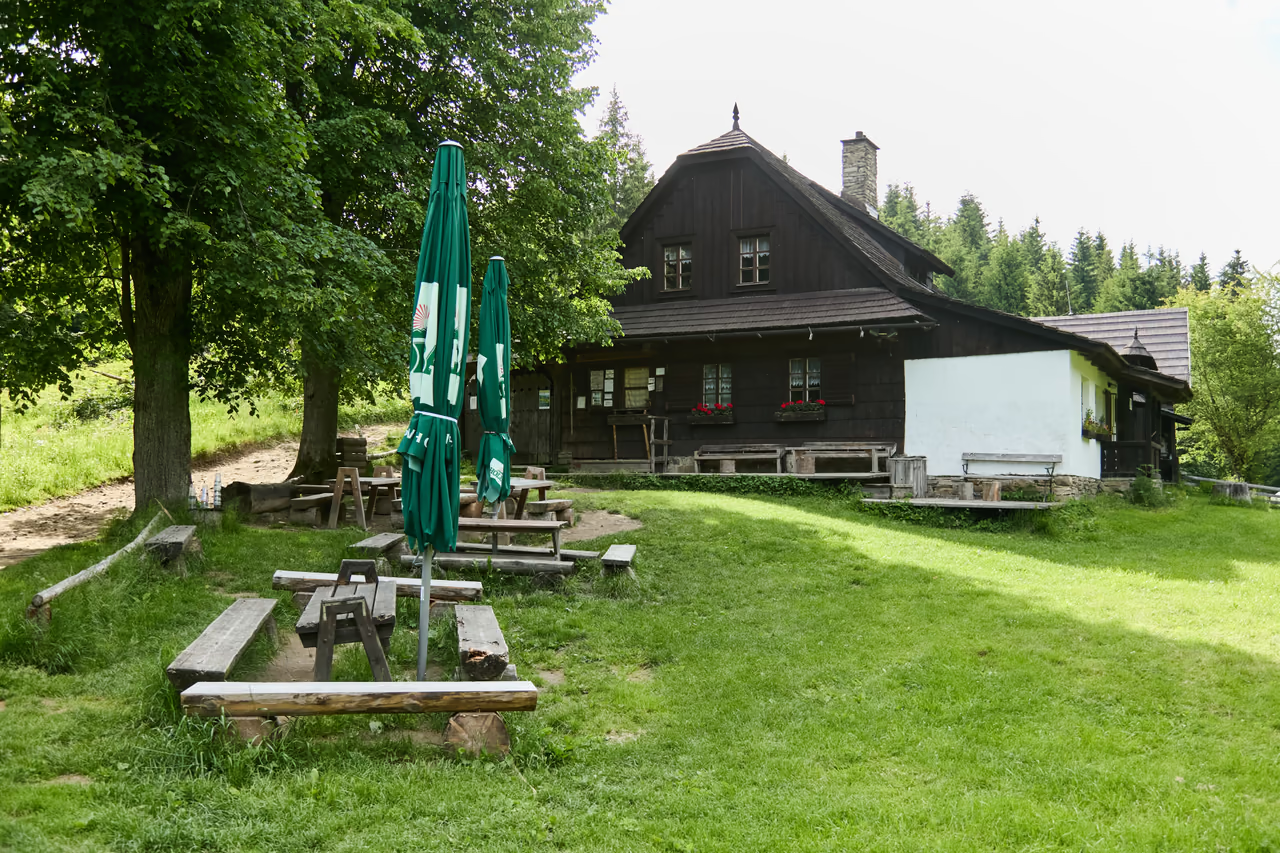
For three hundred years there was grazing here, then farming, and in the end lodging too. Afforestation followed.
1700: the javořina
Towards the end of the 17th century the manorial administration stopped tolerating free mountain grazing. Sheep grazing along the ridges was replaced by enclosed pastures – javořiny, each with a clear extent and a named tenant.
The javořina Jezerné was among the oldest on the ridge of the Vsetínské vrchy that the manorial authority sold to its subjects in hereditary tenancy. It measured 135 hectares and lay on both sides of the ridge – from the slopes above Horní Bečva across Kotlová down to Velké Karlovice. It took its name from the lake at the head of the Karlovice valley, as did the valley itself. In 1700 the manorial authority granted the whole javořina for 30 gulden to Jakub Závorka of Dolní Bečva. Sheep were grazed here above all, cattle only exceptionally.
The lake was said to have been dug by devils, to have somewhere to draw water for their mill on the ridge of Radhošť. The grooves in the boulders here are, so the story goes, the marks of their claws and chains – and the same motif carries the name of the mountain Čertův mlýn.
The lake used to be far larger than it is today, and dragons were born in it. People went to it with unease: nobody knew what was moving beneath the surface.
Then a sorcerer appeared to one of the local cottagers. He promised him immeasurable riches if he would help lure two dragons out of the lake – and when that succeeded, he flew off with them, nobody knows where. This version was written down by Karel Jaromír Erben from the collection of B. M. Kulda and published in 1865 in Sto prostonárodních pohádek a pověstí slovanských.
A retelling of folk motifs.
The tenancy passed down, and the javořina was divided with it: three quarters went to one family, a quarter to another. Each built its own holding on its share, so that some time before 1825 two paseka holdings stood here, each in a different saddle. The older was called Stará Kotlová and stood north of the summit; the second grew up right on the ridge in the Pod Kotlovou saddle. A third building joined that second one after 1921.
1928–1941: Domovina
A hundred years passed in the meantime. The javořina stayed in private hands and changed owner several times – until a new way of farming appeared in the mountains. A smallholder cannot buy a breeding bull, a livestock weighbridge or fertiliser on his own. Forty people can.
On 12 January 1928 twenty-nine people met at Čeněk Malina's inn at Horní Bečva and founded the Pastevní družstvo Domovina grazing co-operative. The purpose was practical: to set up and maintain pastures for the livestock of members and non-members, and to buy breeding bulls, a livestock weighbridge, seed and fertiliser. At its founding it had forty-six members.
That same year the co-operative bought Stará Kotlová at auction and grazed on it from the spring. Financially it did not work out: the members paid neither for the grazing nor for the produce they took, and the debts grew so far that after the season the co-operative stopped releasing their livestock until they paid. By 1937 it had nothing left to pay the interest with – the Spořitelna města Rožnova savings bank put its property up for a forced auction. At that auction the bank bought everything itself.
1881–1957: the walkers
Walkers came here long before the clubs. In the summer of 1881 the poet Svatopluk Čech hired a guide at Horní Bečva and had himself led across Jezerné to Karlovice; out of the trip came the feuilleton “Dvě chalupy moravské”, published as a book three years later.
Half a century later, walking in the region was driven by the Rožnov branch of Klub čs. turistů. From 1928 its membership grew quickly – from 89 at the end of 1929 to more than 290 a few years later – and it deliberately built a network of staging points in the Beskids where people could eat and sleep.
The co-operative needed income, the walkers a roof. The two met at Stará Kotlová: from the summer of 1929 the branch ran an emergency hut in it, a hostel was added a year later and eventually fifteen beds. The fittings were primitive, but the place was right – a crossing of routes in the middle of the finest ridge stretch between Soláň and Třeštík.
In 1940 the hospitality moved to the neighbouring, younger holding and lasted there until private trades were abolished in 1957. Today the present owner has revived it in that same cottage.
1949–1962: the end
After the co-operative collapsed there was nobody to graze. The holding passed through several owners until, in 1949, it was taken over with all its land by the municipality of Horní Bečva.
In 1962 Stará Kotlová came down – cottage, sheepfold and barn. The northern saddle where it stood was planted with wood.
The sources disagree about the origin of the name Kotlová. Neither reading is documented by any record – both are linguistic arguments, only resting on different things.
The steep flanks of the mountain are cut deep by the headwaters of the Hluboký, Bučkový and Jezerní brooks. The hollows that resulted could have brought cauldrons to mind – kotle in Czech.
The archival study by K. J. Malina (kjmalina.cz)
The second explanation derives the name from the number of old “hollowed-out” trees with cavities that, according to the information panel in the saddle, used to grow here.
The information panel in the saddle
Timeline
late 17th c.
The manorial administration stopped tolerating free mountain grazing and replaced it with javořiny – enclosed pastures with a named tenant. Jezerné is among the oldest of them.
1700
The manorial authority grants the whole javořina of 135 hectares for 30 gulden to Jakub Závorka of Dolní Bečva.
before 1825
The tenancy of the javořina was divided among heirs and each family built its own holding on its share – each in a different saddle. Stará Kotlová stands north of the summit, the second holding right on the ridge; after 1921 a third building joins it.
12 January 1928
At an inn at Horní Bečva 29 people found the Pastevní družstvo Domovina; that same year it buys the holding at Jezerné at auction.
1930
The Rožnov branch of Klub čs. turistů sets up a hostel with six beds in the cottage; a year later a made-up path through the Hluboká valley is added.
1932
Refreshments join the lodging – beer, raspberry cordial and cold food. The number of beds grows to fifteen.
1937
The co-operative cannot pay the interest on its debts. The Spořitelna města Rožnova puts its property up for a forced auction and buys it itself.
August 1941
An extraordinary general meeting approves the accounts with a loss of 14,750 crowns and the removal of the co-operative from the commercial register.
1949
The holding with all its land passes into the ownership of the municipality of Horní Bečva.
1962
The oldest holding comes down along with its sheepfold and barn, and the northern saddle where it stood is planted with wood. Of the three holdings, two remain.
today
The red ridge route crosses the wooded summit; the last two holdings of the Jezerné settlement stand in the saddle, and in season a serving hatch with refreshments opens in one of them.
The summit has neither a viewpoint nor a sign – it makes sense as part of a ridge walk. The finest stretch is between Benešky and Kotlová, and you can stop in the saddle below the summit.
Beskids passport
Are you here in person?
This page has already been added to your Beskids passport as a digital visit. To collect a badge for visiting in person, use the button below while you are there.
Your browser asks for your location once when you click. Verification happens offline on your device and your location is not sent anywhere.
Leave the car below and find the green waymarks. No road goes up – by the dam there is the Horní Bečva, přehrada stop.
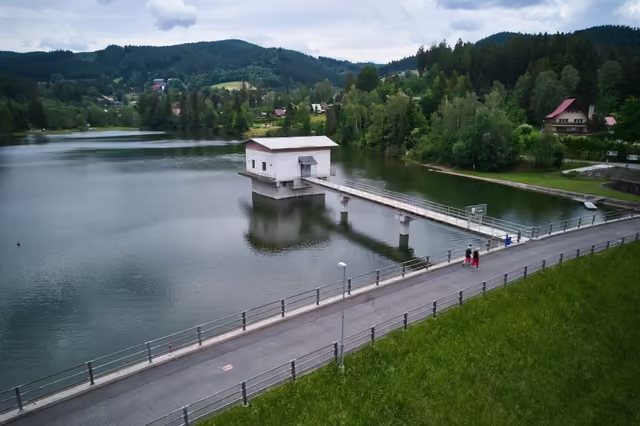
A steady climb through wood from the valley to the ridge. It is the shortest way up and the steepest – allow an hour and a half.
The green route ends here. Both surviving cottages of the Jezerné settlement stand here, and in season a serving hatch with refreshments opens in one of them.
The summit is wooded and has no view – the outlooks come from the meadows before it, not from the summit itself.
The easiest start: the saddle has the Hutisko-Solanec, Čarták, Sedlo stop and somewhere to park. The ridge barely climbs from there on.
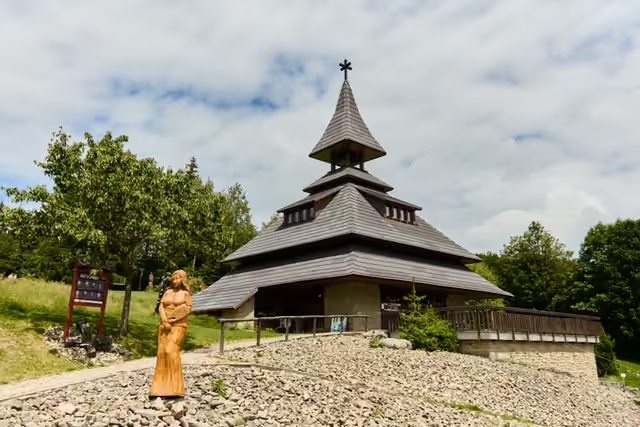
The finest stretch of the whole ridge walk. The Javorníky Mountains on one side, the highest Beskids summits on the other – these are the views the summit does not have.
From the east the same waymarks run about two kilometres from the Benešky junction.
From below it is markedly harder – the green route from the dam climbs 275 metres to the saddle. The municipality of Prostřední Bečva also describes an approach of its own through the Adámky part of the village; we do not have that one drawn on the map.
Kotlová itself is wooded and has no view. The outlooks come from the ridge meadows before the summit – over the Javorníky Mountains and the highest Beskids mountains.
From Soláň it is easy ridge walking. The climb from Prostřední Bečva on the green route is markedly harder because of the ascent – expect a steep climb on a forest path.
There is nothing on the summit. The signpost and information panel stand in the saddle about 700 metres to the west – and there is somewhere to sit there.
The serving hatch with refreshments at the cottage in the saddle opens only in season. There are no public toilets on the ridge.
The buildings in the saddle are lived in and private. The meadow around them is not a public campsite – walk through and leave the people in peace.
The summit is 870 metres above sea level. There is no view from it – it is wooded. The outlooks come from the ridge meadows before the summit.
A mountain settlement in the saddles below Kotlová. It grew up on the javořina of the same name – an enclosed mountain pasture – and consisted of paseka holdings. As late as 1930 the gazetteer of the Czechoslovak Republic still listed it as a settlement at Horní Bečva. In 1962 the last co-operative building was pulled down and the pastures around were planted with wood.
No, but the two are connected. Both are named after the lake at the head of the Karlovice valley. The Jezerné settlement stood up on the ridge, in the saddles below Kotlová, and is gone; the Jezerné valley lies down on the Karlovice side and is a holiday area today. The javořina the settlement grew out of reached across the ridge as far as that valley.
Because Kotlová is the name of the mountain, of the signpost and of the saddle below it – Jezerné vanished from the maps along with the settlement. And the period names of the holdings pointed to the mountain as well: the oldest of them was called Stará Kotlová.
An enclosed mountain pasture. When the manorial authority began to regulate free sheep grazing in the mountains at the end of the 17th century, it concentrated it on ground marked out in this way. The Jezerné javořina covered 135 hectares, and in 1700 the manorial authority sold it into hereditary tenancy.
There is no certainty. An archival study derives the name from the shape of the steep flanks with their deeply cut brooks, which could have brought cauldrons to mind. The information panel in the saddle offers a second reading – from the old “hollowed-out” trees with cavities.
Along the red ridge route from Soláň, where there is the Hutisko-Solanec, Čarták, Sedlo stop – the ridge barely climbs from there on. From the east the same waymarks run about two kilometres from the Benešky junction. The climb from Prostřední Bečva on the green route is demanding because of the ascent.
Otázka 1 z 5
 Rysík→
A few quizzes and I get glasses, and I will feel properly educated.
Your rank: Homebody. You do not have a single stamp yet. Visit any place and become a Pilgrim.
You can experience the Beskids and Moravian Wallachia with Rysík and without him. Rysík would love to be there for it. Whether you take him along and take on the challenges with him is up to you.
You can find your favourite places in your account. On the Walking routes page you can use them to filter routes.
Suggest a more accurate wording.
Ridge meadows created by grazing are common in the Beskids. Every meadow has a different story.
The meadows that were saved
Two kilometres east along the ridge. Those pastures would have ended like the ones at Jezerné – but they have been mown again since 2003.
Přejít na stránku →The western end of the ridge walk
The saddle on Soláň with the Hutisko-Solanec, Čarták, Sedlo stop – the easiest way to Kotlová starts here.
Přejít na stránku →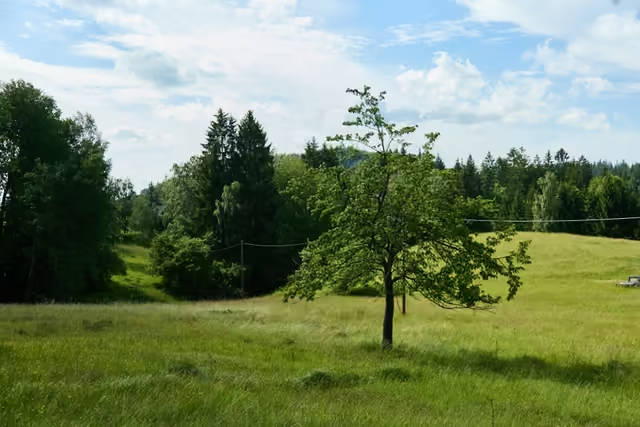
When the farming stops
A peaty meadow above Horní Bečva that drainage and the end of mowing all but killed. A different place, the same plot.
Přejít na stránku →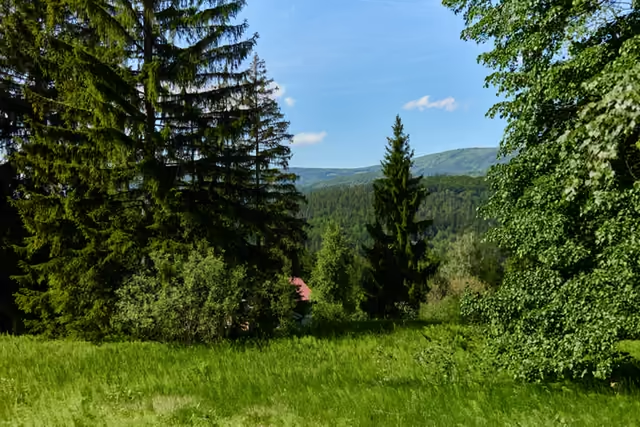
The imprint of three ways of farming
A nature monument where the difference between a mown meadow, a pasture and a peat bog is still visible.
Přejít na stránku →