Why come here
A view the wood does not allow elsewhere
The ridge of the Vsetínské vrchy is wooded for most of its length. At Benešky it opens out – across the meadows you can see the Javorníky Mountains opposite and down into the valley.
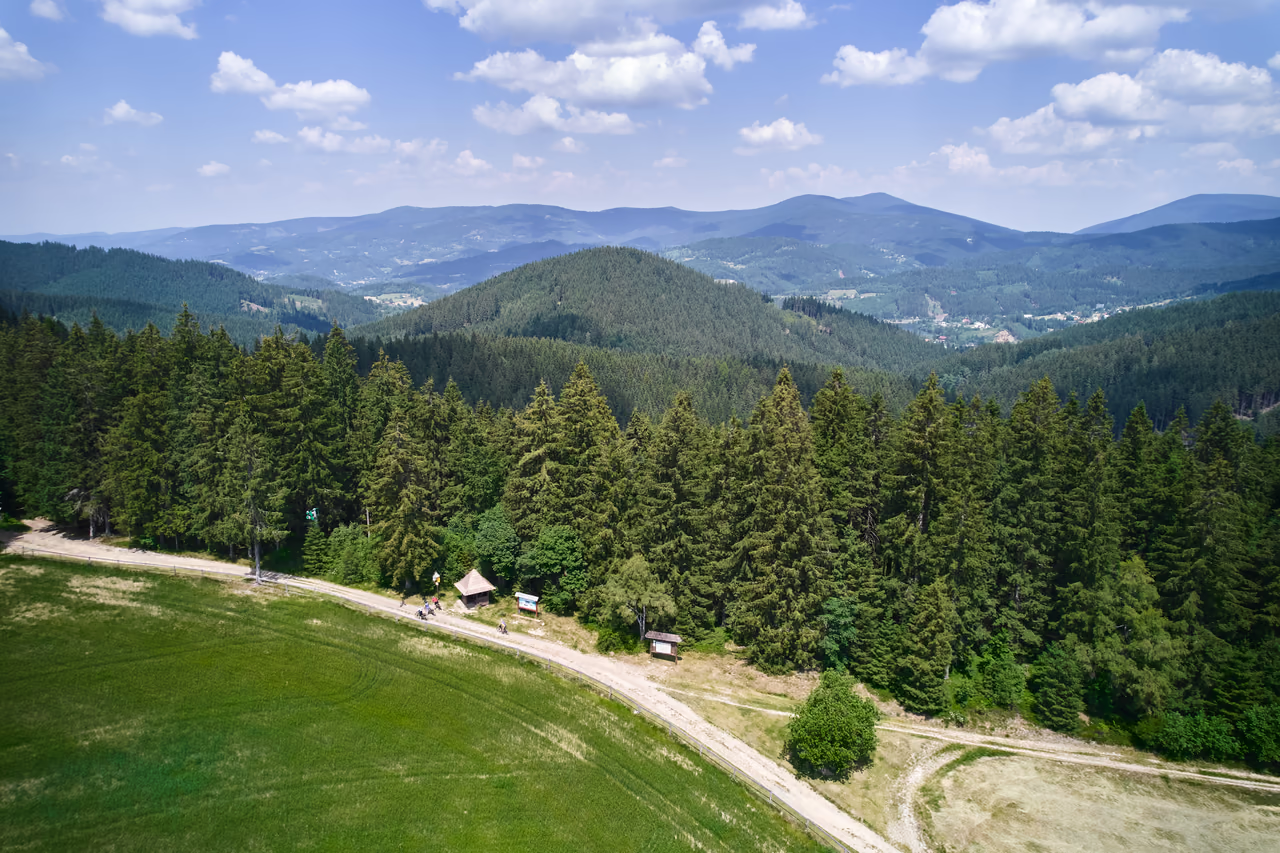
Ridge meadows • Vsetínské vrchy • 855 m a.s.l.
Mowing and grazing hold the meadows on the ridge. Without them the wood would swallow them in a few years.
On the ridge of the Vsetínské vrchy above Horní Bečva the wood opens out into a belt of meadows with a view of the Javorníky Mountains. The meadows were grazed and mown by pasekáři. Once the mowing stopped, they began to grow over.
Since 2003 the meadows have been maintained again – and they have repaid it with nine species of orchid.
Why come here
The ridge of the Vsetínské vrchy is wooded for most of its length. At Benešky it opens out – across the meadows you can see the Javorníky Mountains opposite and down into the valley.
What not to miss
Nine species of orchid grow on the meadows, among them the early-purple orchid and the western marsh orchid – right by the path.
When to come
Best in May and June, when the meadows and the orchids are in flower. In winter the Vsetínské vrchy cross-country ski trail runs through Benešky.

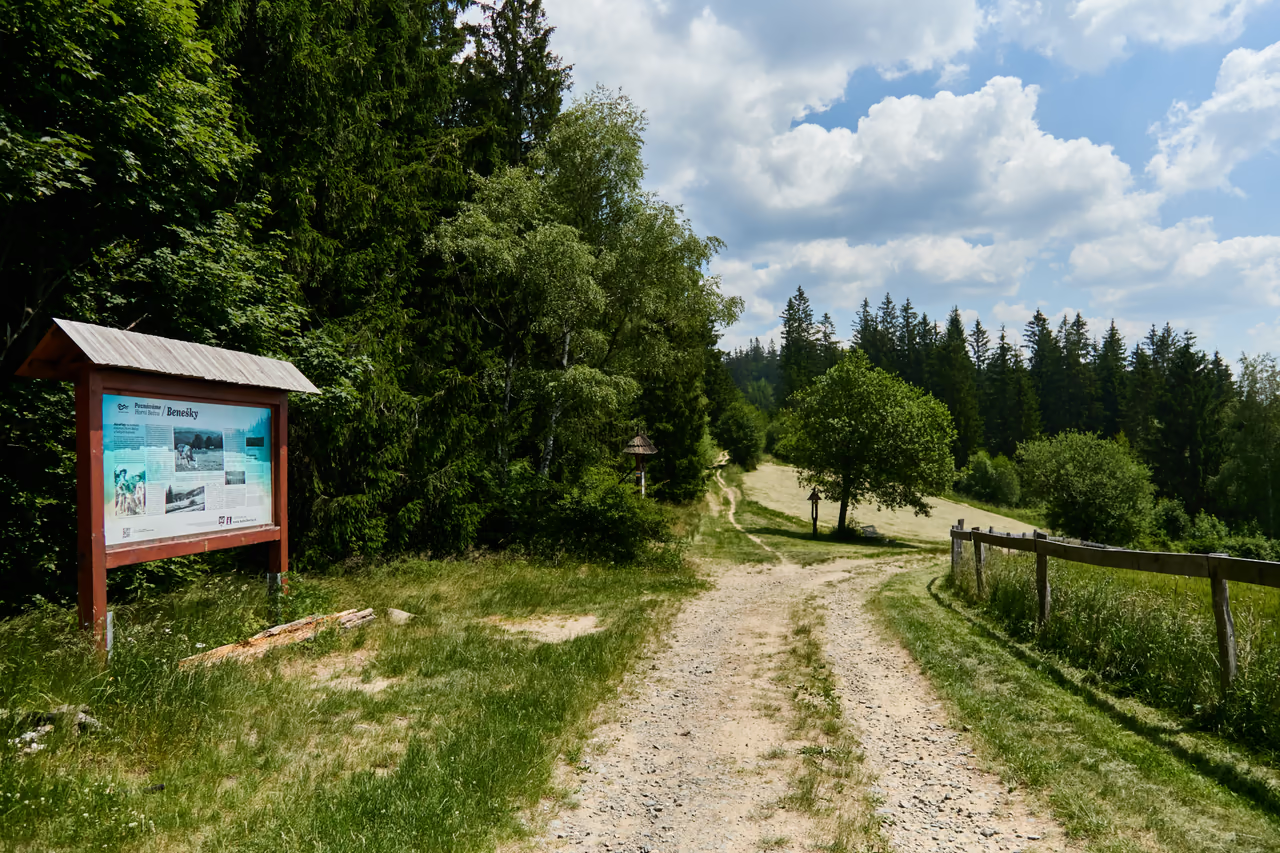
A crossroads on the ridge
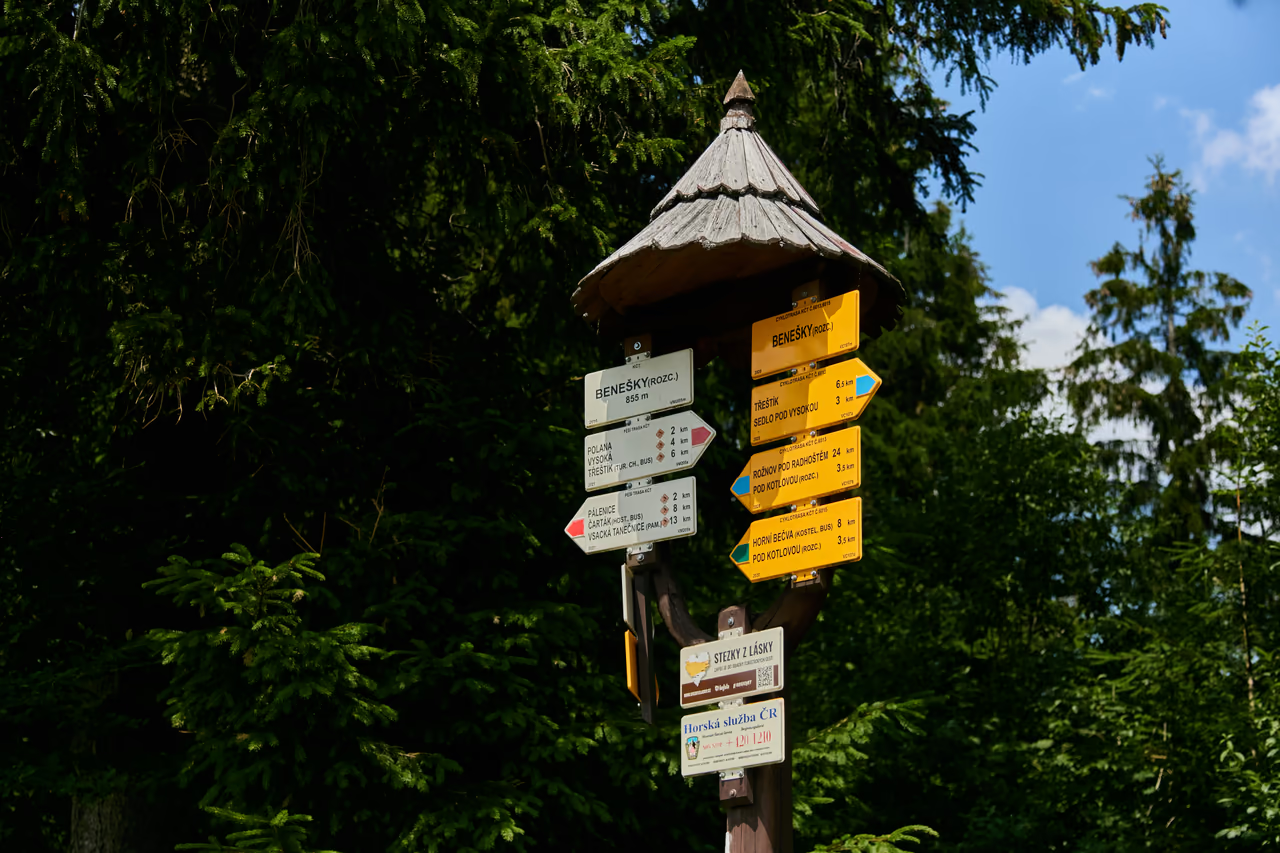
Benešky is a junction. Along the ridge comes the red ridge route of the Vsetínské vrchy, which runs from Čarták to Třeštík with a turning to the highest summit, Vysoká. The blue waymarks lead up here from Horní Bečva below.
Cycle routes cross here as well (Rožnov is 24 km away along them, Horní Bečva 8 km). In winter the Vsetínské vrchy cross-country ski trail passes through, a groomed track from Vsacký Cáb to Třeštík.
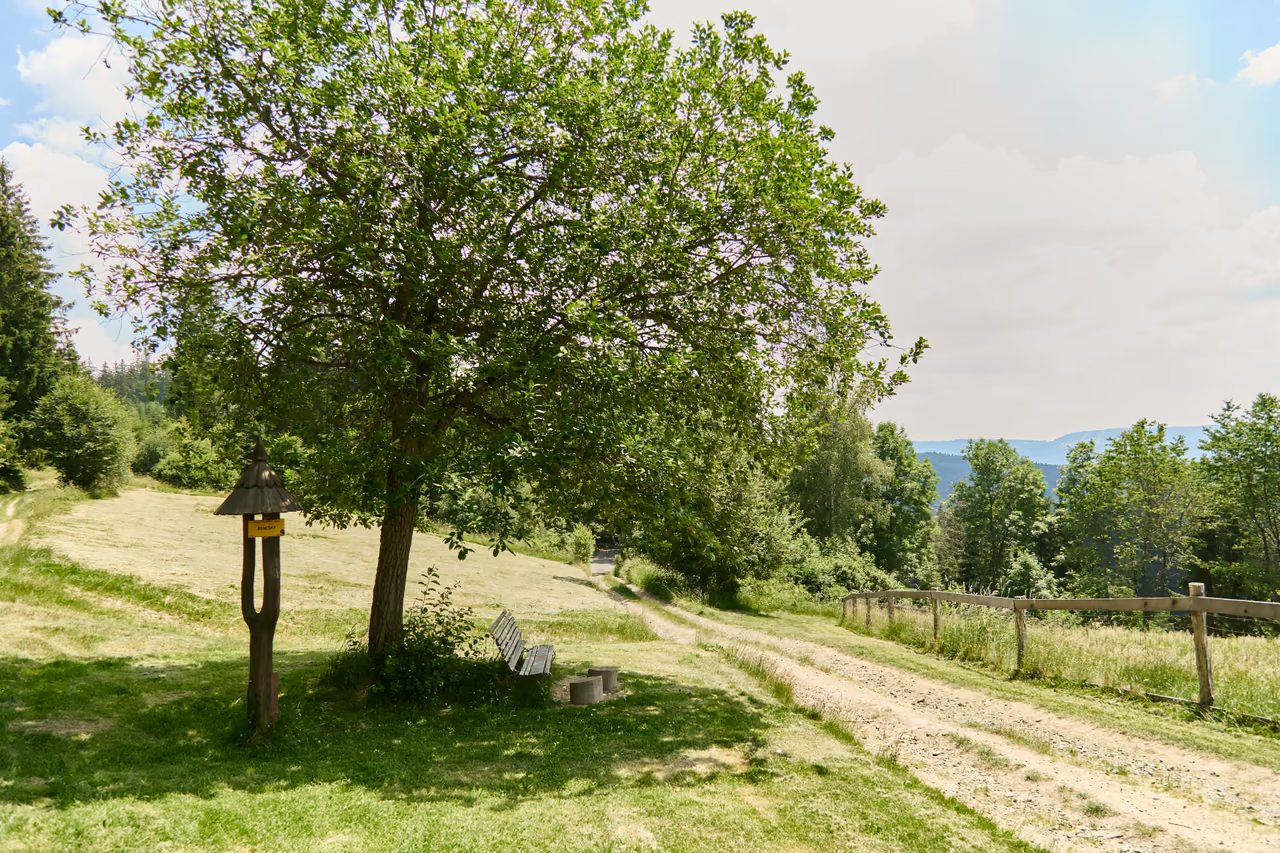
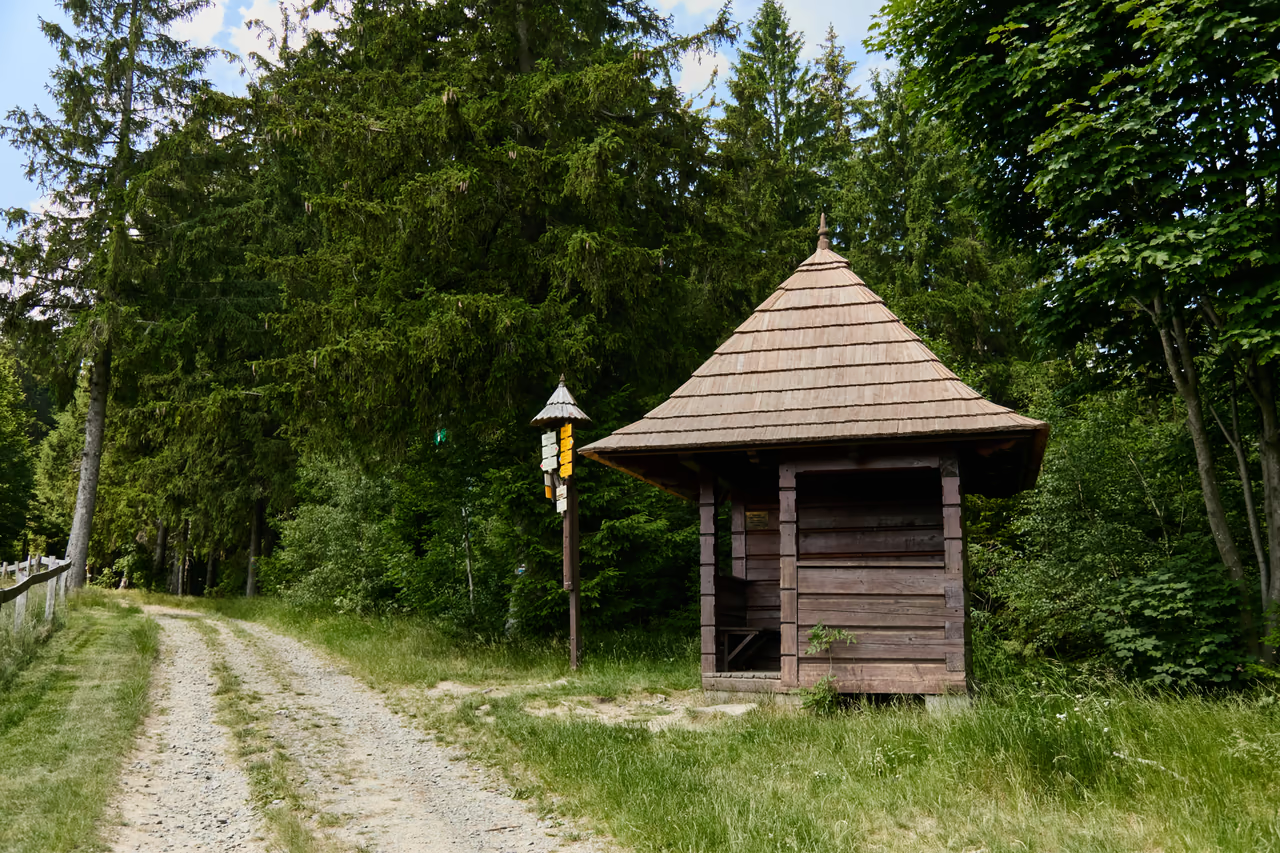
When the weather turns, you can take cover in the wooden shelter with a shingled roof and a bench. By the track there is also an information panel from the municipality of Horní Bečva, and the Benešky spring rises not far from the path.
The meadow on the ridge was made by people, not by nature – and without their work it grows over again.
A meadow as human work
The Vsetínské vrchy were originally wooded from top to bottom. The meadows on the ridge were made by people: the pasekáři cleared the wood and kept it open by grazing and mowing. The settlement of Benešky, which the junction is named after, lies lower down the slope – the ridge used to be its pasture and its hay meadow.
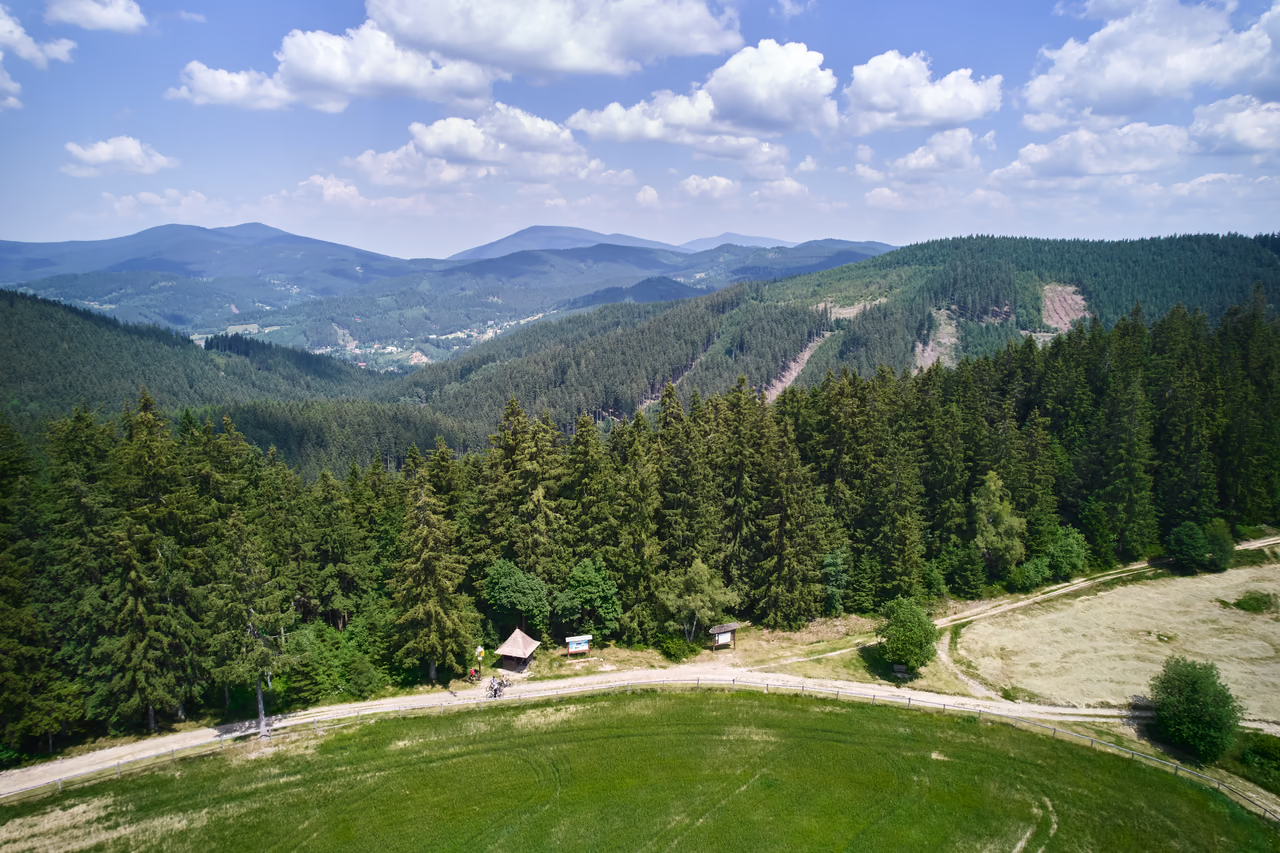
Twenty years without a scythe
For almost twenty years nobody looked after these meadows. They grew over with self-seeded growth, and with them went the rare flora the meadows are protected for. Had that been left to continue, they would have ended like the meadows Pod Tanečnicí. There the salašnictví sheep farming declined and the pastures are gradually growing over with wood.
Doing nothing does not protect the nature here. Without regular care the meadow would grow into wood and lose the variety it is protected for.
The theme of intervention as help for nature is taken further by the story of Pod Juráškou.
Since 2003 the meadows have been maintained by conservationists under the Program péče o krajinu, the landscape care programme. First the ground had to be cleared of self-seeded growth. All that was left of it are copses of birch and spruce and a few junipers scattered across the meadow. The meadows cover roughly seven hectares and lie in zone I of the Beskydy Protected Landscape Area.
What the mowing brought back
The orchids flower here from May into early summer. You can see them right by the path.
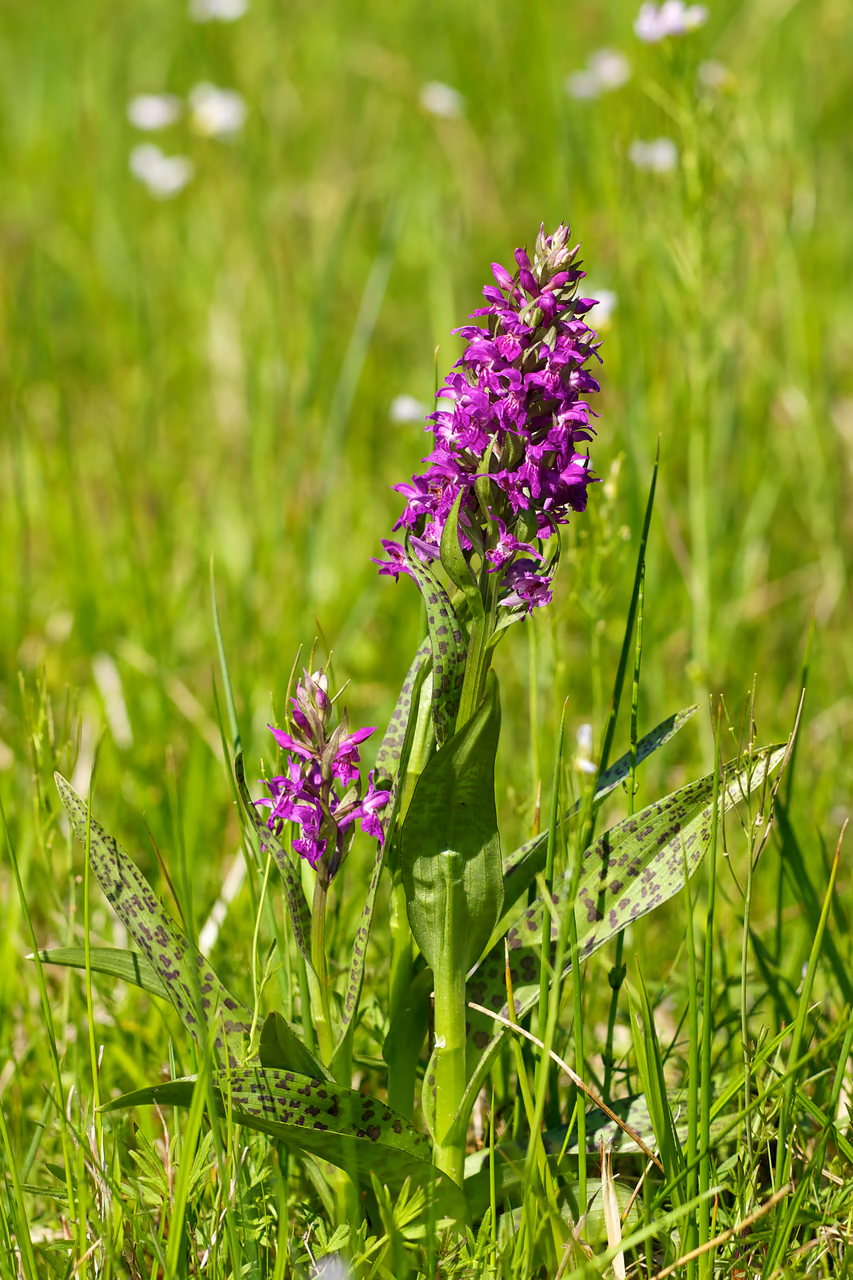
Dactylorhiza majalis
The most striking orchid here – a dense, deep purple spike, with leaves usually darkly spotted. It flowers from May; come in May and June for the best chance of catching it.
Foto: Jörg Hempel, Wikimedia Commons, CC BY-SA 3.0 DE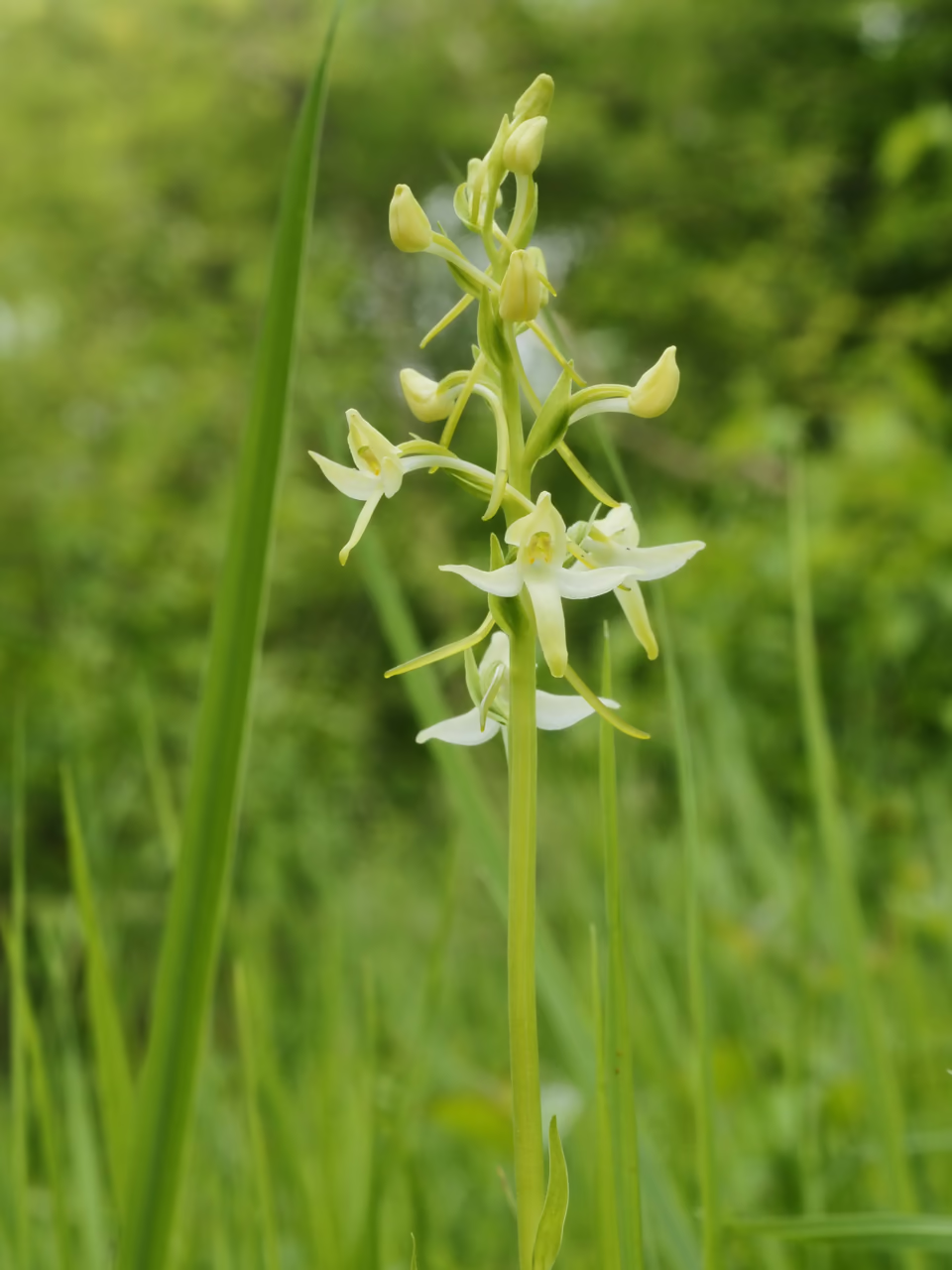
Platanthera bifolia
White flowers with a long spur on a loose spike, and two large opposite leaves at the ground. It scents mainly towards evening – it draws the night moths that pollinate it.
Foto: Hans Hillewaert, Wikimedia Commons, CC BY-SA 3.0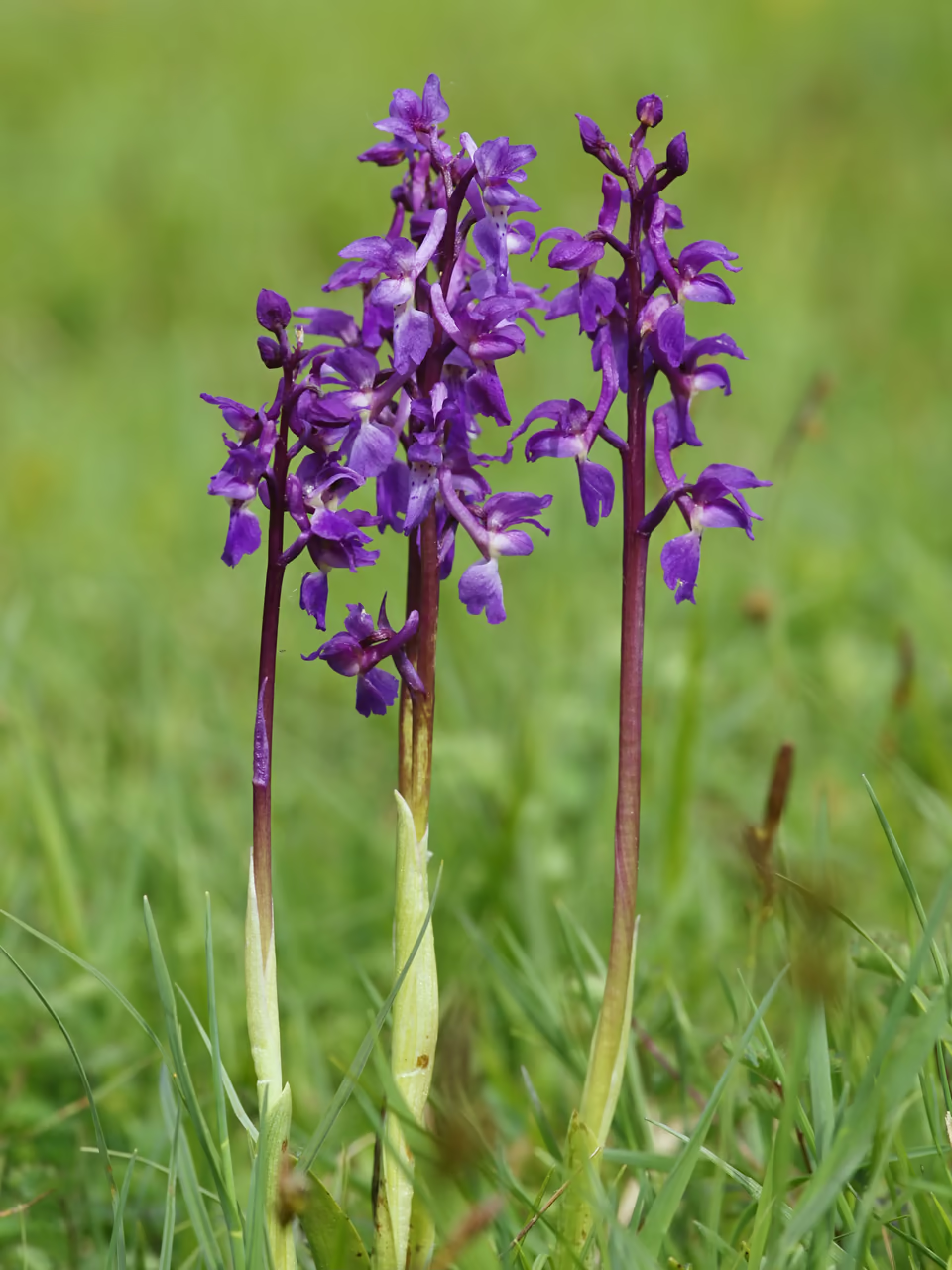
Orchis mascula
A crimson spike on the mown meadows, with leaves often darkly spotted. It flowers early, in May and June; later nothing is left of it but a leaf.
Foto: Hans Hillewaert, Wikimedia Commons, CC BY-SA 3.0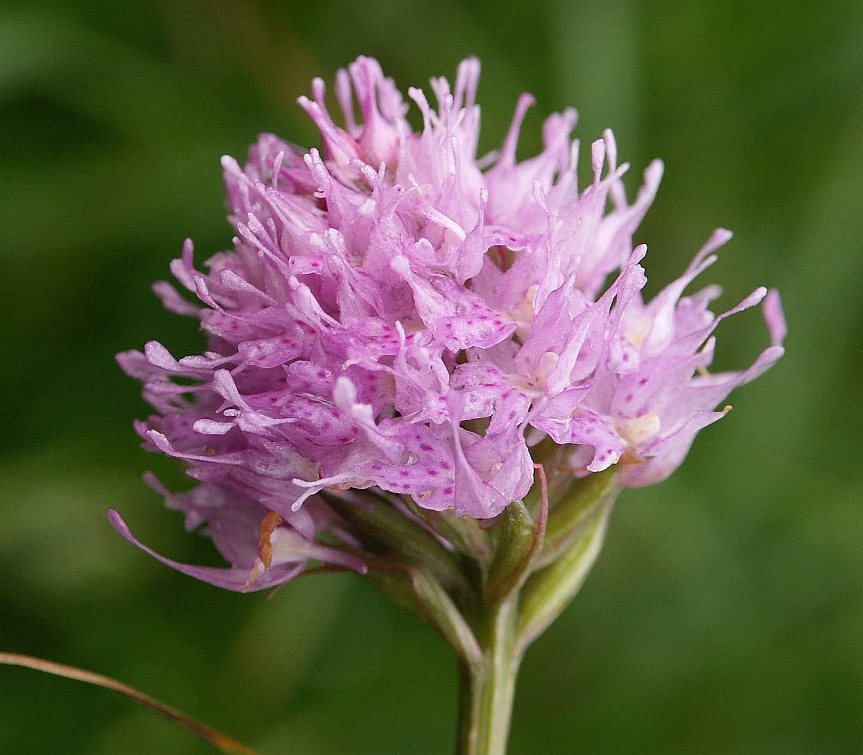
Traunsteinera globosa
You will know it by its shape: the flowers are packed into a pink globe on a slender stem. A mountain orchid – it flowers on the meadows in June and July.
Foto: Bernd Haynold, Wikimedia Commons, CC BY 2.5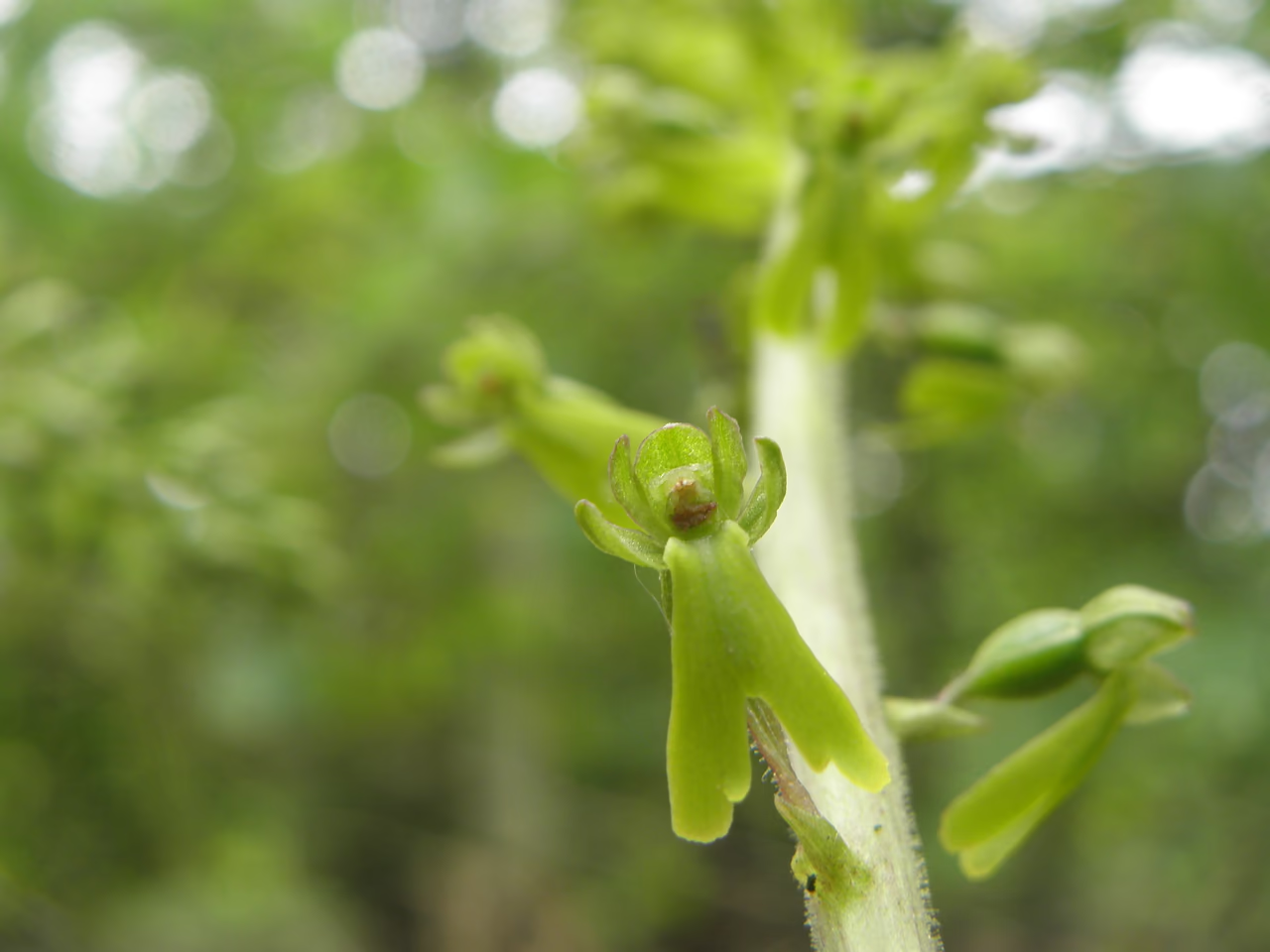
Neottia ovata
An inconspicuous orchid with greenish flowers – you will walk past it unless you know what to look for. The pair of large oval leaves facing each other low on the stem gives it away.
Foto: Rob Hille, Wikimedia Commons, CC BY-SA 3.0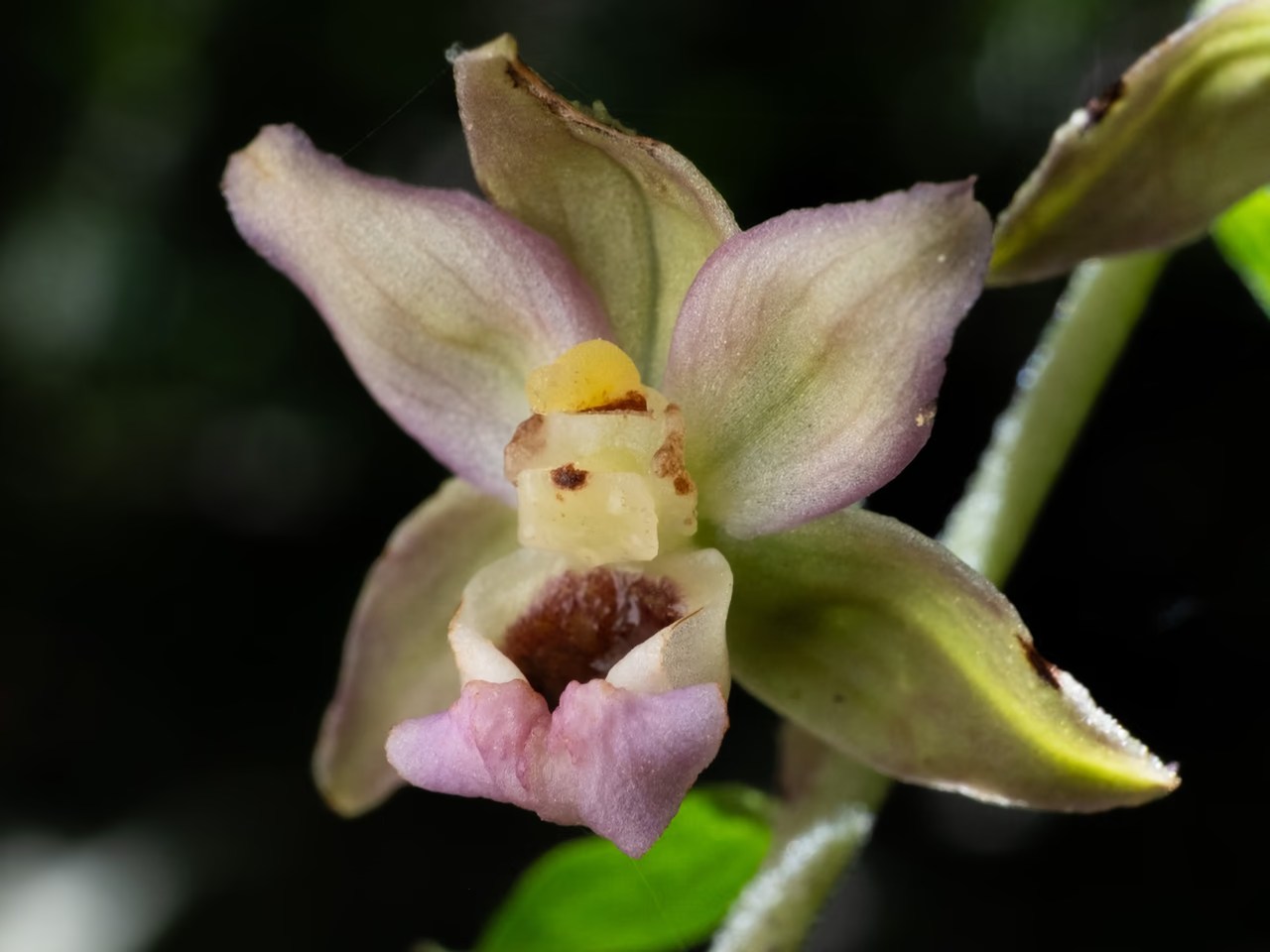
Epipactis sp.
A genus of orchids with inconspicuous green and pink flowers on a one-sided raceme. They flower later than the others – in summer, when the most colourful wave on the meadow is over. The photograph shows the broad-leaved helleborine, the commonest member of the genus; the source for Benešky names only the genus.
Foto: Alex Abair, Wikimedia Commons, CC BY 4.0The photographs of individual species are taken from Wikimedia Commons (author and licence given with the photo) – they show the species, not a particular plant from Benešky.
Timeline
earlier
The meadows on the ridge are kept by the grazing and mowing of the pasekáři from the settlement of Benešky. The open country is a by-product of farming.
1973
The ridge becomes part of the protected landscape area. The meadows at Benešky are among the most valuable ground and fall within zone I.
before 2003
Nobody mows the meadows. They grow over with self-seeded woody plants and lose their openness – and the rare flora goes with it.
2003
The meadows begin to be maintained under the Program péče o krajinu. The self-seeded growth is cleared, and only copses of birch and spruce and a few junipers are left on the ground.
today
Nine species of orchid grow on seven hectares of mown meadows – among them the early-purple orchid, the western marsh orchid, the round-headed orchid and the lesser butterfly-orchid.
You cannot drive here – and that is just as well. Benešky is the reward for an hour's climb from Horní Bečva or for a stretch of the ridge walk.
Beskids passport
Are you here in person?
This page has already been added to your Beskids passport as a digital visit. To collect a badge for visiting in person, use the button below while you are there.
Your browser asks for your location once when you click. Verification happens offline on your device and your location is not sent anywhere.
Leave the car in the village (no road goes up) and find the blue waymarks. The nearest stop is Horní Bečva, přehrada; check the connection in IDOS.
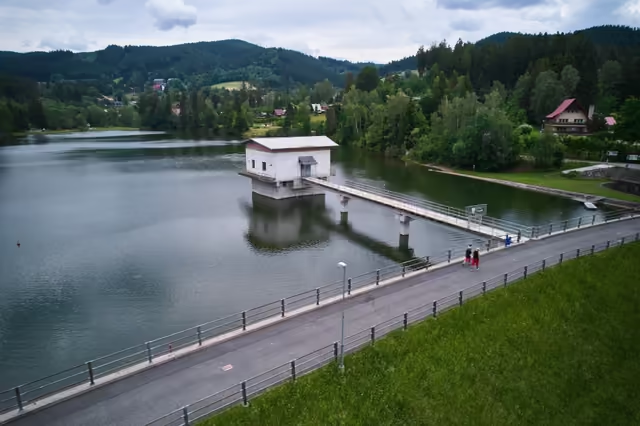
A steady climb on forest and field tracks from the valley to the ridge. The shortest way up, and the steepest – allow an hour to an hour and a quarter.
The wood opens out, the meadows appear and with them the view of the Javorníky Mountains. A wooden shelter with a bench stands by the signpost.
The saddle below Soláň with a bell tower, a gallery and a nature trail. The red ridge route runs east from here.
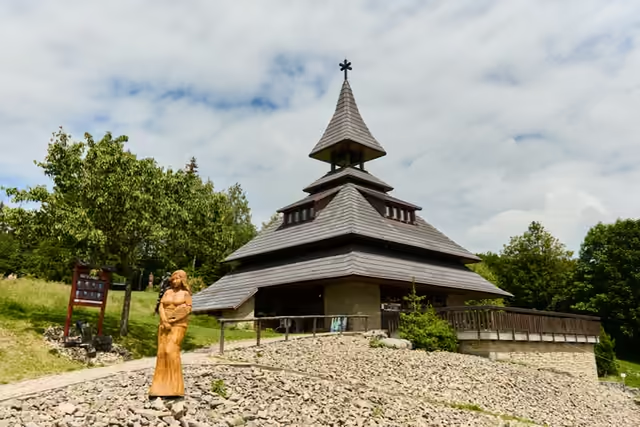
The path alternates between wood and mountain meadows. Beyond Kotlová (869 m) the ridge opens again into grassy stretches with views.
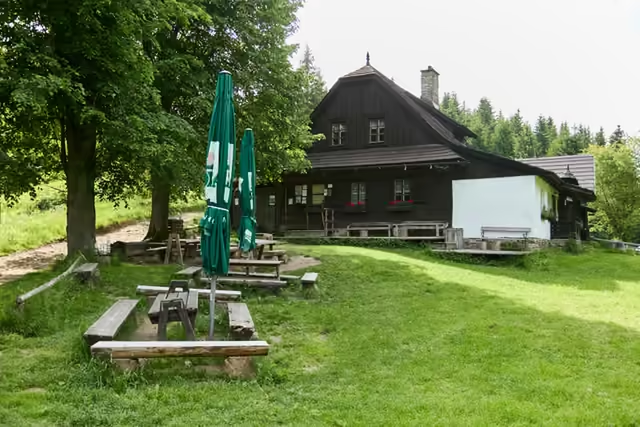
The last junction before Benešky – only two kilometres from here.
The longest of the approaches, but all of it along the ridge – with a stop at the bell tower on Soláň right at the start.
A mountain saddle by the Slovak border with a car park. The red waymarks head west along the ridge from here.
The highest summit of the Vsetínské vrchy. The Rožnovská Bečva rises on its slopes – the river that runs through the whole Rožnov area.
The last hill before Benešky; the yellow route from Karlovice crosses the ridge here.
The descent from Vysoká ends exactly where the ridge opens into meadows with orchids.
Not by car to the top: there is no car park at Benešky and no access road. Park at a starting point below (Horní Bečva, Soláň, Třeštík) and walk the last kilometres.
From Horní Bečva up, allow an hour to an hour and a half of walking. You can carry on along the ridge – 2 km to Kotlová, 4 km to Vysoká.
An open meadow is fine, but unpleasant in a storm. The wooden shelter by the signpost is the only refuge for a long way – and the signpost carries the number for the Horská služba mountain rescue.
At the junction there is only a shelter with a bench. Refreshments and toilets are down in the villages and saddles below the ridge.
You are in zone I of the Beskydy Protected Landscape Area. The orchids grow right by the path – leave them standing, keep out of the mown ground and keep your dog on a lead. Part of the meadow along the path is fenced – stay behind the fence.
The Vsetínské vrchy cross-country ski trail passes through Benešky – a groomed track that runs along the ridge from Vsacký Cáb to Třeštík.
The Vsetínské vrchy were originally wooded from top to bottom. The pasekáři cleared the wood and kept the open ridge by grazing and mowing – without that work there would be wood here again.
For almost twenty years nobody maintained them and they grew over with self-seeded trees. Care came back in 2003 under the Program péče o krajinu.
Nine species, among them the early-purple orchid, the western marsh orchid, the round-headed orchid and the lesser butterfly-orchid. They flower from May into early summer.
855 m a.s.l., on the ridge of the Vsetínské vrchy between the summits of Pálenice (848 m) and Polana (937 m).
No – no road and no car park go up there. Three waymarked routes lead here: from Horní Bečva below, or along the ridge from Soláň or from Třeštík.
Otázka 1 z 5
 Rysík→
A few quizzes and I get glasses, and I will feel properly educated.
Your rank: Homebody. You do not have a single stamp yet. Visit any place and become a Pilgrim.
You can experience the Beskids and Moravian Wallachia with Rysík and without him. Rysík would love to be there for it. Whether you take him along and take on the challenges with him is up to you.
You can find your favourite places in your account. On the Walking routes page you can use them to filter routes.
Suggest a more accurate wording.