Looking up into the crown of an old elm: the massive forking of the moss-covered trunk, yellow bracket fungi on the bark, blue sky showing between the leaves

Protected tree • Makov, the U Papají settlement • 720 m a.s.l.

Brest u Papají

One of the oldest elms in central Europe.

A tree that stands for the village

In the U Papají settlement, in the part of Makov called Kopanice, a field elm grows by a cottage – according to the Kysuce PLA Administration one of the oldest elms in central Europe. Since 1995 it has been part of Makov's coat of arms.

girth at the roots
over 11 m
altitude
720 m a.s.l.
the year the arms were adopted
1995
Brest u Papají360°
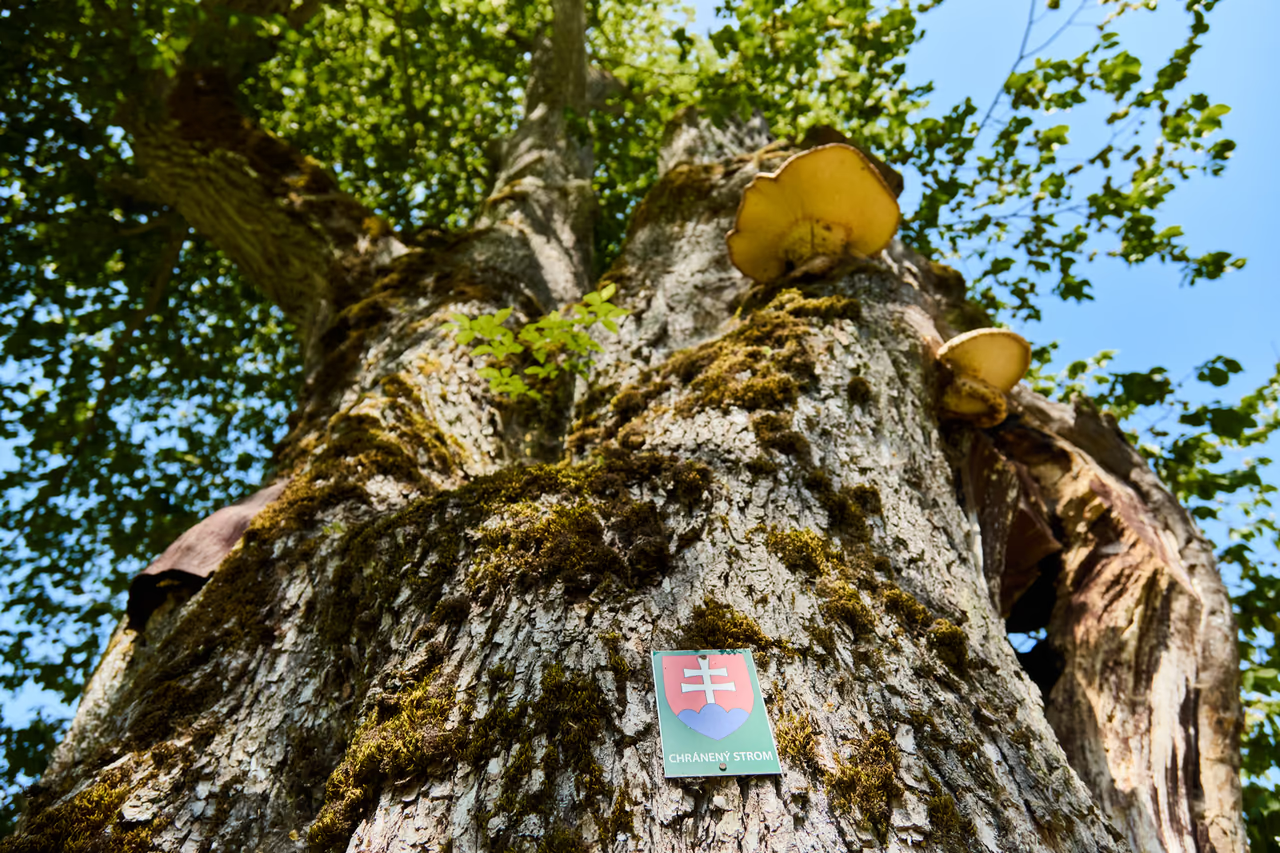
Looking up the elm's trunk: two large yellow fruiting bodies of wood-decay fungi growing out of the bark, moss-covered bark, a Chránený strom plate lower down and a cavity with bare wood on the right

Why come here

An age you can put your arms round

Few elms this old are left in Europe – since the 20th century the species has been decimated by Dutch elm disease. According to the Kysuce PLA Administration this one is among the oldest in central Europe.

When to come

All year, as you prefer

The tree is visible without leaves from autumn to April – and that is also when it flowers, in March and April. Through the summer the crown hides it, but in May and June the seeds ripen and fall.

One more thing

Four roots in the village arms

Makov has the tree in its arms: a golden elm with four roots on a blue shield. The roots stand for the parts of the village – Čierne, Potok, Kopanice and Trojačka – and the same number of massive branches stands for the four tributaries of the river Kysuca.

The story of the tree in Makov's coat of arms

First a tree by a house. Then a tree that outlived the houses. In the end a tree that stands for the village.

Kopanice

Build a house, plant a tree

The U Papají settlement is one of the kopanice chotáry scattered across the slopes above Makov. The village memorial book puts its beginning in 1521, when two families – the Pápays and the Lábays – are said to have come here across the White Carpathians. One settled below the ridge towards Kysučné, the other towards Semeteš; both settlements are named after them.

A custom is tied to this part of the Javorníky that the whole story of the tree rests on: a tree was planted beside every newly built log cottage. It was to protect the house from the elements and at the same time served as a measure of its age – as tall the tree, as old the house.

It was in exactly that period, some time in the 16th century, that the elm at Papaje was planted, judging by the estimate of its age. The houses around it have been replaced since then; the elm stayed and became the measure of age itself – not for one house, though, but for the whole settlement.

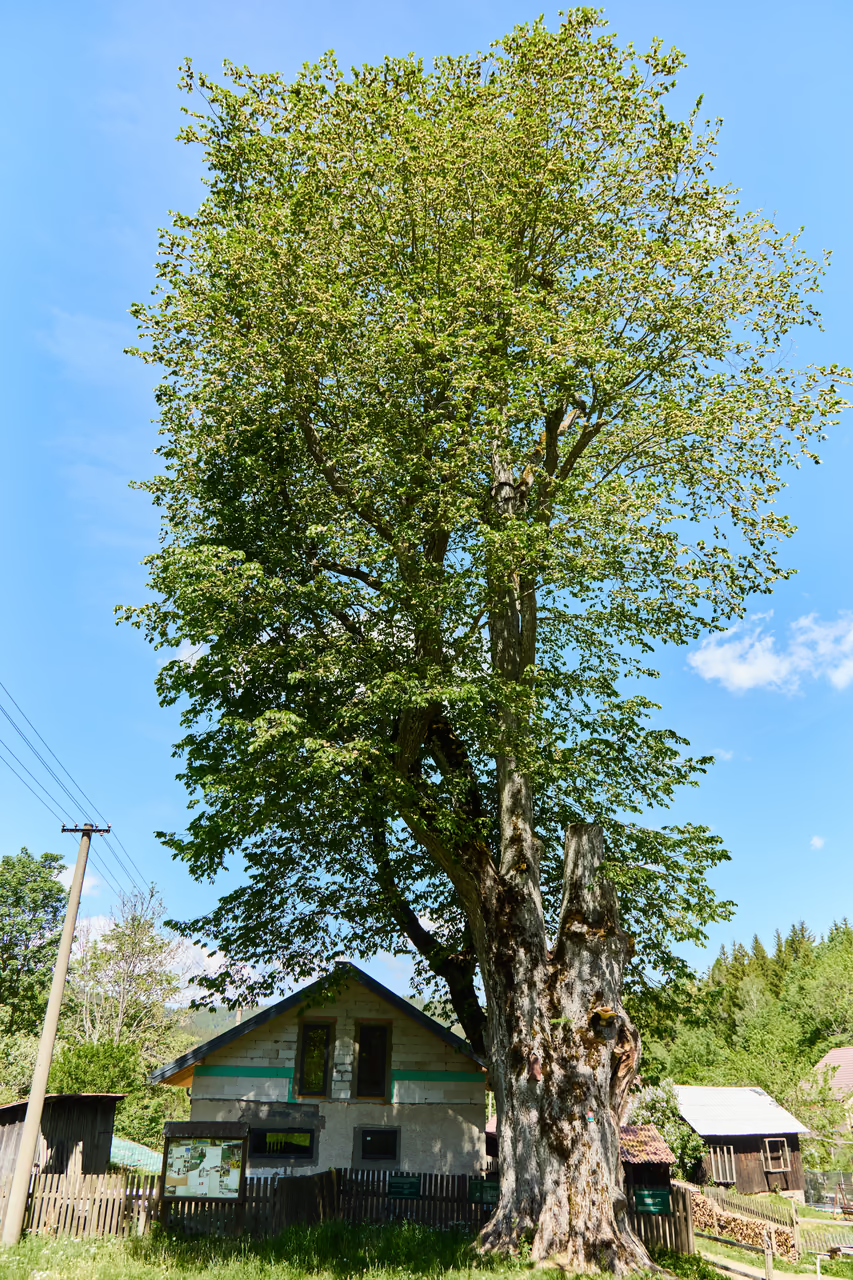
The whole mature elm from foot to crown: a furrowed trunk with a cavity at ground level, a broad pale green crown, a cottage with a fence, a woodshed and wooded slopes behind the tree
The tree from foot to crown. Behind it the building it grows beside – and that neighbourly relation is where its whole story comes from.

The village arms

Four roots, four parts of Makov

The arms show a golden elm with four roots on a blue shield – each root standing for one part of the village: Čierne, Potok, Kopanice and Trojačka. Its massive branches come to the same number: they stand for the four equal tributaries of the river Kysuca that run down from those parts.

The design came out of a public competition the village held in 1994 with the Kysucké múzeum v Čadci – from 217 entries by 185 authors the jury chose the motif of the river Kysuca and the protected tree, which the academic sculptor Milan Greguš, a native of the Greguše settlement, worked into the arms. The village council adopted the arms on 23 March 1995, and a few weeks later the Heraldic Commission of the Ministry of the Interior of the Slovak Republic approved them as well.

roots = parts of the village
4
branches = tributaries of the Kysuca
4
the year the arms were adopted
1995
The coat of arms of Makov: a golden elm with four roots on a blue shield
Foto: Finono, Wikimedia Commons, CC BY-SA 4.0

A one-off

A tree growing where its species does not

The trunk measures 676 centimetres in girth at 130 cm above the ground – a figure published by the Kysuce PLA Administration in 2024. At the roots the girth is over 11 metres and the tree is around 30 metres tall. Its age is estimated at 400 years, and according to the Administration it is among the oldest field elms in central Europe.

The position itself is unusual too. The field elm is a tree of the lowlands – it belongs in river floodplains and on the alluvium of large rivers, usually at 400 to 500 metres above sea level. This one grows a good two hundred metres higher, on a kopanice hillside – where a wych elm would be more expected.

Old elms are a rarity in Europe. Since the 20th century they have been decimated by Dutch elm disease – an illness that has cut their numbers right across the continent.

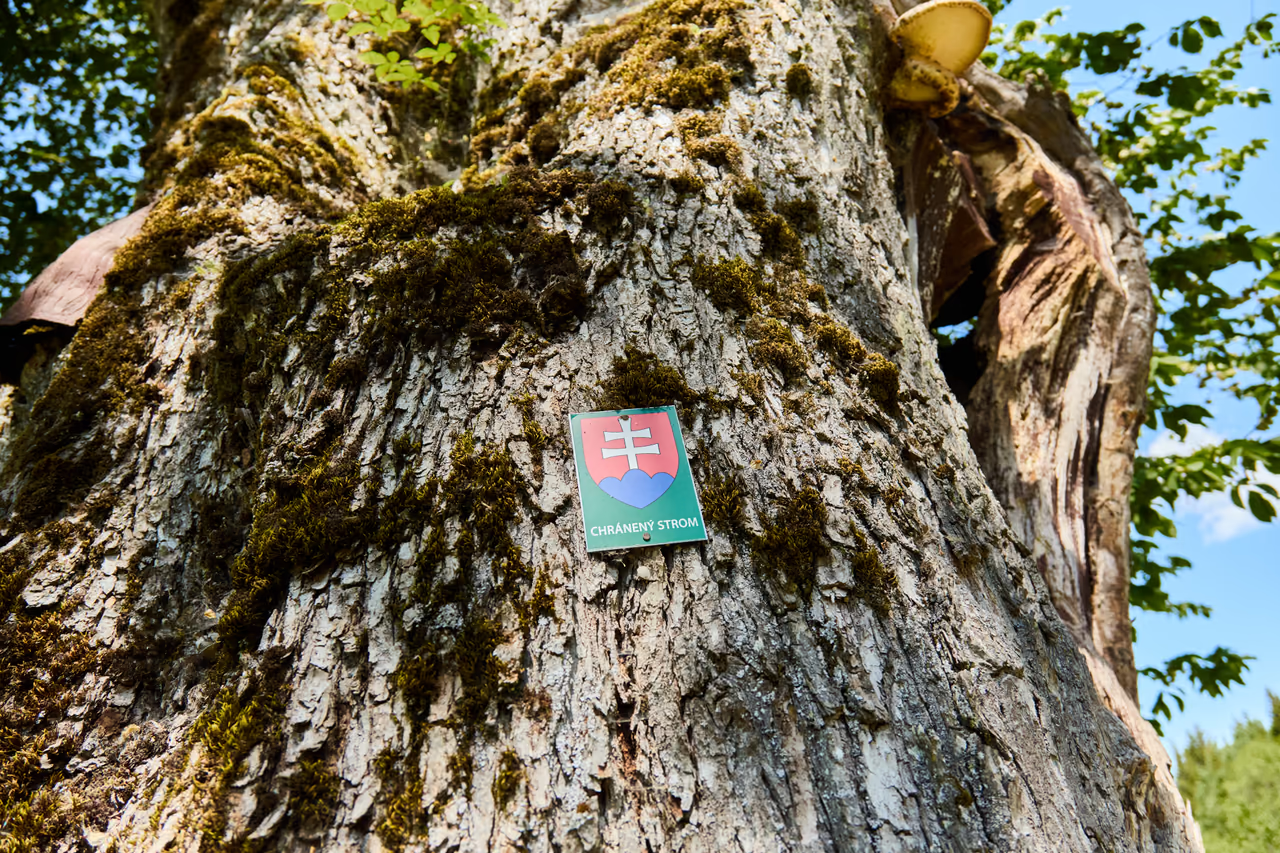
A close view of the massive moss-covered trunk with a green enamel plate bearing the Slovak state emblem and the words Chránený strom in the middle, an open cavity in the trunk on the right
The state “Chránený strom” plate on the trunk.

Condition and care

What a four-hundred-year-old trunk can carry

Brest u Papají has been protected since 1973 – by a resolution of the council of the then Okresný národný výbor v Čadci it was entered in the state register as a protected natural formation, and a protection zone was declared around the trunk – a circle ten metres in radius set aside purely for the roots.

In December 2005 snow bent the elm's crown so far that several branches broke off it. In the spring of 2006 the tree was therefore treated and its crown balanced. The village looks after the surroundings – there are information panels, benches on the meadow, a footbridge over the brook and paths right up to the tree.

The age shows on the tree. There are cavities where branches have broken off, and the fruiting bodies of wood-decay fungi on the bark. The village survey does not conceal the elm's condition: it puts the tree's social value at just under 13,000 euros and its damage in the band of 26 to 60 per cent. The elm is marked, but alive.

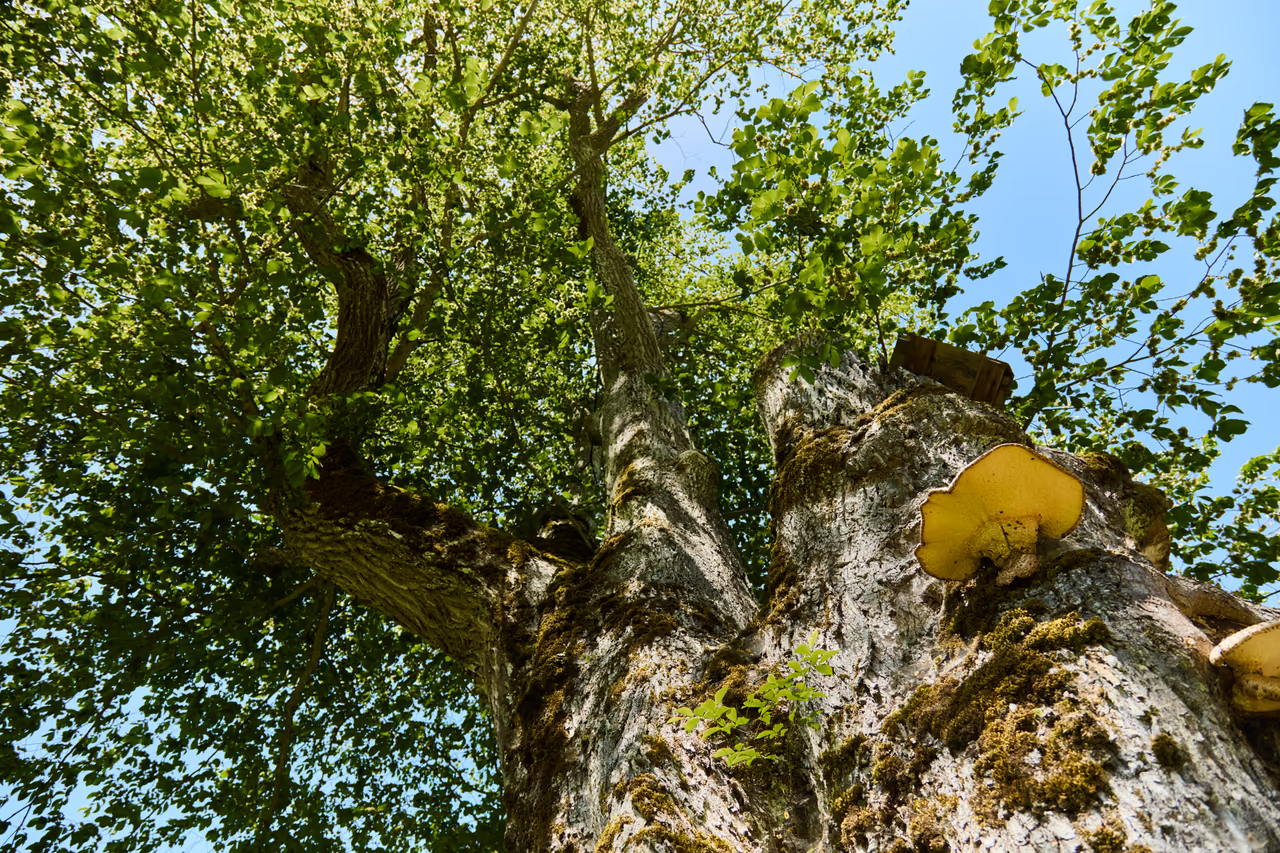
Looking up into the crown of an old elm: the massive forking of the moss-covered trunk, yellow bracket fungi on the bark, blue sky showing between the leaves
The fruiting bodies of wood-decay fungi on the bark – one of the marks of age that the village survey takes into account.

Timeline

From a kopanice log cottage to the village arms

  1. 1521

    The memorial book dates the settlement

    The Makov memorial book puts the beginning of the U Papají settlement in 1521 – two families, the Pápays and the Lábays, settle below the Javorníky ridge.

  2. 16th century

    The tree is planted

    The estimate of about 400 years dates the planting to precisely the time when these slopes were being settled and a tree was planted beside every new log cottage.

  3. 20 April 1973

    Entered among the protected

    A resolution of the council of the ONV at Čadca (no. 86/1973) enters the tree in the state register as a protected natural formation with a protection zone 10 metres in radius.

  4. 23 March 1995

    The tree in the village arms

    The village council adopts arms with a golden elm with four roots – the design by the academic sculptor Milan Greguš came out of a public competition held in 1994.

  5. December 2005

    Damage by snow

    Under the weight of snow several branches of the crown were damaged.

  6. spring 2006

    The crown treated

    Treatment and balancing of the crown follow – work meant to take away the risk of further breakage.

  7. today

    The tree lives on

    Marked but alive – the elm at Papaje goes on growing and remains the measure of the settlement's age.

Na závěr

Doplňující info a test znalostí

Rychlá rekapitulace

How old is the elm at Papaje?

The Kysuce PLA Administration estimates its age at 400 years (a figure from 2024).

What makes this particular tree exceptional?

According to the Kysuce PLA Administration it is among the oldest field elms in central Europe. When measured in 2024 its trunk girth at 130 cm was 676 cm, the girth at the roots was over 11 metres and the tree was about 30 metres tall. It also grows at 720 metres above sea level, whereas its species normally occurs at 400 to 500 metres, mainly in the lowlands and on river alluvium.

How long has it been protected?

The council of the ONV at Čadca entered it in the state register as a protected natural formation on 20 April 1973 (resolution no. 86/1973).

What does the elm in Makov's arms mean?

The village arms show a golden elm with four roots on a blue shield. The roots stand for the four parts of Makov – Čierne, Potok, Kopanice and Trojačka – and the same number of massive branches stands for the four equal tributaries of the river Kysuca that run down from those parts. The arms were designed by the academic sculptor Milan Greguš after a public competition in 1994, and the village adopted them on 23 March 1995.

Is brest the same as jilm?

Yes. “Brest” is the Slovak name of the genus that Czech calls jilm and English elm. At Papaje it is brest hrabolistý (Ulmus carpinifolia, now Ulmus minor), the field elm.

Is the tree healthy?

It is marked by age. There are cavities in the trunk, the fruiting bodies of wood-decay fungi on the bark, and in December 2005 several branches broke under snow. The village survey puts the damage in the band of 26 to 60 per cent.

Závěrečný kvíz

Otázka 1 z 5

The mature elm from foot to crown, a cottage in the kopanice settlement behind it

What does the word “brest” mean?

RysíkRysík→

There is a quiz a little further up. Shall we try it?

A few quizzes and I get glasses, and I will feel properly educated.

Try the quiz

Your rank: Homebody. You do not have a single stamp yet. Visit any place and become a Pilgrim.

You can experience the Beskids and Moravian Wallachia with Rysík and without him. Rysík would love to be there for it. Whether you take him along and take on the challenges with him is up to you.

Save Brest u Papají to your favourite places

You can find your favourite places in your account. On the Walking routes page you can use them to filter routes.

Something not right here?

Suggest a more accurate wording.