Above the houses of the Kršlisko settlement, in the kopanice part of Makov, stands a tiny chapel. Inside, a gilded relief of Cyril and Methodius with a double-armed cross fills the whole end wall. Beside it, in the corner, a carved group holds a book bearing the first sentence of John's Gospel in Old Church Slavonic.
their arrival in Great Moravia
863
Glagolitic, then Cyrillic
2 alphabets
the sentence on the book in the carving
John 1:1
Why come here
The church over the ridge, the chapel within reach
The church at Makov is a long way from Kršlisko, so around 1900 the people of the settlement built a chapel of their own. Forty years later the farmers who owned the woods around added a bell tower to it.
When to come
Mass only once a year
The chapel has one fixed date in the year: after the feast of Saints Peter and Paul, so after 29 June, mass is said in front of it. The rest of the year it is quiet here.
What not to miss
The book in the hands of the carving
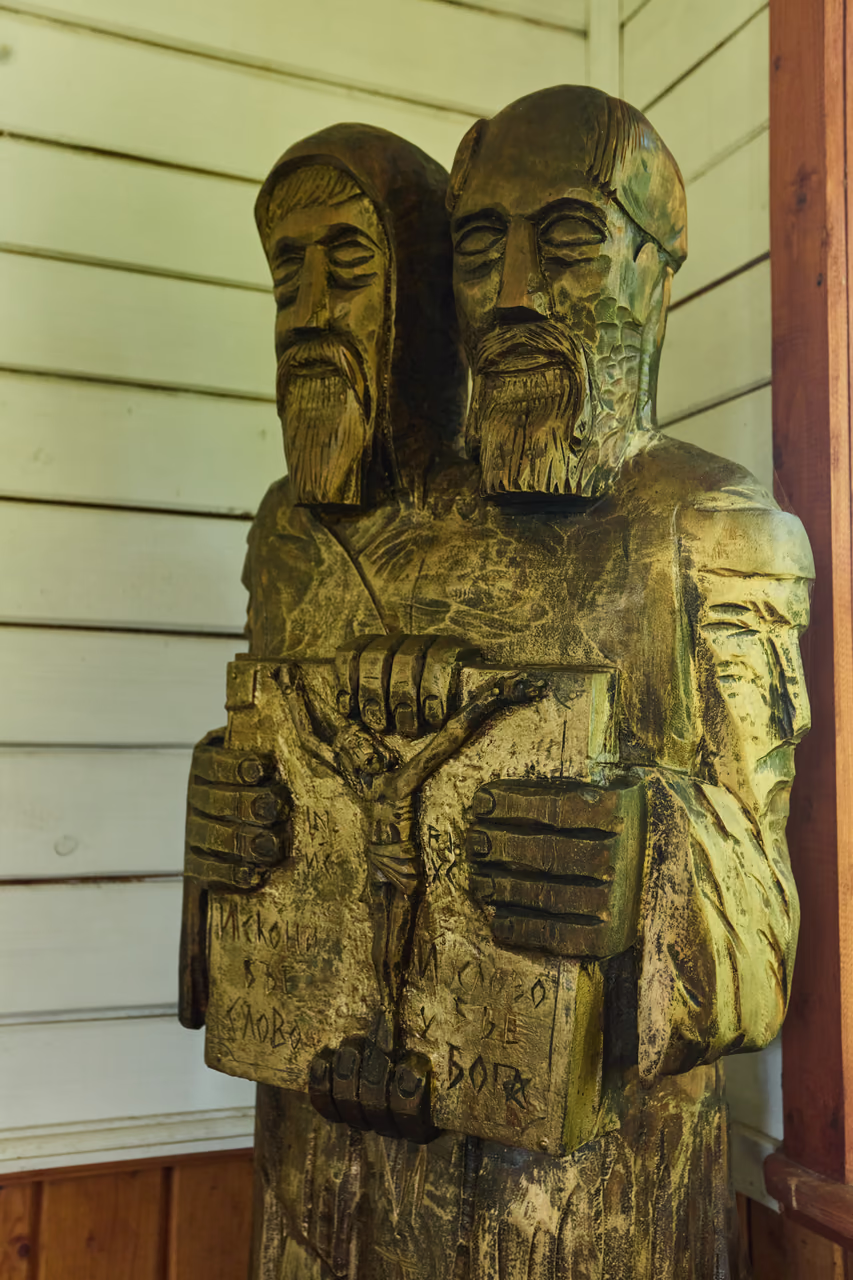
The wooden carving in the corner holds an open book with an inscription in Cyrillic: “ИСКОНИ БѢ СЛОВО, И СЛОВО БѢ У БОГА”. In English “In the beginning was the Word, and the Word was with God” – the opening of John's Gospel.
The story of the chapel at Kršlisko
First a chapel the settlement built for itself. Then a bell that called it together. And on the wall two saints who brought writing here.
01
The kopanice
They had a church, but over the ridge
Kršlisko is one of the settlements scattered across the slopes above Makov. It was founded by kopanice settlersThe people of the kopanice: thinly settled mountain slopes with scattered holdings and small fields dug by hand out of the hillside. The typical form of settlement in the White Carpathians and the Javorníky. from seven villages around, who moved here from the turn of the 17th and 18th centuries – digging new fields and paseky and building holdings ever higher up the slopes. Their chotáryChotár – the cadastral territory of a village or settlement, that is the land belonging to it, boundaries included. spread right across the ridge, far from the villages they came from, but they carried their parish attachment with them: for over a hundred years they belonged to the parish at Vysoká nad Kysucou. They became a village of their own only when they joined into one Makov in 1895.
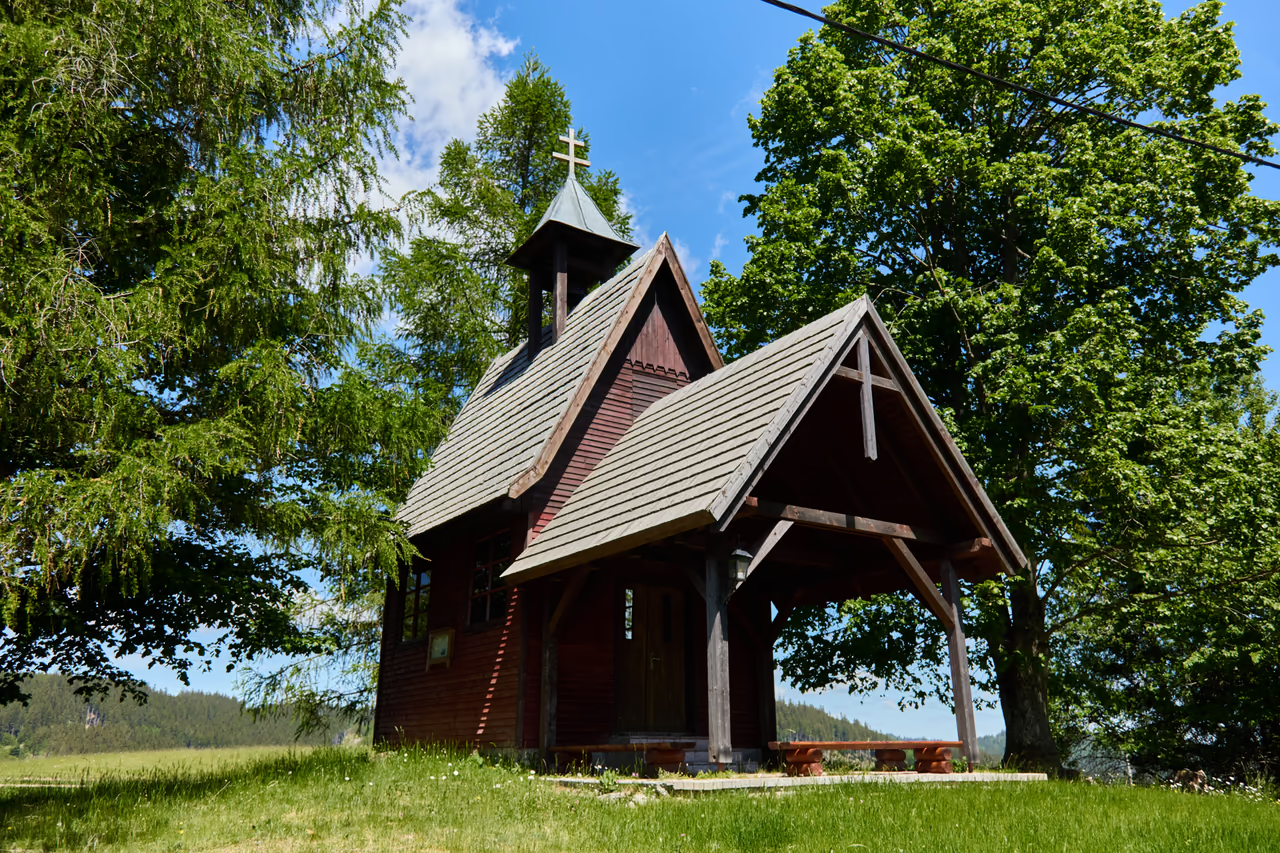
So around 1900 the people of the settlement built a chapel of their own on the slope above the houses – a wooden building with a bench along two walls and a single altar table in the middle. It did not replace the church, but it was close at hand.
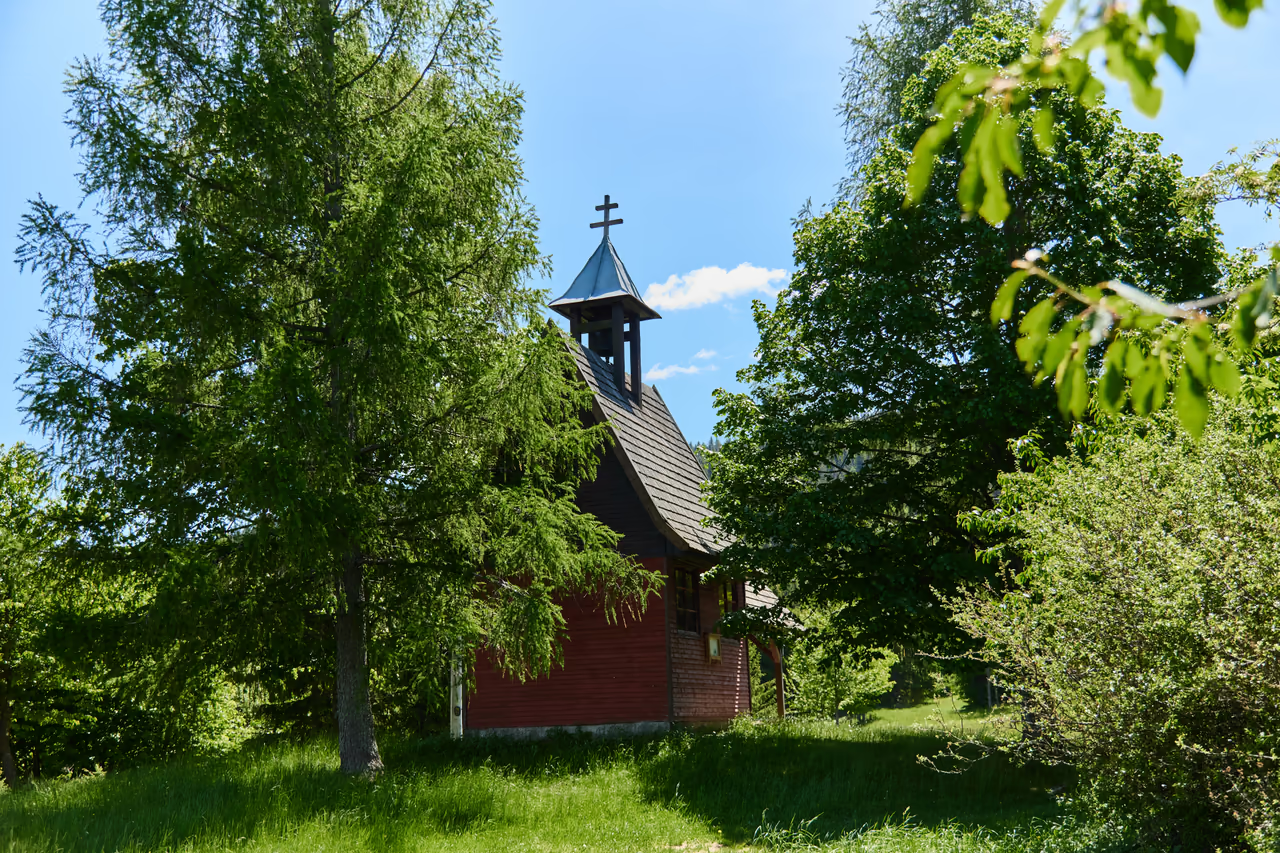
Forty years later, in 1940, a bell tower was added to it by the body that decided in the Javorníky where grazing and felling would take place – the local urbárníciUrbárníci – members of the urbarial community: the descendants of farmers who, after serfdom was abolished, gained the village woods and pastures into joint ownership and administer them to this day. In Kysuce and the Kopanice this is the oldest surviving form of joint ownership..
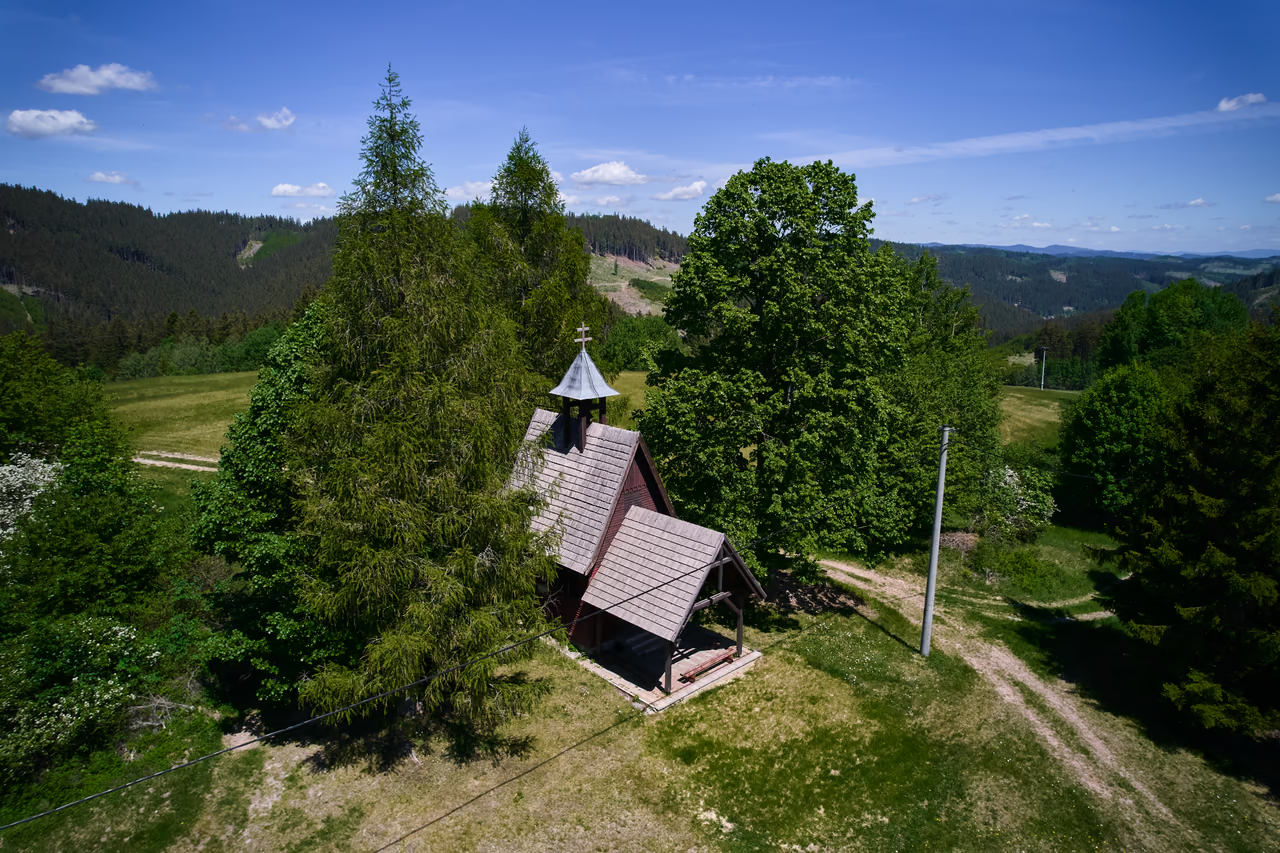
The chapel stands above the houses of the settlement, among mature trees. The bell tower above the gable is forty years younger than the building below it.
02
Above the altar
Two saints with a double-armed cross
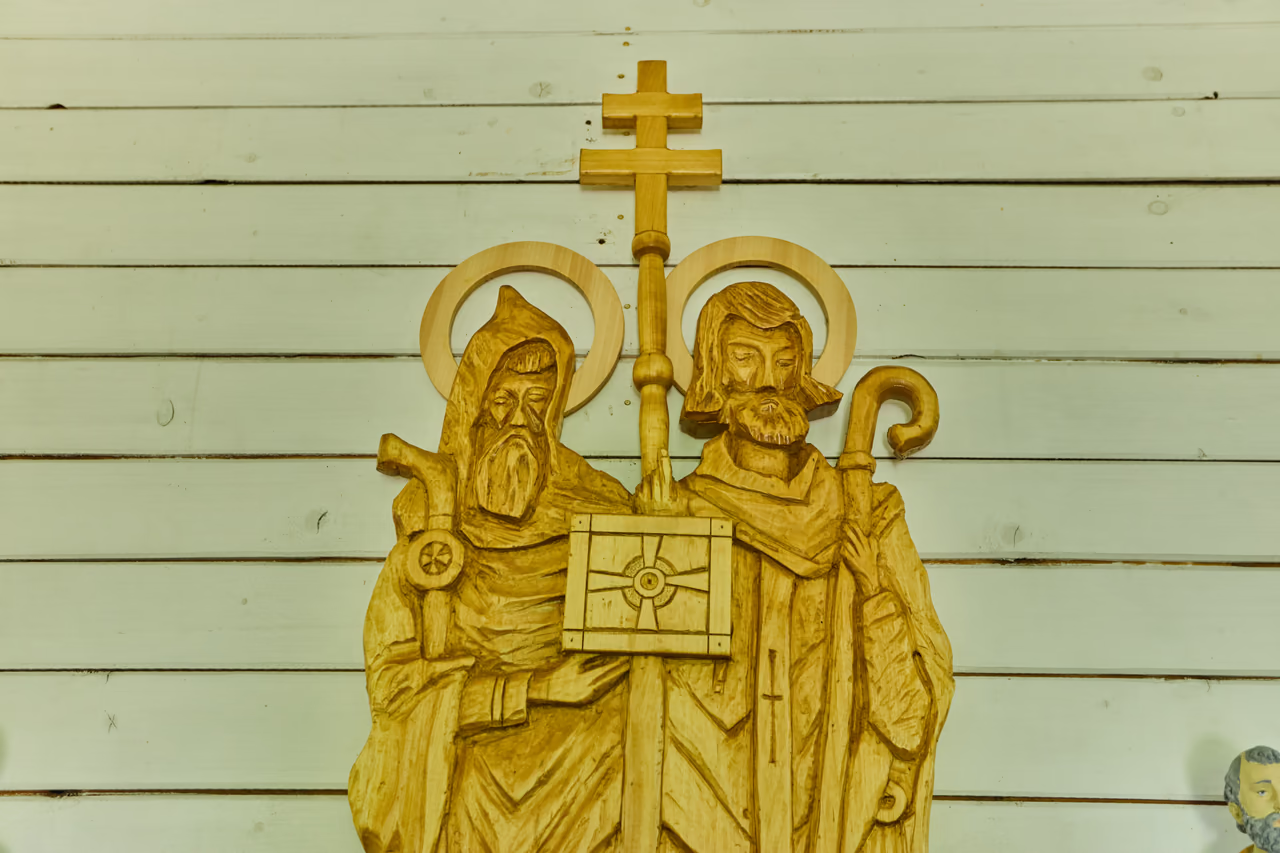
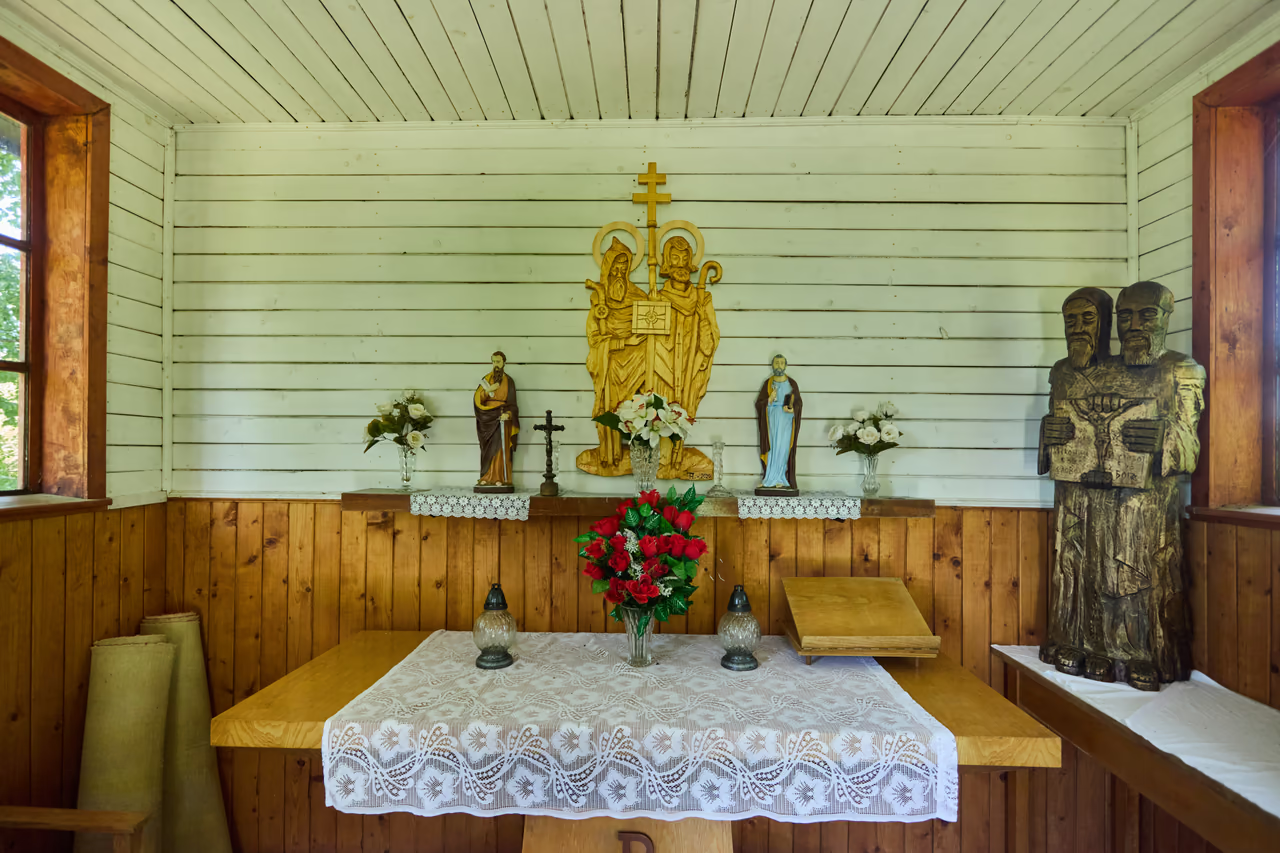
The end wall of the chapel is filled by a gilded carved relief of two haloed figures, with a double-armed cross between them: a monk on the left, a bishop on the right. This is the usual depiction of Cyril and Methodius – the brothers from Thessaloniki who came to Great Moravia in 863 and brought with them writing for the Slavonic language.
Just under twenty-two kilometres as the crow flies from here, on the other side of the Czech-Slovak border, stands on the summit of Radhošť the chapel that bears their name – the place the story of their coming is tied to, and where crowds have streamed to the pilgrimage for over a hundred years. The chapel at Kršlisko has none of that – but it carries the reverence the settlement brought up onto the slope with it.
The relief of Cyril and Methodius above the altar cornice.
03
In the corner of the chapel
The book that reads In the beginning was the Word
In the right-hand corner behind the altar stands a carved group of two figures, cut from a single trunk – heads side by side, four hands closed around an open book. In the middle of the book is a carved crucified Christ, and on both sides of his body an inscription carved in CyrillicCyrillic – a script derived from the Greek majuscule, which came into being in Bulgaria at the end of the 9th century and replaced the older Glagolitic. Russian, Bulgarian, Serbian and Ukrainian are still written in it.:
ИСКОНИ БѢ СЛОВО, И СЛОВО БѢ У БОГА
It is not a randomly chosen sentence. Život KonstantinůvŽivot Konstantinův – an Old Church Slavonic legend written shortly after Constantine's death (869), the main source on his life and on the beginnings of Slavonic letters. records that Constantine began his translation of the gospel into the Slavonic language with precisely this sentence – it is the first sentence the Slavs received written in their own tongue.
Constantine wrote it differently, though. For Slavonic he created the Glagolitic script – writing with rounded letters curled into themselves, unlike anything else. The Cyrillic the carver cut is younger: it came into being at the end of the 9th century, derives from the Greek majuscule and gradually pushed Glagolitic out. It bears Cyril's name, but Cyril did not create it. So on the book in the chapel above Kršlisko stands a sentence the two brothers translated, written in a script that came after them. The carver put it into the hands of both and set them in the chapel the kopanice settlers built above their houses.
The group carved from a single trunk. The inscription runs from the left-hand page to the right, around the carved Christ in the middle.
04
On the altar cornice
Peter and Paul and the one fixed date in the year
Two polychrome statues stand on the cornice below the relief: Saint Peter with a key and Saint Paul with a sword. They are the patrons of the parish church at Makov, which Kršlisko belongs to. So the chapel declares itself part of the village below by its furnishings as well.
From that comes the one fixed date the chapel has in the year: after the feast of Saints Peter and Paul, so after 29 June, mass is said here every year. Outside, in front of the chapel.
The chapel and its bell tower were last repaired in 1993, when the priest Pavel Mitaš reconsecrated it. The bell rope runs through the ceiling straight into the chapel – the bell is rung by hand, from inside. And the bell at Kršlisko is not the only one in the Makov parish: in 2021 the parish documented no fewer than six of them, bell towers included – at the parish church and the cemetery, at Kršlisko, at Greguše, at Trojačka and at Buková. Every settlement has its own.
The altar wall. To the left of the relief Saint Paul with a sword and a book, to the right Saint Peter with a key – the patrons of the parish church at Makov.
Timeline
From kopanice without a church to a restored chapel
1895
The village of Makov comes into being
The village is put together from parts of seven villages whose chotáry had climbed over the Javorníky ridge. Until then the kopanice belonged in church terms to the parish of Vysoká nad Kysucou.
around 1900
The settlement builds a chapel
On the slope above the houses of Kršlisko the original chapel goes up – a small wooden building for a few dozen people.
1940
The urbárníci add a bell tower
A new bell tower was added to the chapel by the local urbárníci, the community of owners of the woods and pastures around.
1993
Restoration and reconsecration
The chapel and the bell tower were repaired and reconsecrated by the priest Pavel Mitaš.
2021
The bell documented
The parish recorded six bells and bell towers of the Makov settlements in photographs and on video, the one at Kršlisko among them.
today
Mass after the feast of Peter and Paul
Every year after 29 June mass is said in front of the chapel. A blue waymarked walking route passes through the settlement.
Visit
Up to Kršlisko
Where exactly it is
The Kršlisko settlement, in the Makov-Kopanice part
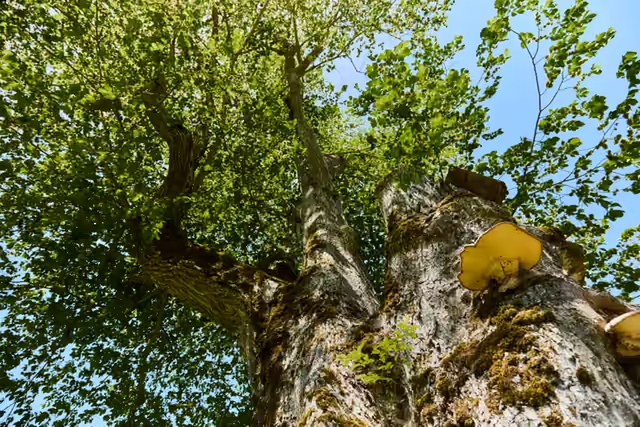
The chapel stands above the houses of the settlement, at the edge of a meadow under mature trees. From the protected elm at Papaje it is about half a kilometre as the crow flies – both places lie in the same part of Makov. No waymarked path runs between them; they are linked by the circuit by way of Greguše.
This page has already been added to your Beskids passport as a digital visit. To collect a badge for visiting in person, use the button below while you are there.
Your browser asks for your location once when you click. Verification happens offline on your device and your location is not sent anywhere.
You set out from Makov, from the Kopanice part. You can leave the car right at the start of the blue waymarks; from there the climb to the chapel is on foot.
1
Makov, Kopanice – Papajestart • the start of the blue waymarks
The part of the village at the north-eastern end of the Makov chotár. There is somewhere to leave the car at the start of the waymarks.
Kršlisko – the chapel above the housesdestination • the blue waymarks
The climb follows a broad field and forest track up into the settlement. The chapel stands above the houses at the edge of a meadow, among mature trees – you will see the bell tower with its cross straight above the gable.
2
On to Greguše and the elmcarrying on • a circuit of about 11 km
As the crow flies the elm is only about half a kilometre from the chapel, but no direct waymarked path runs between them – they are linked by the circuit through the kopanice settlements: from the chapel up to the ridge at the U Lovásov saddle, along the red route to the Greguše settlement, and from the Nad Zápačou junction down a skid road into Papajovce to Brest u Papají. The whole circuit is about 11 km with around 400 metres of ascent.
The waymarked path runs through an inhabited settlement – the cottages around are private and some of them lived in all year.
What to know before you go
Mass once a year
Mass is said in front of the chapel every year after the feast of Saints Peter and Paul, so after 29 June. The exact date is announced by the Makov parish.
There are no opening hours
The chapel has no opening hours, and neither the village nor the parish gives any. You can look round the interior in the 360° tour higher up this page.
On foot on the blue route
Blue waymarks lead here from Makov-Kopanice along a broad field and forest track. You can leave the car at the start of the waymarks at Kopanice.
Nearest facilities
Refreshments and toilets are down in Makov. Around the chapel there is only meadow.
Na závěr
Doplňující info a test znalostí
Rychlá rekapitulace
When was the chapel at Kršlisko built?+
The municipality of Makov gives around 1900 for the original chapel in the Kršlisko settlement. The bell tower was added by the local urbárníci in 1940; in 1993 the chapel and the bell tower were repaired and the priest Pavel Mitaš reconsecrated the chapel.
What is there to see in the chapel?+
The end wall is filled by a gilded carved relief of two saints with a double-armed cross, and in the corner stands a wooden carved group of two figures with a book written in Cyrillic; an older print of the same subject hangs on the wall as well.
How do I get to the chapel?+
A blue waymarked walking route leads from the Makov-Kopanice part along a broad field and forest track into the Kršlisko settlement; the chapel stands above the houses. You can leave the car right at the start of the waymarks at Kopanice. From the chapel you can carry on round the circuit by way of Greguše and Papajovce (and past the protected elm) and back, about 11 kilometres in all.
Can I get inside?+
The chapel has no opening hours. You can look round the interior with its altar wall, the relief and the carved group in the 360° tour on this page.
Your rank: Homebody. You do not have a single stamp yet. Visit any place and become a Pilgrim.
You can experience the Beskids and Moravian Wallachia with Rysík and without him. Rysík would love to be there for it. Whether you take him along and take on the challenges with him is up to you.
Save the chapel on Kršlisko to your favourite places