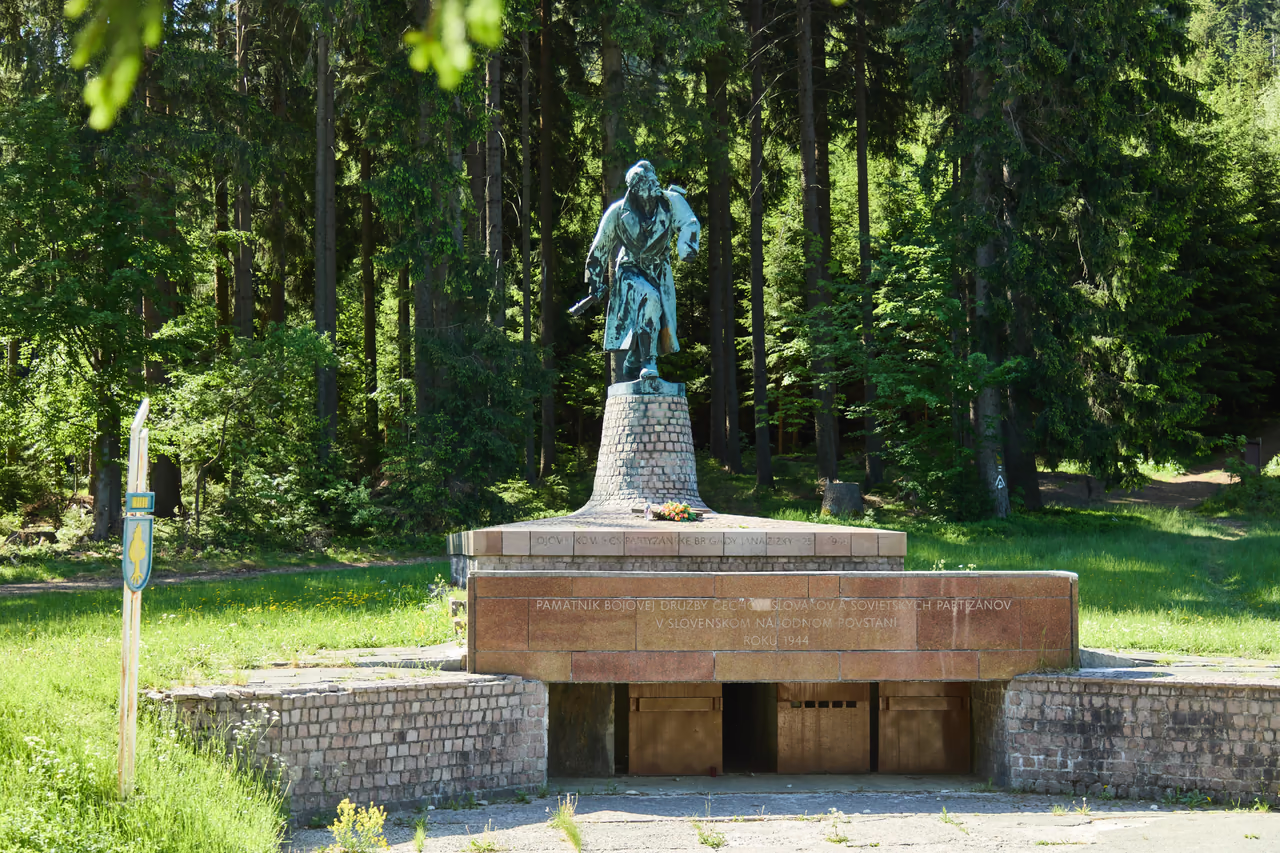
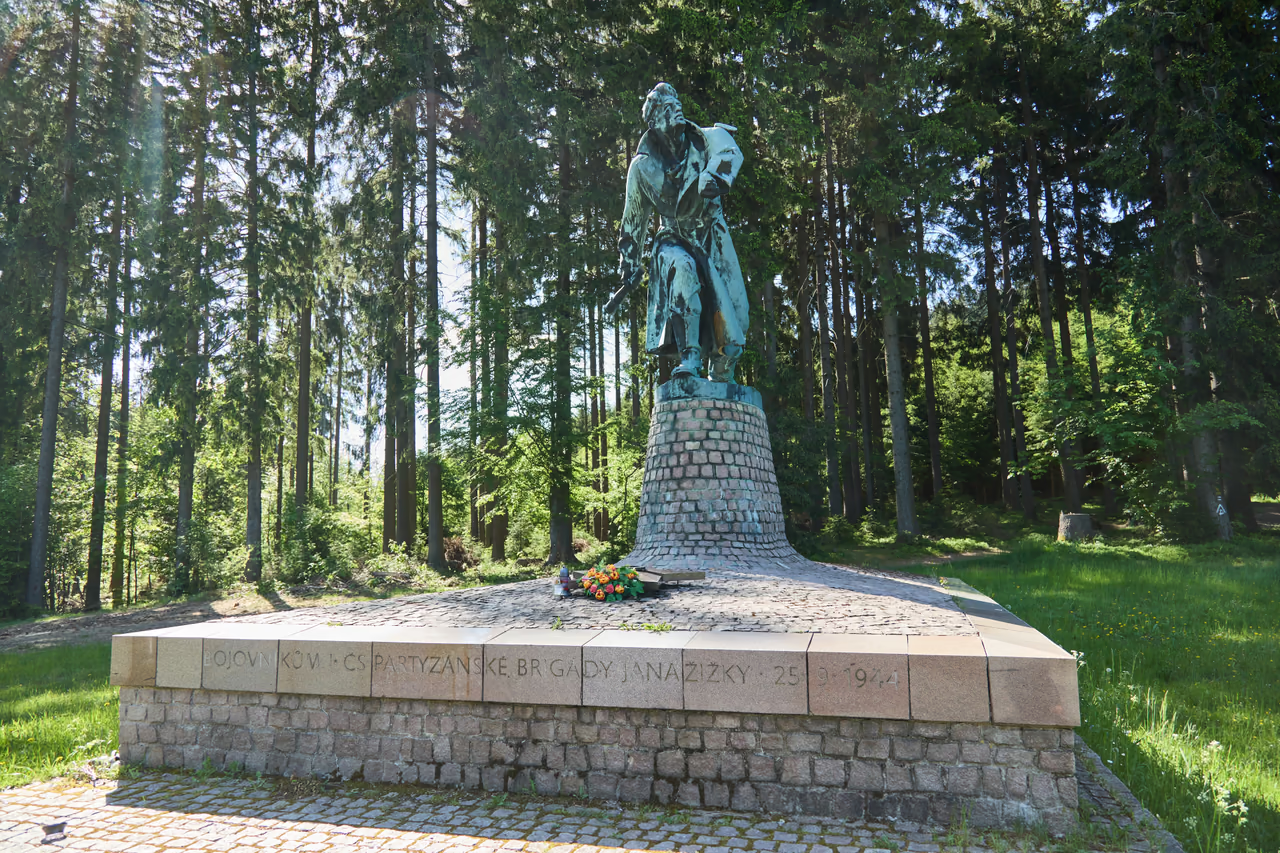
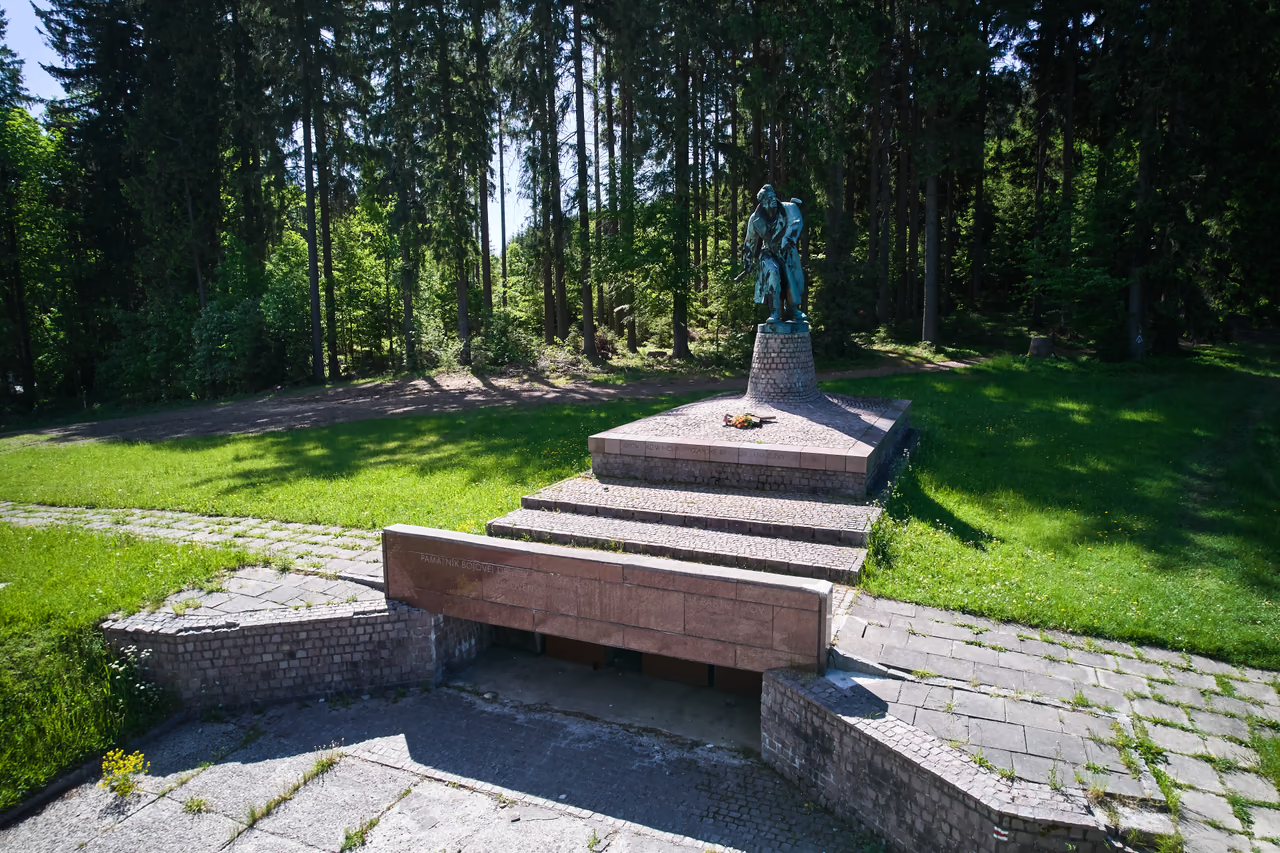
The memorial to the 1st Czechoslovak Jan Žižka Partisan Brigade in the Makov pass from above – the statue of a partisan on a stone plinth above a terrace with steps

Memorial to the 1st Czechoslovak Jan Žižka Partisan Brigade • the Makov pass • 801 m a.s.l.

The Partisan

A bronze guardian of the border that the Jan Žižka brigade fought its way across in September 1944.

The memorial stands in the pass where the fighting was

In the Makov pass, where the road from Velké Karlovice crosses into Slovakia, a bronze partisan has stood since 1975 – a memorial to the crossing of the 1st Czechoslovak Jan Žižka Partisan Brigade into Moravia. A statue, a boundary stone and two dedications in two languages.

Today you cross the border without stopping; in September 1944 it was fought over.

The memorial with both inscriptions from the front, a sign with the arms of Makov on the left
The memorial in the Makov pass – both dedications at the front, a sign with Makov's arms on the left.

Why come here

A memorial literally on the border

The bronze partisan stands right on the Czech-Slovak border – in the saddle that the 1st Czechoslovak Jan Žižka Partisan Brigade fought its way through into Moravia in September 1944. Its dedication is in Czech and in Slovak.

When to come

All year, and for the ceremony in August

The place is freely accessible all year. At the end of August a commemorative ceremony for the anniversary of the SNP is held at the memorial, with guests from both republics.

What not to miss

Two inscriptions and a boundary stone

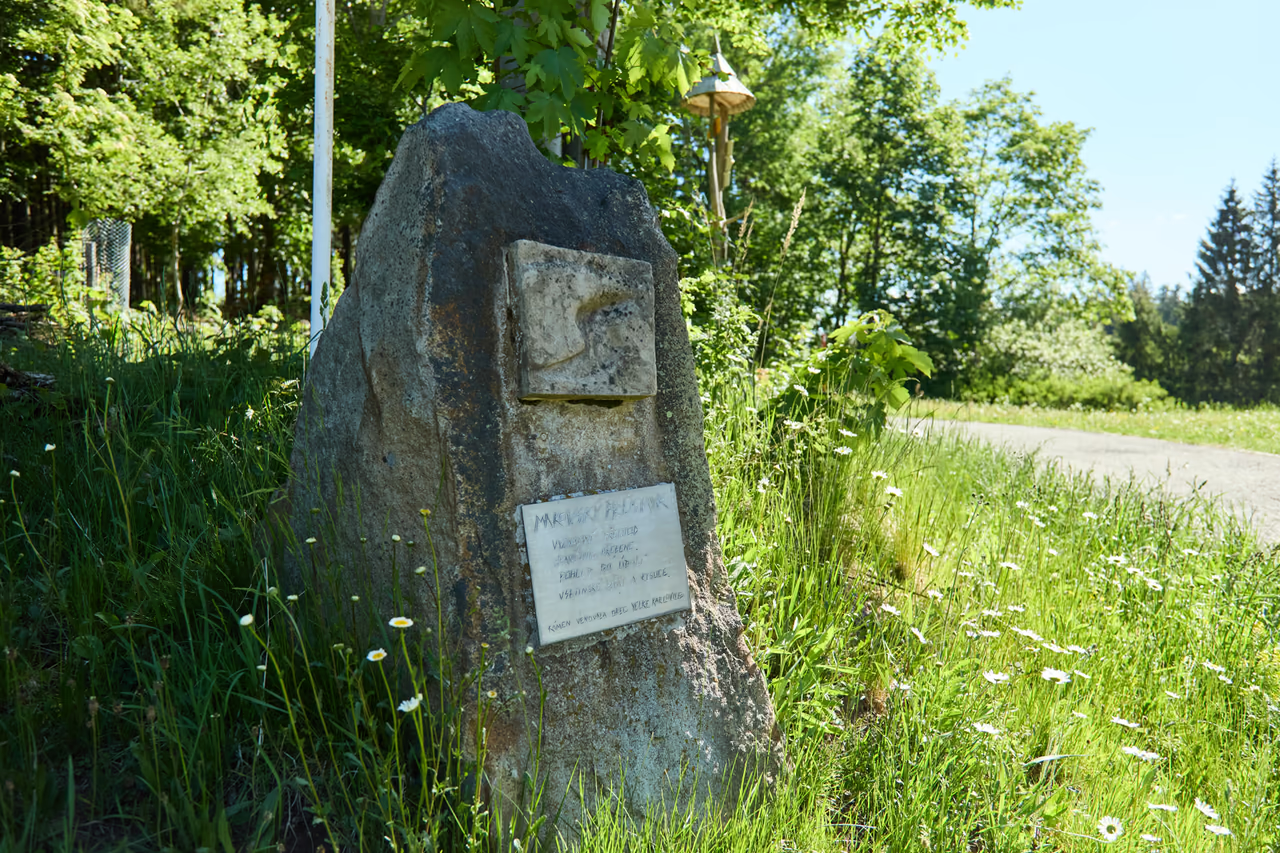
Read both dedications. The upper Czech one carries the date 25 September 1944 – the day of the fight for the pass. By the road there is also a stone with a plaque about the Makov pass, given by the municipality of Velké Karlovice.

Místo pro 360° prohlídku - doplní se později.

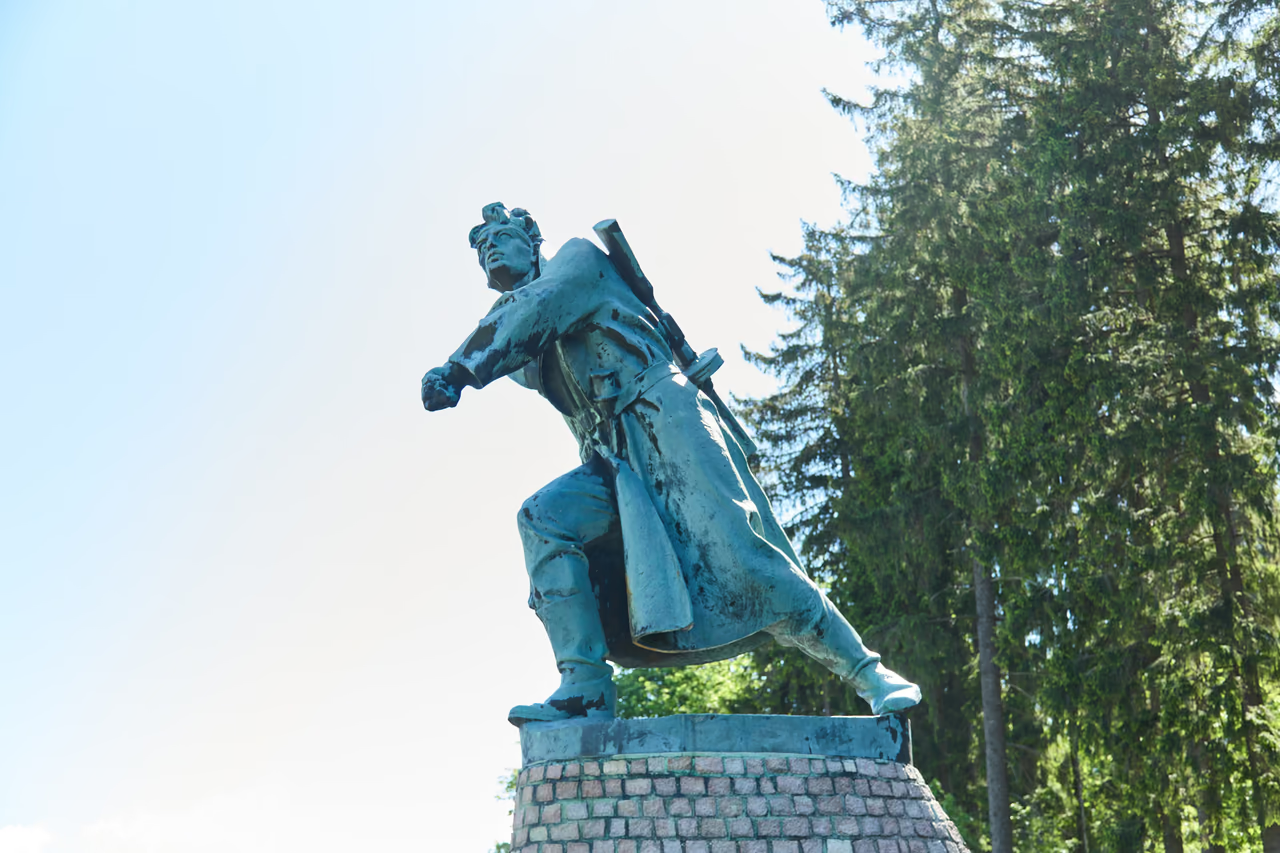
The bronze statue of a partisan against the sky – a figure in a coat looking back over his shoulder
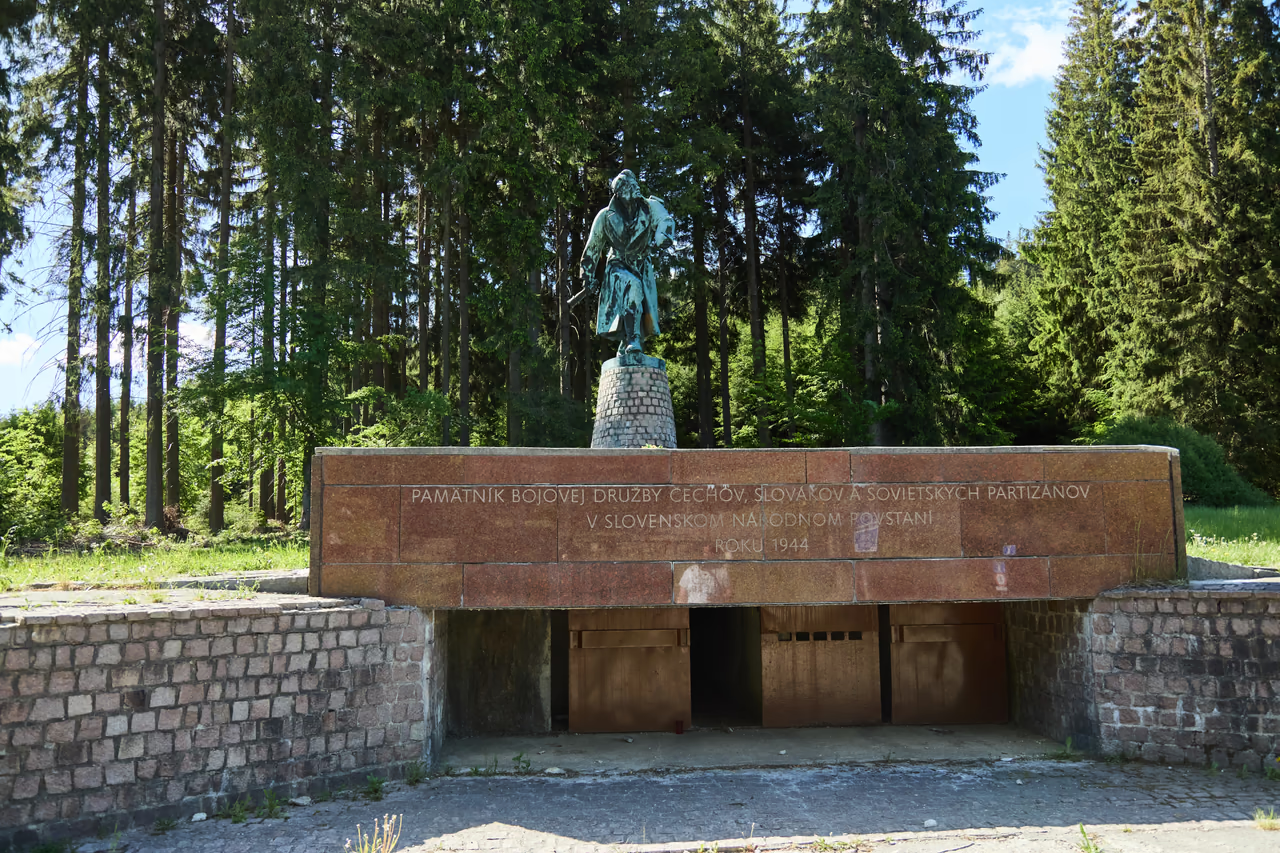
The memorial to the 1st Czechoslovak Jan Žižka Partisan Brigade in the Makov pass from above – the statue of a partisan on a stone plinth above a terrace with steps
The lower wall of the memorial with the Slovak dedication from 1944

Background

Who were the partisans?

In March 1939 Nazi Germany occupied the Czech lands and set up the Protectorate of Bohemia and Moravia. Slovakia became formally independent, though in reality a state dependent on Germany. Six years of occupation, war and terror followed.

Against the German occupation rose the resistance: the fight to drive out the occupiers and bring back a free Czechoslovakia. Its hardest, armed part was made up of partisans – fighters who hid in the mountains and from there raided German units, destroyed their equipment and gathered intelligence. They survived only thanks to the help of local people, who gave them food, a roof and information – and risked their lives for it.

The decisive turn came in August 1944, when the Slovak National Uprising broke out. The Soviet command then began dropping organising groups into Slovakia to spread the resistance into the Protectorate of Bohemia and Moravia as well. One of them set out across the mountains into Moravia – and it is its story that this memorial holds.

  1. 01

    Who

    Fighters behind the lines

    The partisans operated behind enemy lines outside the regular army. They leaned on the help of local people – without them they would not have survived in the mountains.

  2. 02

    Against what

    The Nazi occupation

    From 1939 Nazi Germany controlled the Czech lands. The resistance worked for the end of the occupation and the restoration of Czechoslovakia.

  3. 03

    How

    Sabotage and raids

    They destroyed railways, equipment and supplies, raided smaller units and gathered intelligence. In doing so they tied down forces that were then missing at the front.

  4. 04

    Why here

    The mountains as cover and as a gateway

    The Beskids ridge gave cover and linked Slovakia with Moravia. The pass was one of the ways the resistance crossed the border.

The story of the Jan Žižka brigade and the Partisan memorial

From a night drop in Slovakia through the fight for the pass to a memorial that two countries handed to each other as a gift.

Where they came from

The Žižka II drop

At the end of August 1944 a Soviet parachute group with the code name Žižka II landed near Sklabiňa in Turiec, a short way from Martin – 21 men and women. It was commanded by the Slovak second lieutenant Ján Ušiak, with the Red Army captain Dajan Bajanovič Murzin as chief of staff. Its task was to support the Slovak National Uprising, which had just broken out, on the spot.

On 6 September, however, new orders came: leave Turiec and fight through the mountains of Kysuce to the Moravian border, and spread the resistance into Moravia. The journey took ten days – the group grew with volunteers along the way and after crossing the river Váh numbered 315 people. In mid-September it reached the border and spent several days studying it at close quarters before attempting to cross as a whole.

Sklabiňau MartinaŽilina · řeka VáhMakovský průsmyk~76 km~10 dní pochodu
Trasa výsadku, srpen–září 1944
Schematická mapa, ne zákres přesné trasy - přesný postup výsadku Turcem a Kysucemi není doložen.
  1. End of August

    The drop near Sklabiňa

  2. 6 September

    Orders: move into Moravia

  3. 16–21 September

    Reconnaissance at the border

  4. 25 September

    The attempt to cross as a whole

  5. 28/29 September

    The first group in Moravia

25 September 1944

The fight for the pass

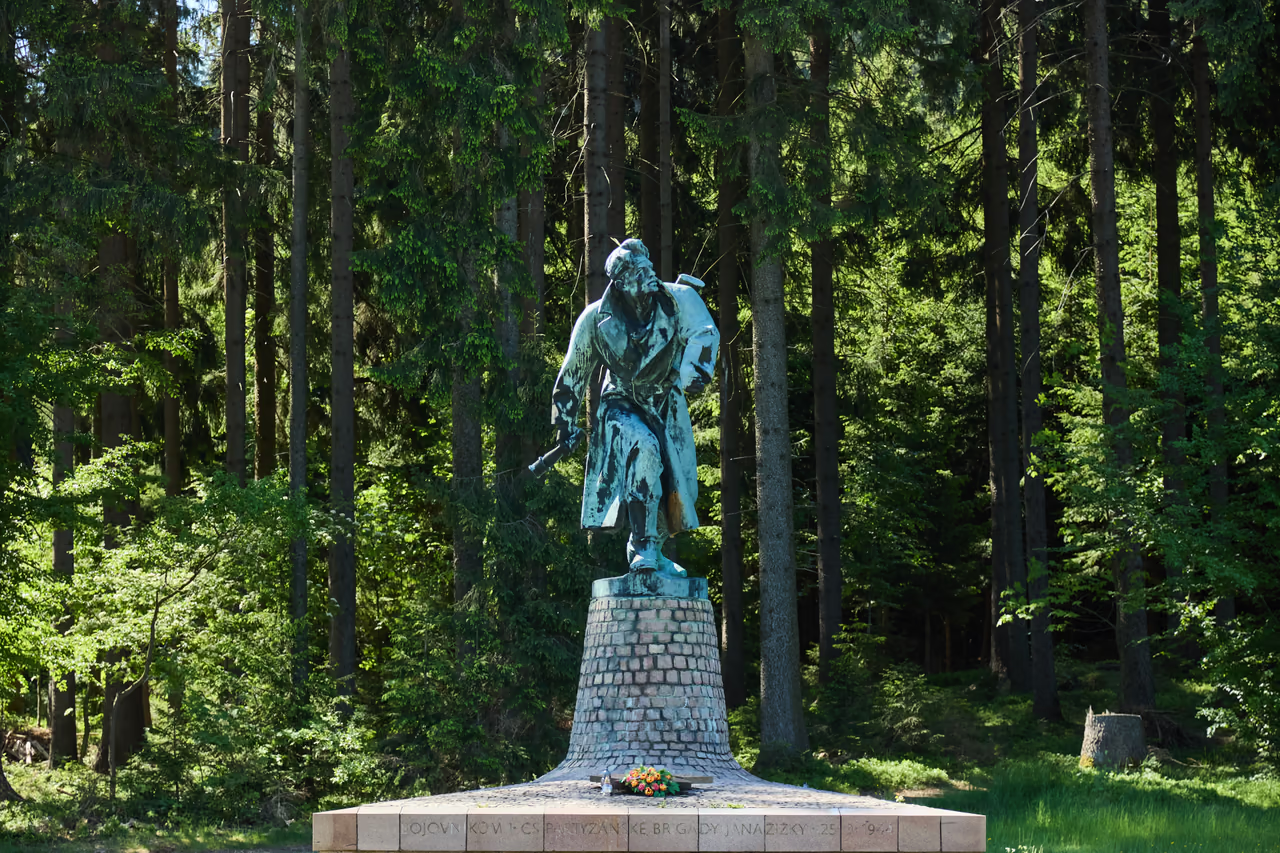
On 25 September 1944 the unit tried to cross the guarded border of the Protectorate as a whole – here, in the Makov pass. After heavy fighting with German units it had to fall back into Slovakia. The date 25. 9. 1944 carved on the plinth refers to that day.

The staff then changed tactics. The unit split into smaller groups, which worked their way across the ridge one by one with the help of local people. The first through, on the night of 28–29 September, was a group of about sixty led by Murzin. By mid-October the others had made it into Moravia as well – including Ušiak's.

„Bojovníkům 1. čs. partyzánské brigády Jana Žižky · 25. 9. 1944“ – to the fighters of the 1st Czechoslovak Jan Žižka Partisan Brigadethe dedication carved on the memorial terrace
The bronze statue of a partisan on a tapering plinth of stone blocks, spruce forest behind it

Autumn 1944

The strongest unit in the Czech lands

After crossing the border the unit became the strongest partisan unit on the territory of the Protectorate. It established itself in the Moravian-Silesian Beskids and came through the large Nazi anti-partisan operation Tetřev. On 2 November 1944, though, the enemy attacked its staff near Čertův mlýn. Badly wounded, Ušiak took his own life the next day, surrounded at Čeladná, so as not to be taken prisoner. Murzin took over the command and the detachment grew into a brigade whose groups operated from Vsetín to Vyškov.

members of the Žižka II drop
21
people after crossing the Váh
315
battalions of the brigade in spring 1945
4
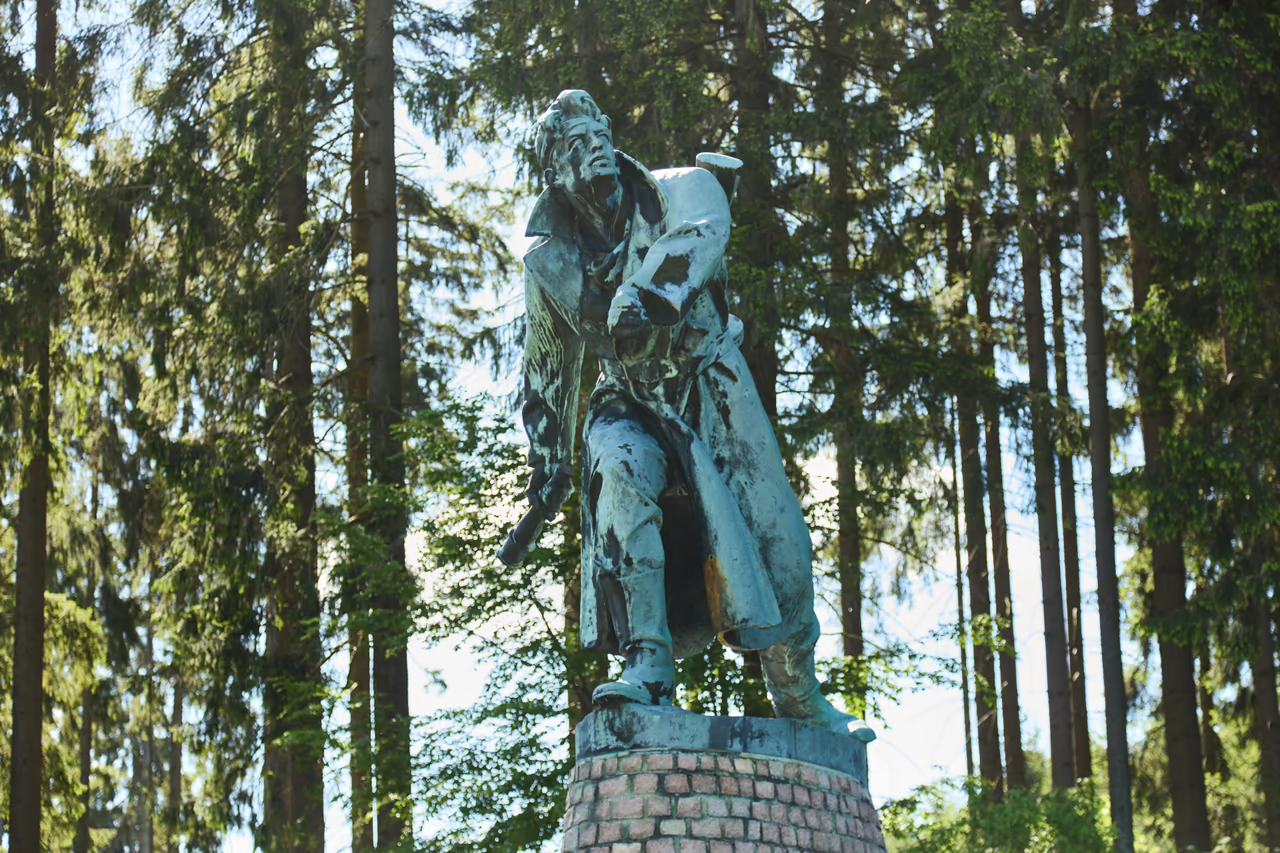
A close view of the bronze statue of a partisan – a figure in a long coat with a submachine gun in his right hand, looking back over his shoulder
The partisan holds a submachine gun in his right hand and looks back towards the ridge the brigade came from.

1975

A memorial built by akce Z

The memorial was made for the 30th anniversary of the liberation of the republic. Several villages of the Vsetín area put up the money and volunteers built it under akce Z. It was unveiled in 1975.

The wall of the terrace is filled by the inscription: “Pamätník bojovej družby Čechov, Slovákov a sovietskych partizánov v Slovenskom národnom povstaní roku 1944” – a memorial to the wartime comradeship of Czechs, Slovaks and Soviet partisans in the Slovak National Uprising of 1944. Below it opens a space closed by metal gates.

The statue itself stands above this terrace with its steps. The whole ensemble can be seen from the road.

Statue
Josef Malejovský, academic sculptor
Architect
Bedřich Hanák
Material
bronze on a stone plinth
Height of the statue
4.7 m
The lower wall of the memorial with the Slovak dedication from 1944

After the state divided

From Vsetín to Makov

The memorial stands in the cadastre of Slovak Makov, but it was administered by the town of Vsetín – even after Czechoslovakia divided. Vsetín could not draw grants for repairs to a monument across the border, though. And a place that vandals visited from time to time was a long way from Vsetín.

So in 2013 Vsetín gave the memorial to the municipality of Makov. A memorial administered across a border became a place where the two countries meet: every year at the end of August Czechs and Slovaks remember the fallen here together.

Until 2013
administered by the town of Vsetín
Since 2013
owned by the municipality of Makov
Cadastre
Makov (Slovakia)
Reason for the gift
grants only in the owner's country, distant administration

The boundary stone

A stone with a relief and a memorial plaque about the Makov pass in the grass by the road

The stone with a relief stands in the grass by the road, a few steps from the statue. It carries an inscription about an important crossing of the border ridge with a view into the valleys on both sides – it was given by the municipality of Velké Karlovice, the neighbour from the other side of the ridge.

Timeline

The whole story in dates

From the drop in Slovakia in August 1944 to the gift of the memorial to Makov.

  1. August 1944

    The Žižka II drop

    Near Sklabiňa, not far from Martin, a group of 21 led by Ján Ušiak lands by parachute, with Dajan B. Murzin as chief of staff.

  2. 25 September 1944

    The fight for the pass

    The unit tries to cross the guarded border as a whole. After heavy fighting it falls back into Slovakia – the date is carried by the inscription on the memorial.

  3. 29 September 1944

    The first group in Moravia

    On the night of 28–29 September a group of about 60 led by Murzin gets across the ridge; others follow by mid-October.

  4. 3 November 1944

    The death of commander Ušiak

    The day after the attack on the staff near Čertův mlýn, the badly wounded Ján Ušiak dies surrounded at Čeladná – by his own hand, so as not to be taken prisoner.

  5. 1945

    A brigade of four battalions

    Under Murzin's command the unit grows into the strongest partisan brigade in the Czech lands; its groups operate from Vsetín to Vyškov.

  6. 1975

    The memorial unveiled

    For the 30th anniversary of the liberation of the republic. The villages of the Vsetín area put up the money, volunteers built it under akce Z, and Josef Malejovský made the statue.

  7. 2013

    A gift to Makov

    Vsetín, which had administered the memorial even after Czechoslovakia divided, gave it to the municipality of Makov, in whose cadastre it stands.

Events at the memorial

A commemorative ceremony for the anniversary of the Slovak National Uprising

End of August

the commemorative ceremony for the SNP anniversaryThe exact date is announced each year by the municipality of Makov.

Once a year the memorial comes alive: the laying of wreaths and flowers, the national anthems, speeches by guests – that is what the annual commemoration held at the memorial by the municipality of Makov looks like. The victims of the Second World War are remembered at it.

Guests and delegations come from Czechia, Slovakia and abroad: survivors and war veterans, representatives of the anti-fascist resistance, of local authorities and of partner organisations.

Na závěr

Doplňující info a test znalostí

Rychlá rekapitulace

What is the Partisan memorial in the Makov pass?

A bronze statue of a partisan (by the sculptor Josef Malejovský, with the architect Bedřich Hanák) on a stone plinth, unveiled in 1975 for the 30th anniversary of the liberation of the republic. It commemorates the 1st Czechoslovak Jan Žižka Partisan Brigade.

Where did the parachute group that eventually reached the Makov pass set out from?

From Sklabiňa, not far from Martin, where a group of 21 led by Ján Ušiak (with Dajan B. Murzin as chief of staff) landed in August 1944.

When was the fight for the Makov pass?

On 25 September 1944 – the unit tried to cross the guarded border as a whole and, after heavy fighting, fell back into Slovakia. On the night of 28–29 September a group of about 60 led by Murzin then got across the ridge.

Who owns the memorial today?

Since 2013 the municipality of Makov in Slovakia, in whose cadastre it stands. Until then it was administered across the border by the town of Vsetín.

What is the boundary stone beside the statue?

A separate stone with a relief and a memorial plaque, given by the municipality of Velké Karlovice to mark an important crossing of the border ridge.

When is the commemorative ceremony held at the memorial?

In the last week of August, for the anniversary of the Slovak National Uprising – Czechs and Slovaks remember the fallen here together. The particular day is set by the municipality of Makov.

Závěrečný kvíz

Otázka 1 z 4

The memorial terrace with the Czech inscription Bojovníkům 1. čs. partyzánské brigády Jana Žižky 25. 9. 1944

A date is carved on the plinth of the statue. Which one is it, and what does the memorial recall by it?

RysíkRysík→

There is a quiz a little further up. Shall we try it?

A few quizzes and I get glasses, and I will feel properly educated.

Try the quiz

Your rank: Homebody. You do not have a single stamp yet. Visit any place and become a Pilgrim.

You can experience the Beskids and Moravian Wallachia with Rysík and without him. Rysík would love to be there for it. Whether you take him along and take on the challenges with him is up to you.

Save The Partisan memorial to your favourite places

You can find your favourite places in your account. On the Walking routes page you can use them to filter routes.

Something not right here?

Suggest a more accurate wording.